Thursday, January 22, 2015

Chasing Eunouchos and Saris

I have a writing on Jesus' interaction with gender-odd people, that I have started and given up/bogged down on three times now. Trying to talk about early Jewish ideas about gender-odd people, or Greek ideas about gender-odd people have similar issues. It's all very complicated, and there is a lot of evidence that is suggestive, but very little that is particularly decisive. And there are so many methodological problems. And so many assumptions that might be challengeable, or might not … I keep hoping for a bright grad student to spend months and months sorting it all out for me … Or maybe a scholar already has somewhere, and I just haven't found it. … So rather than giving answers I'm going to try to share some of my frustrations …

One of the first basic issue is this. At Matthew 19, Jesus talks about three kinds of “eunuchs.” The Greek here is “eunouchos” which the Septuagint regularly uses for the Aramaic term “saris.” So did Jesus actually say the Greek word “eunouchos” or the Aramaic/Hebrew word “saris” (or something else?), and the author of Matthew just chose the Greek work “eunouchos” to render whatever Jesus said into Greek? Well, it probably depends on just how bilingual you think Jesus was, which is controversial, and has lots of suggestive evidence. Moreover what did “eunouchos” mean in Greek at the time? Was it a term specifically for males who had been castrated and typically served as royal servants? Or was is a broader category for a variety of gender-odd people in Greek thought, including but not limited to castrated male royal servants? I can find suggestive evidence for each side and people advancing that interpretation. Certainly the broader notion comes into use by the next century. What about “saris”? Again it looks like castrated male royal servants are the main meaning in the Hebrew and Aramaic of a century or two earlier. But the Hebrew of a century of two later, seems to treat “saris” as a much broader category. So what did it mean in Jesus' day? In Jesus' mouth? In this specific context? It completely shifts the meaning of passage as a whole, how you take these terms … There is lots of reason to think that several different traditions and cultures worth of understanding of the castrated and gender-odd were colliding in the Roman Empire around this time, the Greek, the Phyrigian, the Roman, the Jewish, the Persian, the Egyptian, the Mesopotamian Semitic, etc. The idea the “eunuch” in English specifically means castrated male seems pretty entrenched, but it's not that hard to find people who use the term otherwise, so there are lots and lots of problems with interpretation.

1) Cultural Imperialism vs Overly Uniquifying the Modern

So the smart scholar I've been corresponding with puts the first worry this way.

“I'm not saying that there weren't always people who felt different or who felt that they did not fit into the binary gender system. I just wonder whether they thought about themselves in the same terms we do today... whether they could actually conceive of a third or intermediate or indeterminate gender as being a suitable label to embrace, because the idea simply hadn't been floated yet. It makes me think a little of the situation with gay/lesbian sexual identity. You have to wait until the 19th century to find the intellectual underpinnings of what we now think of as sexual identity. There were always gay people, but the idea of a non-heterosexual identity just wasn't there until the modern period. So I think we have to be careful not to get into "cultural imperialism," imposing our modern way of thinking onto the past.”

2nd Century Gallus Priest
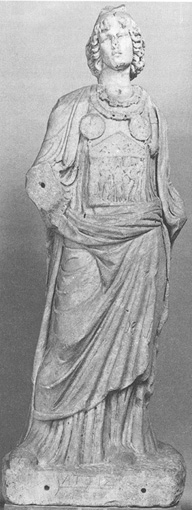
Well, first, Rome officially adopted Cybele as a State Goddess in 204BCE, and her priesthood coming out the Phyrigian tradition, were “galli.” They wore women's costumes, mostly yellow in color, and a sort of turban, together with pendants and ear-rings, wore heavy make-up, and wore their hair long a bleached. They typically castrated themselves. They were a familiar sight in Rome, and other parts of the Greco-Roman world. And Romans used phrases like “medium genus” and “tertium sexus” to describe them (“middle kind of people” or “third sex.”) So yeah, the ancients definitely at least had the idea or concept of a third or intermediate gender or sex, as an available possibility, whatever they thought of that possibility.  And whether that was their usual way of thinking about gender-odd folks or not. And yes the Galli were routinely called “eunouchos” in Greek. And don't get me started on India, and how much cultural interaction there was between India and the Greco-Roman world.


But, the bigger point about “cultural imperialism” is a real worry, but a complex one. The terms “homosexual” and “heterosexual” are from the 19th century, it's true. Earlier people carved up the complex domain of gender, sexuality, attraction, identity and so on, in different ways with different terms and idioms, and often different ideologies as well. There were lots of ways of talking and thinking about sexual identities other than heterosexual ones long before the 19th century though, and this was something that interested many people in many time periods. Plato in the symposium, for instance has Aristophanes talking about male-male lovers as “people of the sun,” female-female lovers as “people of the earth” and male-female lovers as “people of the moon.” Clearly, Aristophanes speech is intended to explore the rhetorical possibilities of humor and satire, but it is also advancing a picture of preferences and identity. The topic of homosexuality in the Ancient world is a complex and fairly well explored one, and it is very much a mistake to project modern categories like “homosexual” onto them, but the ancients certainly used plenty of intellectual categories of their own, and made lots of distinctions in attraction and identity. They just carved the space differently. The distinction between penetrating and being penetrated, and what kind of motive one had for being penetrated was crucial, whereas whether one preferred penetrating males or females was often considered minor. And if we look at other pre-modern contexts, say medieval China, or Shakespearean England, we are going to find different terms, idioms, and concepts, and none are going to be exactly like the 19th and 20th century idea of “homosexuality” but neither are they going to lack the intellectual underpinnings to think and talk about sexual identity in their own idioms and categories.

There is definitely a danger of “cultural imperialism” of overly using our own intellectual categories to think about other times and cultures. But there is an opposite danger too. We can over-emphasize the uniqueness of the modern, by refusing to look at similarities to other times or cultures. Maybe we want to flatter ourselves that our culture is “advanced” or “special” or “distinctive” and it really is in some ways, but it is easy to want to exaggerate this. Or maybe we want to portray our society as “fallen” in some important ways, and want to dismiss or under-emphasize ways in which other societies struggled with similar issues.

There is LOTS of evidence that various cultures of the ancient world struggled with the gender binary in various ways. Sometimes scholars just assumed that gender wasn't binary. Sometimes people assumed binaryness, but there were rebels. Sometimes gender binaries were really about trying to suppress the power of women culturally or politically, other times that motive seems less central. A good history of the gender binary in the West, and resistance to it, would be a long hard, (valuable) project, and if someone has done it and I haven't seen it, I'd love to know.

Certainly there were people in the Mediterranean in Jesus' time who were thought of as non-binary by their contemporaries. But how many? Of what kinds? How did people think or talk about them? What were concepts employed? Did Jesus know or say anything about them?

2) Fine details in terms and concepts and the limits of evidence

Galen uses the term “eunouchos” to include people who are born with ambiguous genitalia, and for people who have male genitalia but are impotent or heavily feminized, as well as for people who have had male genitalia removed. Lucian in the 2nd century, says that someone who has intact genitals but is unable to penetrate a woman is also a eunuch.  Is that usage more common, or limited to the 2nd century only, or what?  Aristotle and Hippocrates both mention that men unable to procreate from birth even with a full set of genitals are "eunouchos."  The Septuagint uses “eunouchos” to translate a discussion of a merely infertile male at Wisdom 3:14, and that's like 3rd century BCE, so the word was used for more than just castrated-folks even before Jesus. Latin uses the terms castratus, eunuchus, and spado, (as well as eviratio vs. castratio). Are there important distinctions between them? Probably. (OK I learned more, the Pandicts, 6th cent Roman laws clarify this quite a bit, the wikipedia on eunuch is more helpful than my Latin dictionaries here.  Spadones are folks who lack generative power, whether their genitals are intact or not, castrati have damaged or missing genitals.  Spadones are allowed to marry, adopt, and institute posthumous heirs, unless they are also castrati.  The Pandicts are clear that someone can be "eunuchus" and still even able to procreate.  Now how many of those distinctions are in place centuries earlier?).  The Comprehensive Aramaic Lexicon lists 9 different terms as meaning eunuch or chief eunuch (and from a bunch of different roots, including an Aramaic transliteration of the Greek term eunouchos, and the Hebrew tumtum isn't one of them). Were there important distinctions among these many terms? Probably.  NINE terms.  Are there other terms in Greek besides eunouchos that were near in meaning to it, but had important differences? Probably. There is a lot of dispute about the etymology of the Greek eunouchos, some tracing it to eune / bed in various ways, or to eunoein / good minded, or to eunis + okheuein / deprived of mating. And that plays into controversies on the words meaning. Is a gay man a eunuch? An impotent but intact heterosexual? A person with a micropenis? A trans-woman who has undergone genital surgery? A Catholic priest? A celibate woman? A non-binary person who is no longer fertile, but has kids and a marriage already (like ME)? If that seems like projecting OUR concerns into the past, notice that ancient Greek speakers seemed to disagree about the case of the impotent, or the infertile, or the uninterested in marriage, or the purposefully choosing not to engage in marriage despite it's attractions, or the potent but not with women. Who the hell counts as a eunuch?

Maybe we could sort some of this out with a lot of footwork, but probably there is enough subtlety to the terms and their shifts over time, and uses in different polemic contexts, that many of the maddening questions are going to be unanswerable.

3) Axes to grind

Even apart from worries about cultural imperialism, I clearly have an axe to grind here. I'm non-binary and trans and looking for places that ancient thought dealt with non-binary people or trans people, or whatever the closest equivalents they could frame in their own idioms were. And there is a sense in which I'm working on this largely to try to make sense of Matt 19. (Other ideas like androgynos, or hermaphoditus, or galli, or the myth of Tiresias, or Hercules' crossdressing, become important if we are trying to understand more Pagan understandings of ancient non-binary and trans -like people)

But there are plenty of gay scholars, who think, plausibly of eunouchos as a term for men so gay that they were unwilling or unable to procreate with women, despite social pressure to do so.  They see in Matt 19, Jesus discussing something like homosexuality, but in pre-modern terms. And there are plenty of conservative scholars who think of eunouchos as a term for people who choose celibacy, like the priesthood that is eventually started in Jesus' name, and see Matt 19 very much in terms of the celibacy of the priesthood.

That means that this isn't just a term from another culture, or a term we have suggestive but sketchy evidence on, but a term that is itself a thing to be fought over in the modern world. Sigh. Each scholar and each translation has to be viewed with a certain kind of suspicion, even ourselves, because it is so easy for agenda to take the lead over evidence …

4) Lack of Personal Resources

My Aramaic scholar friend-of-a-friend gave me over a dozen great leads to find things that smart people might already have written on this quagmire.  If I were still a grad student in Bloomington, I'd go round them up from the excellent University library there, read them at my carroll, look for more, and start composing. But I don't have access to a university library anymore, and none of this is going to be in our little public library, and only bits and pieces are on the web. And I don't really have the time. And I don't really have sufficient expertise in the relevant languages, just a sorta broad base in ancient cultures, gender theory, and such.   This topic deserves a long and serious scholarly treatment by a real scholar, but I am just scholar enough to yearn for one, and not scholar enough anymore to deliver one.

* * *

I WANT to say, hey Christian or ex-Christian gender-odd folk, this is what Jesus actually says about gender-odd folks, regardless of what the conservative Christians in your life want to say about people who don't fit perfectly into the right boxes …

What I actually have to say, is here's my take with a huge dose of perhaps, and waffle, and complexity. The bigots speak a simple message, ignore problematic details that call their narrative into question, and trust people like me to be full of doubts and caveats, and easy to shout down. And so I am, and don't know how to fix it …

Maybe I'll write that commentary on Jesus and the Gender-Odd folks one day, but for now, all I can do is complain about how hard it is … sigh.

Monday, January 19, 2015

Non-Binary Hero/ines

So I am badly in need of role models. Especially non-binary role models. And I'm not alone. I mean for key segments of my life I didn't even realize that being non-binary was possible. The book I'm reading at the moment (on what philosophical ethics should say about intersex), begins with physicians arguing “intersex individuals could not possibly live normal lives as intersex individuals and … the only chance for happiness and psychological well being was the establishment of a secure male or female gender identity. Secondly, there was simply no precedent for [such individuals] living as normal people within our society (Darbuul 2000).” Now I'm trans, not intersex, but I think it's clear that it's really being non-binary that the doctors thought was unprecedented, and impossible to be compatible with “happiness,” “psychological well being” or being “normal.” So seeing people, who HAVE navigated non-binary lives in our society, and come off as successful, or happy, or psychologically healthy, or even maybe kinda normal – is important, both for me personally, and for society as a whole to give up these dumb arguments.

If you look for strong black role models (like say Dr. Rev. MLK whose day it is, or Oprah, or bell hooks, or dozens of others), or strong female role models, or these days even strong Trans role models, it's not too hard to find some great examples. But if you want specifically non-binary role-models … uhm … Well, for starters who is the most famous non-binary person you know these days? Does any name even jump to mind?

For me, there were three big non-binary role models that were personally influential to me as I was sorting myself out

Richard O'Brien – Riffraff from Rocky Horror Picture Show, and more importantly the writer of it (and the music and lyrics of it). Assigned male at birth, he struggled with his gender his whole life, and eventually came to identify as transgender, a mix of male and female, and possibly third gender. He's been taking estrogen for over a decade but retains male pronouns. At one point he estimated that he was 70% male, and 30% female.

Kate Bornstein – A writer and gender theorist, who identified as a trans-woman, and later a genderqueer, and takes she/her as pronouns. Her books My Gender Workbook, and Gender Outlaws, both influenced me greatly. I disagree on a number of theory points, but admire her personally, and her rare combination or radicalness and gentleness. We share many tastes too, like Neil Gaiman comics.

Brin Convenient – founder of Bigender.net and a Youtuber. https://www.youtube.com/watch?v=EYVzoSDKfhg – A bigender person, I encountered electronically early on. Not as famous as the others, but I had some personal interactions with Brin, and watched enough of Brin's videos to think of her as a role model. Importantly he/she leads a pretty normal life, rather than an ultra-edgy one the way that Bornstein or P-Orridge, or in someways even O'Brien do.


Frankly, I usually looked to binary trans people as role models. Both famous ones like Lana Wachowski or Jennifer Finney Boylan, and people I knew in real life or electronically, like Sir G, Boy Kris, or MaryXYZXYZ. Trans people that I perceived as peers, rather role models exactly, or who I perceived as just a little “ahead” of me, like Shannon, Rachel, Erica or Andi, were also critical.
Once I had already begun identify as genderqueer privately, a buddy of mine, Walt, pointed out to me the amazing life of Genesis P-Orridge.

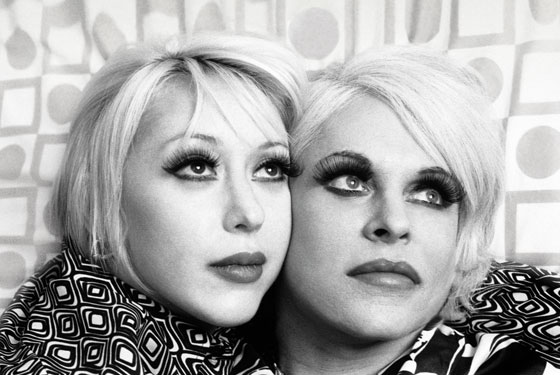
Genesis P-Orridge – is a musical and performing artist best known for leading the cutting edge industrial band Throbbing Gristle, and later Psychic TV. In 1993 s/he began h/er “pandrogyny” project in which the former Neil Megson and his wife Lady Jaye Breyer P-Orridge attempted to merge into a single genderqueer being through hormones, surgery, artistry, and occultism. Even though the formerly Lady Jaye half died in 2007, the other half of Genesis has continued with the project. I listened to Throbbing Gristle long before confronting my gender issues, or learning that the person who fronted the band later became an out genderqueer, who takes s/he and h/er.


Here is a partial list of some others folks that are publicly non-binary, and that are famous enough for me to be able to find a little about them. I rather suspect that I will being doing more detailed postings on the lives of particular non-binary folks over the next few weeks, and I learn more about them myself. But for now here is a schematic list.

Ruby Rose – Australian model, DJ, MTV VJ, actress, etc. She's the voice of Maybelline in Australia. She's engaged to a lady (actually Pheobe Dahl, Raold Dahl's granddaughter), and in July 2014 she came out as genderfluid, taking he and she based on mode.

Justin Vivian Bond – A singer-Songwriter known for cabaret style, also a Wiccan radical faerie, Mx. Bond, takes the pronoun v, and has been an out genderqueer, since shortly after v (ver?) interactions with Kate Bornstein in the mid 90s.

Chris Pureka – Singer-songwriter with a folky style, and several albums. Has been out as genderqueer since at least 2007, but apparently still takes she/her.

Jiz Lee – porn star, Hawai'ian, genderqueer who takes they/their. I'm guessing that they identify “mahu” (a native Hawai'ian category of genderqueerness), but I'll try to confirm that if I do a follow up post on them.  (Pictured here in their role as Spider Jerusalem!)

Gopi Shankar – Tamil activist, wrote a book on gender identities in Tamil India, coined lots of terms in Tamil for variations on gender identity. Founder of Srishti Madurai Genderqueer group. Takes ze/hir in English.

Rae Spoon – Canadian singer-songwriter, identified as trans-man for a long time before claiming to be gender-neutral and genderqueer in 2012

Ivan Coyote – Canadian writer and spoken word artist, genderqueer, takes they/their

Hida Viloria – Latina intersex activist, writer, chairperson of Organization Intersex International. Born in 1968, her parents were among the first in the modern period to refuse “normalizing” genital surgery for their child. Identified publicaly as neither male nor female before the word genderqueer had even been coined, but embraced the word later on.

Marilyn Roxie – designer of the genderqueer flag. Takes they.  Also does a fair bit of music criticism, and founded a netlabel.

H. A. Burnham – supposedly coined the term Neutrois in 1995, to describe hirself, and takes/took ze/hir. Can't find much info on Burnham though ...

I'll look up more and add them tomorrow, but I wanna get this post up … Oh and some more!

So if you don't know the Trans 100, is a list of 100 trans people who are congratulated for being awesome each year. It's website is here. Part of the goal of course is to have a wide variety of role-models. I could only find 2 from the 2014 “class” who I could tell were non-binary, there may be others who identify as non-binary publicly, but didn't mention it in their short biographical blurb

Micah Bazant – visual artist, self-identifies as “Timtum” (one of the 6 categories of gender identity in Jewish law, and a non-binary one at that). Creator of the trans zine Timtum, co-edited the Love and Justice Haggadah, and one of the members of transtorah.org a website for Jewish religious thought from a trans perspective. Takes he/him


TC Tolbert – A genderqueer poet with several books and chapbooks. Teaches at the University of Arizona. take s/he.


And now adding the 2013 Trans 100 Class ...

Avory Faucette – blogger, speaker, and activist. A non-binary person who takes zie/hir (with the extra i, how uncouth, zie and I, should have a terrible fight because we are almost alike but not quite ….).  Oh did I mention International Human Rights Law? Yeah.

Ignacio G. Rivera - “A storyteller, radical queer colored mujerista parent, activist artist, and strategic/visionary organizer.” Performance artist, film-maker, lecturer, sex-educator. They identify as two-spirit and genderfluid, and take the pronouns they/their.

Kate Bornstein – already raved about her, but she's in the 2013 Trans 100 too.
Qwo-Li Driskill – multiracial Cherokee Two-spirit, poet, performer, activist, scholar, editor. Co-editor of Sovereign Erotics: A Collection of Two-Spirit Literature and of Queer Indigenous Studies. Teaches as Oregon State University. Take they/their.


Sassafras Lowery – Author, artist, educator, editor.  Edited the "Kicked Out" anthology about teens being kicked out of their houses.  Wrote a novel, Roving Pack, about homeless queer and trans teens. Ze identifies as genderqueer (according to hir Facebook page, don't worry I only stalk to compliment).  Takes ze/hir (the right way, with no i, see? Sorry, I just gotta cut the treacly admiration with a little silliness OK?)


And now some suggested by viewers and interlocutors!

Raphael Carter - An American science fiction writer, who also wrote on gender issues.  Zir first novel was shortlisted for a Locus award, and zie was a nominee for the Campbell Best new writer 97-98.  One of zir short stories won the James Tiptree Jr. award for 1998, making zir the first non-female to win it alone.  Zie (with the i, dammit) was one of the very first webloggers, and did a lot of work on androgyny, zir "Androgyny Rarely Asked Questions" piece is great, did you know that "arenotelicon" is an early Renaissance term for a being that alternates between genders as hyenas were thought to, that is so obscure even the OED doesn't list it?  Or "homovestite" - "one who obsessively, compulsively and  neurotically wears the clothing of their own sex." or "gender refusnik" - someone who is denied access to SRS either from lack of funds or medical paternalism, even gender otkaznik if your slav-savvy" or radar, or scrat, or, never mind I'm gonna have to do a whole post on this I can tell ...
That's Raphael on the Right

Rabbi Elliot Kukla - first openly trans person to be ordained a Rabbi in Reform Judaism.  Rabbi for the Bay Area Jewish Healing Center.  He takes he, but identifies as tumtum, in an article in Transtorah that I have read and re-read and also need to do a full post on soon.  He wrote the first blessing for sanctifying the sex-change process to be included in the 2007 edition of the Union for Reform Judaism's manual for GLBT inclusion, called Kulanu.  How cool is that?  His chaplaincy specialized in mental health issues, and he's done a lot with end of life issues in Judaism to,  He's also a visiting faculty member in Pastoral Care, at my denomination's theology school Starr King.  Also I gotta say, as I read Kukla's article about the category of tumtum and his recognition of it within himself, I think he identifies as non-binary, but if I'm wrong and he identifies as a binary trans-man then I humbly apologize.


[Edit Again]  I now have another post, adding the 2015 Trans 100 class over here


Any other Non-Binary role-models that you folks want to suggest?

Saturday, January 17, 2015

Hobotee

Hobotee is an easy dish, with a fun presentation, that my family has once a month or so, but that most Americans seem never to have had, or even heard of.  Its sorta partway between a meatloaf and a curry.

here's my recipe
1 lb of meat (minced or ground, I usually use ground beef or ground deer)
1 onion (chopped)
1 large slice of bread
1/2 cup of milk
2 eggs
1Tbsp of curry powder
1 tsp to 1 Tbsp of sugar (I usually use brown sugar)
1 Tbsp of vinegar
1/4 cup of shredded coconut (or chopped almonds)
1 Tbsp of cooking oil
some grease of choice
optionally some bay leafs or lemon slices

Be sure to have cooked rice and chutney to serve it with

Pre-heat oven to 350.  Mince the meat (if necessary) and chop the onion, Soak the bread in a bowl with the milk, and then squeeze it dry (back into the rest of the milk), tear it up and put it in a larger bowl, retaining the other milk.  Fry the onions in the oil, and when nicely browned (your call maybe 8ish min) sprinkle in the curry powder and cook a few minutes more being careful not to burn.  Add the hot curried chopped onions, and the minced meat into the big bowl with the torn up bread, and then add 1 egg, the sugar, vinegar, and coconut, and mix it all up.  Whisk the other egg with the milk.  Grease 4 coffee cups.  Divvy the curry mixture into the 4 coffee cups.  Pour the egg/milk mixture over the curry mixture in the coffee cups, trying to get even amounts in each of the 4 cups (it's a bit tricky).  If you want, add a bay leaf, or lemon slice to the top of each cup.  Bake the 4 coffee cups full of meat curry custard for 30 minutes.  This is a good time to cook the rice you're going to serve with it.

When you serve it at the table, have the rice on the plates and serve the hot coffee cups with it.  Each person scoops the lovely meatloaf curry stuff out of their cup and onto the rice with a fork or spoon, and then adds a chutney (or chili sauce, or other sweet-spicy condiment, or if you're a stick-in-the-mud, nothing else) on top.

Hobotee is probably an old Dutch/Malaysian fusion dish, from the Dutch East Indies.  It was common in the US in the late 1800 and early 1900s, but seems to have been associated with Charleston SC, and the South, and in South Africa, where it is often called Bobotee or Bobotie, and has a number of variations.

My recipe doubles nicely (although you can get away with 2 or 3 eggs instead of 4).  It's my personal variation on a recipe (or receipt), that appears in the 1950 cookbook "Charleston Receipts: Collected by the Junior League of Charleston", Walker, Evans, and Cogswell, which mentions that "recipe" is considered a modernized term for the older term "receipt."  The particular receipt I'm modifying, is attributed to Mrs. Richard C. Mullin (Hasell Townsend).

Gaps in Gender-Neutral Language - and my sib epiphany

One of the ways I've benefited immensely from Feminism, despite not being a woman, is in the expansion, defense and normalization of gender-neutral language. English has always had a fair bit of gender-neutral language (including singular they), but gender-neutral language was nonetheless expanded quite a bit by Feminists in the 70s and 80s. These days I can easily be a spouse, a child, a parent, a person, a poet, a cook, a volunteer, a lifter, a runner, a queer, a geek, a gamer, a hipster, etc. I can use gender-neutral language in formal contexts and in slangy ones, and it often doesn't even sound very marked. I've been told by others that English is MUCH better about having and using gender-neutral language than many other languages, including Russian and French, and not just because we have almost no grammatical gender, but even in intentionally neutral words like parent or child, that most languages have, but that we have more of and actually use more often in unmarked ways.

The original rationales and defenses of gender-neutral language in English had nothing to do with non-binary people like me. Chaucer uses it when he doesn't know, or doesn't want to reveal yet, the gender of a person he is talking about. The Feminists of the seventies, argued that using gender-neutral language helps to diminish the power of gender bias within our language, by ceasing to use male terms as prototypical terms for both males and females, and ceasing to emphasize differences between male and female jobs, where they shouldn't be the focus. None of these rationales for gender-neutral language in English even envisions gender-neutral folks like me (unlike say Sanskrit, where the question of how to talk politely about neither-men-nor-women is definately part of the grammar).

With two exceptions, I try hard to use gender-neutral language about myself, and prefer when others use it about me. It feels better, not sure how to explain it, but it does make things more comfortable for me. And by and large, English is pretty good about making it possible for me to talk about myself in gender-neutral ways. But there are gaps and problems and I want to talk about those. (Oh my two exceptions, I've described my job as “housewife” from before I even came out to myself, and why I still prefer that to house-spouse, or stay-at-home-parent, etc. is a topic for another post. Also I made a deal with my kids that they could call me “dad” as long as they wanted to, although I hope the day will come when they don't want to any more. I usually call myself a parent instead of a dad, but not always.)

A new piece of language usually goes through three rough phases while being introduced - coining, gaining prevalence, and becoming unmarked. In coining, the term enters the language but might not be widely enough known for people to recognize the term without having to look it up. As it becomes more prevalent, it is usually championed, or someone or organization tries to promote or at least defend the word or phrase, but often it still seems unusual or marked, or most naturally at home in a particular context. As it becomes more common still, it loses lots of its marking starts just seeming like a regular term or phrase. For example, I'm old enough to remember the word “website” going through this process. In the early 90s the “world wide web” was a new thing, and largely a metaphor, but it very quickly became “the web” as a metaphor and short form, and “website” was coined from that, but it was all technical talk. By 1994, most people had never heard the term and there were only a few websites actually up yet. By the mid to late 90s most people had heard the word, and didn't have to look it up or anything, but it still sounded like a technical term. Today, it is used so commonly that it just seems like a normal word. When I was young, “mailman” was the normal term. I heard “postal carrier” still fairly young but it sounded odd, marked, formal and stilted. Gradually “postal carrier” or “mail carrier” became more normal, even “mailperson.” Today “mailman” sounds odd to my ears, and “mailperson” or “mail carrier” sounds very normal.

Even on the front of being polite to non-binary types, English is making progress. The Doctor of Dr. Who often says “ladies, gentlemen, and variations thereupon.” Data in Star Trek says “ladies, gentlemen, and invited transgendered species.” In MASH Hawkeye said “Ladies, Gentlemen, and anyone in-between ...” Often this is played as a joke, but increasingly it is not, or is only barely. The idea of expanding the phrase “Ladies and Gentlemen” has definitely been coined, but it is still in the promulgation stage, becoming slowly more prevalent. Similarly, the pronouns I use for myself are ze and hir, which are sorta borrowed from Germanic languages. They have been pretty prevalent among genderqueers on the internet for a decade or two now, but are rarely known by the population at large, and certainly sound highly marked when they are used. Singular they is a very old usage, its been common since Chaucer. At one point in the past it was very normal and unmarked. In the 1800s people argued that you ought to use “he” rather than "they" any time singular they was tempting. That became the norm, until recently the tide has begun shifting the other way again, as people argue that generic he is pretty deeply problematic. So singular they is an extremely prevalent gender-neutral usage, but I don't think it codes as entirely normal or unmarked yet, the way that “firefighter” or “police officer” do.

So there are lots of reasons to want gender-neutral language, and my desire not to be misgendered accidentally, or to have polite ways to talk about people who are neither-male-nor-female is not really the main driver. But there are holes or gaps where gender-neutral language hasn't been coined or taken hold that are extremely annoying to me and other genderqueers, even though on the whole English is pretty decent.

My brother calls me his sibling, and my parents call me their child, my cousins call me cousin, no problem. Facebook uses “sibling-in-law” to refer to my relation to my brother's wife, odd, marked but ok. But I have no term to suggest for my aunt to call me, or, more importantly, for my nieces. I saw “nepling” as the joking gender-neutral of niece/nephew once, but have never heard a good non-joking solution. Facebook uses “child of sibling” which seems pretty awful to me. Similarly, there is no good uncle/aunt neutral form. My understanding is that some dialects use “auntie” a little more broadly than “aunt” especially for gender-dodgy folks. I've seen the form “auntcle,” but it seemed pretty jokey. Facebook's “sibling of parent” is awful. I see my nieces pretty often, and I know they love me, but struggle with my gender issues, and are young enough that it shouldn't really be their job forge hard compromises in identity and relation, but I have no good answer for what they should call me now. Sigh. Any suggestions from anyone out there on the nephew/niece or aunt/uncle problem or how they solve it?

Far more frustrating for me personally is the lack of a good gender-neutral for sir/ma'am or for Mr./Mrs. It rarely bothers me much when someone calls me Brian rather than BP, or he rather than ze, but sir and Mr. always bother me a lot. To make it worse, many people feel obligated to use sir/ma'am, or Mr./Mrs. as part of being polite, or worse are required to by their job. So people who don't know me are always using these terms at me in ways that feel like attacks, and total dis-validations and dismissals. I know that isn't usually the other person's intent, but that is how it is received. They are trying to be polite and failing, because English is not making being polite to me easy or natural in this case. Worse, I don't have any easy corrections. If someone calls me Brian, I can gently say “actually I go by BP these days.” If someone calls me “sir” usually my face just falls, and I have no good quick response. If I'm feeling very gentle or contrariwise upset enough I sometimes say “actually it's not sir anymore” or “not sir please” or “sir? Really? Sir?!!” If someone gets as far as “what should I say instead?” I have to say "well, if you aren't comfortable with ma'am or doctor, you should just leave out the honorific."  But most people don't know I'm entitled to “doctor” certainly not people I've never met, ma'am is problematic too, and sometimes they aren't allowed to leave out the honorifics. Wise waitresses and service folk, often look at me, size me up, and say “need a refill, hon?” Pseudo-honorifics like sugar or hon, work pretty well for me, but I know genderqueers that don't welcome those either. English needs and doesn't have a gender-neutral form for sir/ma'am. I've seen science fiction writers use “ser” this way, but it doesn't work in spoken practice, it just slides into sir. Similarly, coining Ms. and getting it to stick and become unmarked, was one of the real successes of the 20th century Feminist language reform project.  But we need and don't have a good gender-neutral between Mr. and Ms. (and miss and mrs.).  I personally am entitled to Dr. and can often correct people to "actually it's Dr. Morton," but that isn't a good solution for most non-binary folks.  I've seen an attempt to use Mx. in Britain as a gender-neutral between Mr. and Ms. but it definitely hasn't caught on much. I don't really have a good solution, for either sir/ma'am, or Mr./Ms. does anyone else?  How do you deal with this?

I was talking the other day with another genderqueer (who takes they/them) about the other big noticeable gap in gender-neutral language in English, the lack of any good generic affectionate term. Say “hey ____, whatcha been up to?” you can fill in “dude” “bro” “fella” “mate” “lady” “lassie” “girl” (even for a woman), “sister” and probably several more, and be appropriately polite, friendly, and affectionate. But what do you say to a non-binary person? “Hey, person, whatcha been up to?” Ouch. There are lots of other ways that we use terms like dude and lady as well, that you just can't find good neutral equivalents. If the person is enough younger than you, “kid” isn't too bad, although it can come across as dismissive if you aren't careful. “Homie” as a neutral for homeboy/homegirl is also possible in some dialects, but doesn't work for me. I'm no one's homie. The genderqueer I was talking with ran in enough leftist circles that “comrade” often sorta worked for them (and the Russian tovareesh and chelovek aren't too bad, one of the few cases where Russian has better gender-neutrals than English). But by and large this is a gap.

Here, however, I have a concrete suggestion. It came to me last night. Sib – as a mildly affectionate short-form for sibling, in the same way that bro or sis work. Hey, sib, whatcha been up to? So I know this sib, who organizes on Facebook for genderqueer minors that are being harassed by the foster care system. Wow, that sib, is smokin' hot! etc. … Think of “sib” as a gender-neutral substitute for dude or lady or bro. The word sib, isn't already in use, it doesn't sound too much like other common English words, and hopefully its shortening of the familiar word sibling will make it fairly accessible. Maybe there will be a problem with it I don't see, but let's give it a try for a while and see how it works, OK?

So those are my gripes. Are there other places where you folks get frustrated with lacks of good gender-neutral terms or phrases in English?

"It's Just A Phase"

One of the things that contributes to the erasing and writing-off of bisexual folks is the idea that bisexuality is “just a phase.” The hard truth is that often it is. Personally, I fully believe that bisexuality is often NOT just a phase, and I know a number on long-term bisexuals that I fully expect to still think of themselves as bisexual in ten years. But I've also known people who thought of themselves as bisexual, and called themselves bisexual, for a period of time, before finally admitting to themselves and others that they were really gay or lesbian. Especially for gay or lesbian folk who went through that process themselves and remember the torn feelings, the self-repression, the internal compromises that you try your best to ignore, it can be hard not to project your own experience onto others.

A similar thing happens with trans folk, and in particular happened to me, maybe it still is. I don't think so. But maybe. I currently think of my self as non-binary – I'm a trans person but not exactly a man or a woman. But I've gone through a lot of phases of self-understanding in my own life, and I know several trans-women who went through a phase of thinking of themselves as genderqueer, before finally admitting to themselves that they were trans-women. I'd bet that's pretty common for trans-men too, although none of my close trans-male friends have told me personal stories to that effect.

So I want to be kind towards “phases.” We're stumbling through our lives trying to make sense of a very complex world, and often very complex selves too. It's one thing to knowingly mislead the people around you about who you are, it's another thing to make your best guess and be wrong, or not have the right words or concepts to explain, or to be afraid of the truth, or to be honest but not as fully disclosive about details of history as someone might like. I can be pretty narcissistically introspective on my own blog if I want, but I don't want every casual social interaction to start with an essay from me about myself.

But in this introspective essay, I want to explore my history, and shed light on some ways of framing identity, but showing some of the many ways I've tried to frame my own. Some trans-folk know who and what they are from the get-go and their struggle is about getting other people to believe them and accept them. Not me. I was full of doubts and confusions, with long periods of denial and self-repression thrown in. My story is about coming out to myself in fits and starts. Trying to find the concepts and possibilities I need to make sense of my self and become comfortable with myself. There are lots of narratives out there for the sure-of-yourself struggles of trans-folk, but I've read precious few from the doubters, wafflers, navel-gazers, and phase-trippers like myself. So I want to talk about some identities that I've claimed for a time but ultimately abandoned: I've considered myself “some other kind of male,” a “crossdreamer,” a "crossdresser,” “bigender,” and “genderfluid.”

“Some other kind of male” - That was my first way of making sense of myself to myself. I knew from very early on that I was not like other boys – somehow - and that male and not-male were at war within me – somehow. This was especially obvious to me when I had to engage in all-male activities like Little League or Boy Scouts. Seeing how my brother interacted with other boys made it pretty clear too. I'm pretty sure I understood this about myself in elementary, junior high, and high school, but I'm not sure I could articulate it much. I wasn't particularly feminine either. And it wasn't clear to me then how different this was from run-of-the-mill alienation which I certainly also had, especially by the time I was a mopey, poetry-writing, black-wearing teen. I don't think it ever occurred to me to try to hide it, any more than I tried to explain it though. Whatever it was, was often confused with me being gay, and I was pretty keen to insist I wasn't gay not-that-there's-anything-wrong-with-that-other-than-girls-I'm-interested-in-giving-up-on-me. I'm not sure it ever occurred to me to try to figure out why so many other people thought I was gay, even when they didn't mean that as an insult.

By college and later grad school, though, I could get pretty articulate about my sense that I was some other kind of male than the regular kind of male. I talked about “counter-masculinity” and “Masculinism” as a counter-part to Feminism, aimed at reforming and improving the male gender role in many of the ways that 2nd wave Feminism had worked to improve the female gender role from within, as a lived experience. I theorized that Nerddom was a kind of nascent attempt to create an alternate model of masculinity that could compete with the more standard sports-business-war picture of masculinity. I talked about beta-masculinity as a alternate strategy to everyone trying to be an “alpha male” whether they were or not. I tried talking about this with others a couple of times, but it never went well, so I settled into a neither-hide-nor-disclose habit about how I thought about myself.

I now think that the whole project of trying to be “some other kind of male” was pretty much doomed for multiple reasons. Masculinity, even its cultural expressions in our culture, were never really as monolithic as it felt to me. There were always many ways to be male. The nerd and the jock, did it differently, as did the blue collar construction worker and the millionaire, or the soldier and the activist. But these were all masculinity. Counter-masculinity just wasn't going to work, it would always be sucked back in as one more way to be male. Sure, the masculine gender role in our culture certainly has a bunch of fucked up aspects that need to be reformed, and introspective discussions about this by men and to men (in some updated and masculine version of the Feminist encounter groups of the 50s and 60s, the Good Men Project springs to mind), are probably even the way to do it, but it wouldn't amount to a counter-masculinity. Similarly, the project of trying to be a dandy or a bear, for instance, make sense, but they aren't going to accomplish what I'd hoped. For nerddom, in particular, it is entirely possible, even common to be a nerd girl. There are a variety of forms of gender bias, and frankly misogyny within nerd culture, but nerdery itself isn't really male or female – masculine or feminine. Similarly, “some other kind of male” just wasn't going to cut it for me personally as a way to do justice to how I felt and what I wanted to be. It was a public story that wasn't a lie, but it also wasn't emotionally workable for me. And there is probably a reason I never met anyone else who thought about themselves in these terms. I think I even dimly understood this by my 30s even if I didn't have a new narrative to replace it until 2012. Still at over 20 years, that's quite a phase ...

“Crossdreamer” - I never actually self-identified as a crossdreamer, by the time I'd heard the word, I'd already moved on. But instantly upon first hearing the term I knew it was the perfect way to express what I was for most of my life, even if I hadn't realized it. I eventually met a bunch of other people in this boat too, and they tend not to get talked about in discussions of trans, and gender and identity and such. By the time I was in junior high, and for the rest of my life I regularly and seriously fantasized about being female. It wasn't even usually sexual (although that happened too, especially later on). I'd just lead these imaginary lives where I was a woman or girl. I'd role play women. I'd play female characters in video games. I'd daydream about being transformed into a woman by a genie, or maybe aliens, or … Always the fantasies had a major fantastic or science-fictiony component. A curse, a wish, time-travelers, witches, mysterious portals, brain-body swaps, and so on. I remember a movie I saw as a kid, about a girl, who at puberty developed some kind of medical condition that turned her into a boy, and her parents moved her to another school and encouraged her to adopt a male name and persona and try again (probably 5-alpha-reductase deficiency although I didn't know that then). But it was portrayed in the film as a real thing that rarely really does happen rather than a fantasy. I used to wish there was a male to female version and I'd get it. I usually wished to be female when I blew out my birthday candles, and definitely tried to kiss my elbow a couple times.

But, importantly, it didn't really spillover into anything realistic. I never thought it could really happen. It never seemed like a plan or a goal. I tried crossdressing as a kid once or twice (and didn't get caught, as an adult, my mother admitted that she never suspected me). But my youthful crossdressing was extremely disheartening. The clothes didn't fit. I had no skill. I couldn't make myself look female even to myself. It just emphasized how male I was, like it or not, how impossible of a dream it was to ever be female.

I don't even think I knew that transsexuality was a thing that happens, until college, and then I was fascinated by it, and intersex, and cultures with 3rd genders. But I had no concept of a broader notion of “transgender” and the stuff I could find on transsexuals was all very gatekeepery and academic. I came to believe that MtF transsexuals believed they already WERE females, and simply wanted to bring their bodies into line, whereas I knew I was somehow male (and not-male too somehow), but WANTED to be female. And that seemed like the critical difference, so that path was closed off to me too. In my fantasies I could be what I wanted, but I couldn't imagine I could ever pull it off in real life. It felt childish and stupid to want what I could never have, but that didn't make me stop wanting it. I didn't talk about it to others much, beyond “I just like playing female characters” or maybe a little more detail to my wife, and didn't meet anyone who seemed like me in this respect until my late 30s.

Also, I frequently just WAS female in my dreams. Not all the time, but often. In my fantasies or daydreams I needed a transformation sequence, an explanation for how this came about. But in my actual dream-dreams it was usually just fait accompli, the dream just began with me already female in the same way that I was already obligated to explore this haunted house, or give this presentation without any preparation, or whatever. And if I managed to lucid dream (and wasn't already female) the first thing I always did was find a mirror and turn myself female. Heck, I practiced and got pretty good at lucid dreaming so that I could do this.

In the month or so before I came out to myself as trans, I discovered an on-line community full of MtF crossdreamers (with a few crossdressers and trans-folk thrown into the mix). For the most part, they didn't think of themselves as trans, and didn't engage in crossdressing. Maybe at Halloween if they got up the courage, or something. Like me they didn't really think they could pull it off, or that it would be emotionally satisfying if they tried. For some people it was purely about masturbatory fantasies, but not for most. I know we were unintentionally transphobic sometimes, but I think the prevailing attitude was one of admiration for folks that were actually trying to transform in real life, not that we'd ever try that. For some, it was definitely a half-way house on the road to realizing that WE might be transgender, or gay, or crossdressers. I was not the first member of this community I saw finally breakdown their resistance and change their tune on this front. But I think some of these guys will probably remain crossdreamers without ever thinking of themselves as transgender, or gay, or really crossdressing for the rest of their lives. Heck I was a crossdreamer for over two decades, so phase almost isn't even the right word. Similarly, some crossdreamers had entirely unrealistic understandings of what it was like to be a woman, and no interest in correcting them, but by and large the crossdreamers respected and admired women, and were trying to get a more complete understanding of them. For some, the imaginary transformation into a woman was largely a mechanism to be able to fantasize about doing sexual things with men without having to think of oneself as gay, but usually there was far more attention on the newly feminized self and life than there was on any partners one might have. Maybe there are FtM crossdreamers like this, I don't know, no one has ever described that to me. There were occasional bits of pop culture that appealed to the crossdreamers, moments of transformation, or explorations of it. Stardust has a scene where a regular Joe gets turned into an innkeeper's daughter by an evil witch, for example. Or the infamous girdle of sex change in D&D. There were a bunch of webcomics that explored this kinds of crossing dream too. One, El Goonish Shive, has a character that at one point gets magically split into male and female versions of himself, who both continue to have lives. Once I saw that, many of my fantasies involved being split into a male and female rather than mere being transformed into a female, so that I could continue with my male duties (as husband, father, and breadwinner), while also being able to lead a female life as well. I knew it was impossible, but that's what fantasies are for, right?

Was it all about repressed internalized homophobia or transphobia? Er … there was sometimes an element of that, but I don't think that was usually the main note. Similarly there are some unkind theories out there about autogynephilia, and there was certainly a grain of truth to that approach, but again it doesn't seem like the main note. In my mind, I just wanted to be female, and didn't think it could ever happen in real life, but I couldn't stop thinking about it either. So “dreaming” was what I could accomplish ...

Julie Serrano, a trans-woman who wrote an interesting gender theory book called “Whipping Girl” theorizes that we have a subconscious gender as well as a conscious one, and that our gender identity is best understood as the result of these two factors combining. For most people the subconscious gender is going to match the conscious, the body, and social role and such well, and you are barely going to notice the many layers of your gender identity. But for transsexuals, the subconscious gender is so strong that it convinces the conscious gender to be strongly at odds with the body and social role, until one can transform the body and social role to better fit with the gender identity. For me, it sorta seems as if, my subconscious femininity, and my conscious masculinity fought and fought, with my conscious (and it's allies, everybody else) getting the upper hand but not definitively winning, and they couldn't figure anyway to compromise or work together, so I lived a fairly male life consciously, and lived a variety of fragments of female lives in places where my subconscious was most powerful, my dreams and daydreams.

At Least a Crossdresser” - There came a point where I realized that all my fantasies were about living a female life, and maybe I'd better face that and think about why … And my fantasies started having realistic components. I'd go through a portal to another world and have adventures in a female body, but at last make it back home only to be trapped back in my male body again, and then decide to initial real-world transition. Or my tangles with horrors from another dimension would break my mind, leaving me with multiple personality disorder, and I'd re-integrate, but with my Trisha personality in charge instead of my Brian personality and begin realistic transition. Or I'd witness a mob hit, go into witness protection, and be forced by the FBI to crossdress, you know, for my own safety … or … And there came a moment when I realized I was going to give crossdressing in the real world another try …

In my second year of college, the Fantasy Club (the role-players) convinced me to be their entry for the “CinderFella – Crossdress Beauty Pagent” part of the homecoming activities that year. Unlike my own early attempts, this time I had two actual women helping me with clothes and make-up and such, and that made all the difference. I played it for camp, and won. Second place was the only other person I knew, and he played it “straight” and was the only contestant that would have passed. I enjoyed the experience immensely even though I envied 2nd place. Disturbingly so, on both fronts. After a little soul searching, I decide to lock all thoughts of crossdressing or wanting to be female into a box in the back of my head labelled “never open this or look in here, or it will destroy any career you might have.” My subconscious femininity leaked out in a variety of ways anyway over the years, and it didn't really stop or slow down my crossdreaming, but the idea of doing anything about it in real life was terrifying for a long time. By the spring of 2012 my career had ended anyway, and so I looked in the box, and recovered a bunch of my memories, and started to process what I found.
From August 2012 to Oct 2012 I thought of myself as a crossdresser, or rather as “at least a crossdresser,” I already suspected that I was ultimately going to think of myself as something “farther down the path.” But I started dressing in female clothes in private, and this satisfied something in myself that hadn't been satisfied before.  In late July I'd had this “trans-epiphany” moment, where I realize that I didn't really think of myself as fully male anymore, and probably never would again. But what kind of trans? How was that going to work? I had no clue. But I was pretty sure that occasional crossdressing was a minimum requirement for me. I could imagine a life where I acted male in public without really feeling it, and every now and then got a chance to dress and act femininely in private and let my Trisha side out. Maybe that would be enough. I wasn't sure how to make being trans actually work in my life. I was afraid to give up my masculine side completely.
Dressing in women's clothes wasn't really about the clothes, or the frission, or the rebellion to me, it was about “being” feminine, about letting my “Trisha side” out. I also never thought of myself in terms of drag. I wasn't performing, and didn't want to exaggerate. I wanted to be feminine while also being myself. I suppose that, that time back in college, I was technically doing “drag” - it was a performance, and I was exaggerating and parodying. But that was very much NOT what I got out of it. It was something else that sung to me and terrified me. Similarly, when I started thinking of myself as at least a crossdresser it fed something in me. Technically I had crossed over into mental illness at that point, the APA considered this “Transvestic Fetish Disorder” until 2013 (when they cleaned up this and several other diagnoses to be a little less transmisogynistic), the International Classification of Diseases put it better though, F64.1 – Dual Role-Transvestism “The individual wears clothes of the opposite sex in order to experience temporary membership in the opposite sex.” Turns out an “experience of temporary membership” was more satisfying than just a daydream, and contrary to what I'd believed for decades, it was achievable for me. (BTW, that's why crossdresser is a more polite term than transvestite, which in the US implies that you believe it is a mental health disorder rather than a healthy identity).

Bigender - In Oct 2012, I heard the term bigender for the first time, I met people who self-identified as bigender, who explained their experience to me, I found the web forum Bigender.net, and by the end of the month I was self-identifying as bigender myself. The idea is that you have two gender “modes” usually a boy-mode and a girl-mode, in my case I called them “Brian” and “Trisha.” If I wore feminine clothes but was stuck in boy-mode, I just felt like a guy in a dress, a bit awkward and embarrassed. But if I was in girl-mode it felt right and I experienced partial “temporary membership” in womanhood. Like many bigender people, I had some control of my modes, but not total control. Indeed the clothes were often powerful cues for shifting modes. Even if I “wasn't feeling it” maybe if I put on feminine clothes I would start feeling it. It wasn't just that I dressed as a female, when I was Trisha, I felt quite female. That “female trapped in a male body” cliché I'd read about often and never really felt before, I felt it when I was in girl-mode. And Trisha wasn't just more feminine than Brian, she was younger, less certain of herself, happier, freer, more tentative. As Trisha, I was at least as much girl as woman, and the contrast of feeling both 39 and 15 at the same time often struck me. I make it sound kinda like multiple personalities, and I wondered about that, but it really wasn't like that. I just don't have better ways to talk about it. Brian and Trisha were both me, I had the same memories, the same plans. They were like sides, or aspects, or filters. Various cues could make me “flip.” The smell of pipe tobacco always dragged me fully and quickly to Brian-mode, Trisha-mode always took a little longer to fully inhabit and came on a little more gradually. Often I'd hear a flip in the inflections of my voice, and know I'd changed modes that way, before the rest of my brain noticed the shift. If I was in Brian-mode, I wanted to be in male clothes and act in male ways. If I was in Trisha-mode I wanted to be in female clothes and act and interact in female ways. I COULD fake masculinity even in Trisha-mode, but it was unpleasant and I always wondered how much femininity seeped through despite my attempted fakery. I could interact with my spouse in either mode, but was quite shy around anyone else as Trisha. Brian and Trisha had separate emails for a while, and other kinds of web presence. For instance, Trisha had a Pinterest account, but as Brian I had zero interest in or patience for Pinterest.

When I began crossdressing I was trying something new after many years of denying myself that experience, and it led to a real shift in my self-identity. But I think bigender was probably a better term than crossdresser for me from as soon as I started, even though I didn't think about it that way for a few months. It wasn't how I dressed that was the critical bit, it was how I felt, what parts of me I was “letting out” and which parts were “locked up.” And the clothes were both a tool for manipulating that, and a reflection of the results of that.

Genderfluid - I know people that have lived as bigender for years, as a stable identity and way to live. But for me it was a phase. In the beginning Brian was very well defined, even set in his ways and stuck, wanting to get past himself, and Trisha was very tentative and fuzzy and coming-into-being, but the distinction between them was very clear. It was like my conscious gender-habits would occasionally step aside and allow my subconscious gender free rein to experiment. Over time, Trisha became stronger and surer of herself, but the boundaries between Brian and Trisha also got softer. In October 2012, I had two very clear modes, and very little in-between, maybe a few minutes while Trisha was coming to the surface. But by Jan 2013, being in an in-between state where Brian-mode and Trisha-mode were both partially activated was becoming common. My conscious gender and subconscious gender were reaching new and synthetic compromises how how gender identity was going to work. I had agreed to participate in a scientific study of bigenderism involving measuring hormone levels in saliva and performing psychological tasks on a computer, but I was finding it hard to get into a clear male or female mode, because the in-between state was becoming so common. I began discretely wearing female clothing under my male clothing. My signature changed to BP, which I knew stood for Brian Patricia rather than Brian Patrick, regardless of my birth certificate. I switched my gender on one of my discreet social media sites that had a lot of gender options to “Genderfluid.”

I understood “genderfluid” to mean almost the same thing as “bigender,” but to be slightly broader. It wasn't clear anymore that I had only two modes, male and female, a third mode in-between or mixed had gone from a trivial transition state, to being important in its own right. But I still had days when I felt very male, or days when I felt very female, and I still felt lots of periodic shifting in my identity.

Androgyne/Genderqueer/Non-Binary - Over 2013, I slowly began being in clear male and female states less often, and the mixed, in-between state became more common. I came to almost always wear a mix of male and female clothing. I begin introducing myself as BP in public. It became harder and harder to shut little feminine mannerisms out of my public interactions. I often wondered how much of my feminine side came through in day-to-day interactions even though I was trying hard to hide it (being not-out to the vast majority of people). I wound up coming out to more and more people, because it became more and more exhausting to suppress part of me for interactions. I thought of myself as BP, a fusion of Brian and Trisha, a fusion of male and female, thoroughly intermixed. At Thanksgiving I finally came out to my parents. I did it in person with a long private talk, but I'd written a detailed letter too, so that they could look over it later to process over time, or to include any little details I happened not to mention during the talk. In it I identify as “androgyne” and “genderqueer” but admit I am also “a little bit genderfluid.” The in-between, mixed gender state had come to feel like my home base, like who I am, and male and female had come to feel like occasional side trips. It feels like my conscious and subconscious have settled on an identity, and are now cooperating robustly on trying to get it to work in practice. I think of androgyne as an old-fashioned word, and genderqueer as a slightly politicized word, for basically the same thing, being in-between genders, or a mix of the genders, or both or neither, or a third gender that is somehow in-between or mixed or both or neither. I think of non-binary as a slightly broader term that include fluid and bigender folk too, but still means something other than a male or female and something other than a trans-male or trans-female.

Since coming out publicly, and starting feminizing hormones, both in early 2014 – I haven't really used much fluid or bigender talk, nor had many of those experiences. I don't “slosh around” significantly anymore. Paradoxically, being on feminizing hormones is making my whole “center of balance” shift slowly femme-ward (and is very psychologically satisfying in it's own right, I feel soooo much more comfortable in myself and my body on the feminizing hormones), but I don't feel nearly as “female” as I occasionally did in strong female-mode when I was bigender. I don't let my feminine side out anymore – rather, it is always out, but always not the full story at any given moment.


Trans-Woman?? - So in some sense I feel stable, I feel at rest. I'm OK with being genderqueer. My best guess is that being genderqueer is not going to be a phase for me, but a permanent state. But I'm also still in transition, and still on feminizing hormones. My body is continuing to shift. I fully believed that I would never “pass,” but I have once or twice now. Probably with another year or two of hormones I'll pass more often. I don't think of myself as a woman, even a trans-woman. I don't feel right claiming that term for myself (although I often defend it for others). But I'm getting ever closer. How do I know that genderqueer isn't one more phase for me, and in a few years I'll think of myself as a trans-woman and see my identity as a genderqueer as just one more phase on the path? I can't know for certain. But I honestly don't think that's what will happen. Maybe I'll even get past the “mid-line” to “almost-female.” Maybe one day it'll be easier to use she and her, than ze and hir. Already I use women's restrooms almost as often as I hold out for a gender-neutral restroom. Maybe I'll be more conventionally female in my social behaviors. But I think if I was going to think of myself as genuinely female it would already have happened. It still doesn't feel possible for me to be genuinely female – but feeling between-male-and-female seems vastly more possible, satisfying, and livable than I ever imagined it would, and that's where I am now.    
Wednesday, January 14, 2015

Nutritional Needs, Transfolk and Biological Sex

 The Credible Hulk, Hulks Out


So a few days ago I signed up for “MyFitnessPal” and began carefully tracking my eating via it, as my wife has done for over a year. (We use Fitocracy for exercise tracking though). It forced me to choose my gender as male or female. So I picked one, and wrote an email to the company, I hope politely, suggesting that they really ought to have another option, or at least allow people to leave gender unspecified. Facebook's decision to greatly expand the gender options available last Feb, was actually probably the final straw that led to me coming out publicly as trans. And now I can pick something other than male or female, or leave my gender unspecified, on literally every other social web site I participate in (Google+, Fitocracy, Pintrest, Blogger, Twitter, etc.). I even included a paragraph each trying to forestall two counter-arguments that I anticipated, that they need the gender information for marketing purposes, or to calculate nutritional advice responsibly.

I got a reply, after some politeness the gist was
We will definitely look into the possibility of adding other gender display options. We definitely want to respect a persons right to define themselves as they see fit, however, their body's nutritional needs would still need to reflect it's original physiology. We will continue to look into it as a prospect for a future update to find a way that is both sensitive to the user's sense of identity and accurate for their body's composition.”

This infuriated me.

But like the Credible Hulk, I want to channel my rage into well reasoned arguments, and citation of details.


The idea of “biological sex,” “biological gender” or in this case “original physiology” is frequently used to write-off the concerns of transgender people. Such uses are almost always badly misunderstanding the biology (as in this case), and often are assimilating things to one of two dumb over-prevalent ideologies 1) external-genitals-are-the-beginning-and-end-of-all-discussion-of-the-biology-of-human-gender-and-who-should-take-which-gendered-social-role or 2) your-parents-best-guess-at-birth-is-the-only-biological-criterion-than-matters-and-all-further-destiny-is-determined-by-that-critical-moment. Both evaporate under examination, but like a persistent fog, keep coming back if you aren't careful.  Oh and since most transfolk will select their social gender when setting up their accounts anyway, if "original physiology" actually is important, then MyFitnessPal already has a problem regardless of whether they add more gender options or not.

So in this case, neither the shape of my genitals, nor the earnest best guess of my parents years ago is really the issue for my “body's nutritional needs.” And we'll look at that. But first I want to say a little about my “biological sex.” Biological sex is really made up of dozens of different criteria, which often line up pretty well for most cis binary people (although certainly not all), but which tend to go in many directions for intersex, trans, and non-binary folks. In my case, my skeletal structure is quite male, my hormone profile is quite female. My skin and hair are feminine (under the direction of my hormones), but my respiratory system is probably pretty masculine still. I have Wolffian structures and not Muellerian structures, and thus, for instance, a prostate but not a uterus. Like most people, my genetic sex has never actually been tested, and even if it were if I had Chimerism it might not show up. My gonadal tissue has never been biopsied, but is probably male, or mostly male, because I've sired two children in the past, although I probably infertile in both directions now. My BRAIN which is probably the most important biological bit, for gender issues, is a complex case. Current evidence is that even prior to hormone treatments, there are important ways in which trans-women's brains resemble physically cis-female brains more than cis-male brains, and trans-men's brains resemble cis-male brains more than cis-female brains. But once hormone therapy starts, the changes in brain structure become even more pronounced. Here's a good article on details. So my “biological sex” like most or all trans people, isn't a simple male or female, but a complex mix of male in this way, female in that way, and somewhere in between in that other way, with plenty of we-haven't-even-checked thrown in for good measure.

Gendered Nutritional Illusions


OK, but males need more calories that females right, and so they're entitled to eat more without feeling guilty right?  So which set of nutritional guidelines apply to trans people, or worse still to non-binary cases?  What are my bodies nutritional needs”? The USDA famously has long recommended different dietary guidelines for men and women. Which should I, or any other trans person use and why?

Well, it turns out that the guidelines were always intended as estimates, and estimates for the “average” man or woman.  A bodies' caloric needs are shaped by your size and your daily activity level and probably fat to lean body mass ratio. Males are statistically larger than females in the US, so the “average” American male needs more calories per day, than the average American female.  But a male and female of the same size and same activity level, probably have close to the same caloric needs to keep their body weight stable. (Especially if their ages and BMI are similar).  Even here there is individual variation we don't understand well yet, but that isn't sex-linked.  Your caloric need to keep your body weight stable is roughly 13 calories per pound of body weight per day for a sedentary person, 16 per for a moderately active person, and 18 per pound for a vigorously active person. If, you'd like check out p. 14 of the USDA dietary guidelines, where they walk you through their process of estimating their recommendations based on differences in “reference height” and “reference weight” for the “average” healthy man or woman.  Whether you are male or female, or trans-female, or non-binary is not really the issue for determining your caloric needs, 

If you care about getting a good estimate of your own personal daily caloric intake for weight stability, figure it out based on your weight and activity level. If you want use a more detailed estimator, (we some times use this one), most use an updated version of the Harris-Benedict equations for estimating resting energy expenditure does include a gender component. But it's outdated in various ways, and evidence suggests, that gender is really functioning as a substitute for body-mass-index here. The equation is old, based on statistical regressions over small samples, and was updated in 1984, but folks who found “Resting energy expenditure is directly related to the size of the BCM (Body Cell Mass) and is independent of sex and age” and “there is no difference in resting oxygen consumption between the sexes when expressed as a function of BCM.” Now this is pretty steep Clinical Nutrition, for this humble ex-philosopher, but if I'm understanding correctly, basal metabolic rate (BMR) depends on your lean body mass, or your fat-free body mass, or your body mass other than adipose fat.  In older people and in women it is statistically normal for someone to have a higher percentage of adipose tissue. Consequently, a man and a woman of the same height and weight, will still have different BMR because more of the woman's body is statistically probably already fat rather than lean body mass (which burns more calories). But notice that lean body mass vs. adipose tissue, is NOT a matter of “original physiology” but is controlled mostly by hormone balance, so even on this theory, you should calculate based on your hormonal sex, if you can't find a good way to estimate adiposity directly, like you know the caliper estimator …  The Katch-McArdle formula for estimating BMR contains a Lean Body Mass component, but no gender component for instance.   Personally, I sometimes run the Harris-Benedict calculations with each gender and average them, to reflect my incomplete transition, trying to remember that they are all very rough estimates, and that your-mileage-may-vary.  I'll probably just use the female numbers once I think my BMI is in normal female ranges.  Oh, and even on this theory, there is significant individual variation from person to person that can't be explained by sex. Odds are high that, as with height or many other issues, statistical variation between the genders on caloric requirements are drowned out by variations within each gender.

A similar point holds true for marco-nutrient breakdowns. The optimal mix of carbohydrates, fats, and proteins varies wildly from person to person based on a number of factors, and there are certainly opposing ideologies at play here. But gender is not one of them. The USDA recommendations for carb/protein/fat balance don't depend on gender. I couldn't find anyone whose recommendations here did depend on gender. The closest to a gender difference I could find is that if you DO eat way too much protein, the medical problems it is likely to cause are slightly different depending on some gendered issues. Also there may be a slight difference in the type of fats one should consume. There is some evidence that ALA, one of the types of Omega-3 fatty acids, benefits some systems but may increase the risk of prostate cancer. Its unclear if maybe it is a net-boon even to people with prostates, but it does seem to be safer for people who lack prostates.  Similarly, the USDA recommends that men get more fiber than it recommends women get per day, but that is just scaled by their overall calorie recommendations. Men and women, and those of us in-between, should all have the same rough percentage of fiber in our diets. Oh, also there may be a difference in the "4th" macro - alcohol. Low amounts of alcohol consumption (as opposed to no alcohol consumption) do seem to have some health benefits for men, women, and folks in-between, but even minor alcohol use also increases breast cancer risks, which is a bigger problem for those of us with non-trivial amounts of breast tissue.

Genuine Gender Differences in Nutrition


For the most part men, women, and those of us otherwise gendered need the same things nutritionally regardless of our gender of identity, early life gender, "original physiology" or current biological gender details – although height and weight and activity level all matter, and body mass index probably matters. The calories you need and the macro nutrients you need, do not depend on your gender, although statistical illusions of various kinds, and estimates and recommendations that you haven't read the fine print on carefully enough can make it look like they do. But there are a few cases where there are real differences.

If you are pregnant or nursing, you are going to need a lot more calories. I've encountered pregnant and nursing trans-men, so gender isn't exactly the issue here, but the details of your biological sex are. Similarly, if there is even a small chance that you might become pregnant, it probably makes sense to make sure your Folic acid levels are good. Insufficient Folic acid can be devastating to embryonic neural development. Since my wife was once pregnant for months without realizing it, while she believed herself to be infertile, I like to encourage Folic acid pretty broadly, even to people who think they are very unlikely to become pregnant.

Similarly, there is very little doubt that menstruating people need significantly more iron than non-menstruating people. Again, it's not exactly gender linked, because pre and post menstrual women are in the same boat as non-menstruating men, and menstruating trans-men or non-binary types are in the same boat as menstruating women. 18mg a day for menstruators and 8mg a day for non, is the current USDA recommendation (and too much iron does have some health risks).

Finally calcium is the tricky case. For a long time, high calcium intake was thought to be a protection against osteoporosis, which is a much more prevalent problem for women than men, and seems to be linked to hormonal balance. But as it happens, the human calcium metabolism is pretty complex, and much effects how well it is absorbed in the intestines, and how much the kidneys choose to excrete. So it looks like when the body is having calcium issues in the US, that insufficient intake is not necessarily the issue. Contrariwise, even moderately high levels of calcium intake (2000 mg a day, twice the USDA recommendation for folks 19-50), seems to up the risks of prostate cancer significantly. So avoiding excessive calcium intake is probably a good idea, especially for older people with prostates, and having slightly over 1000mg of calcium a day, may or may not be helpful for people worried about osteoporosis.

So if you are an entirely "average" and "healthy" man or woman, the USDA recommendations are probably pretty close, but if you are a little taller, shorter, thinner, heavier or say genderqueer, you may need to modify them a little to better fit your own needs.  But "original physiology" is NOT the issue.  Sigh.  Take care of your bodies folks.  I know I personally love mine more than I used to, and am trying to draw on this motivation to be ever slowly better about my diet and exercise.

Oh, and one more thing.  Social gender, and gender of self-identity has many complex interactions with food choice, body-image, pressure to exercise, cooking skill and dozens of other things.  The CULTURE of nutrition is gendered in many, many complex and important ways, deserving many posts of their own, even if the physiology of nutritional needs cares far more about height, weight, and BMI, in most cases.  When we are approaching actual dietary advice, or figuring out actual strategies for ourselves - motivations, and habits, and all those social and cultural issues become critically important again ...

Sources

"The Transgender Brain." (2013?) Transas City. http://transascity.org/the-transgender-brain/

The Harvard Medical School Family Health Guide “Good Nutrition: Should Guidelines Differ For Men and Women - http://www.health.harvard.edu/fhg/updates/update0906b.shtml

Roza, A. M & Shizgal, H. M. (1984) “The Harris-Benedict equation re-evaluated: resting energy requirements and body cell mass.” The American Journal of Clinical Nutrition.

Johnstone, Alexandra M; Murison, Sandra D; Duncan, Jackie S; Rance, Kellie A; Speakman, John R; Koh, YO (2005). "Factors influencing variation in basal metabolic rate include fat-free mass, fat mass, age, and circulating thyroxine but not sex, circulating leptin, or triiodothyronine". American Journal of Clinical Nutrition 82 (5): 941–948. PMID 16280423.

Muth, Natalie Digate. (2012) "Do men and women have different nutritional needs?" http://www.acefitness.org/acefit/healthy-living-article/60/2461/do-men-and-women-have-different-nutritional/

Tsang, Gloria. (2007) "Men vs. Women: Differences in Nutritional Requirements"   http://www.healthcastle.com/nutrition_men_women.shtml