Showing posts with label Autobiography. Show all posts

Monday, May 4, 2015

Is Bruce Jenner a Lesbian, and Am I?

So I haven't seen the Bruce Jenner interview yet, but trans folks are certainly talking plenty about it. Some opinionated overview, in case you haven't been following the case. Yes Jenner is trans and has been transitioning for about the last year and a half, (and thus is a little “ahead” of me). Bruce has not provided the world with a female name yet, and said to use male pronouns for the interview. Whether we are intended to use them after the interview is less clear, but I will try to continue using male pronouns until I'm convinced that that's not the most respectful way to talk about Jenner (and I sympathize a lot with the tensions here personally). Despite this Jenner says "for all intents and purposes I am a woman."  The media as a whole has handled the whole damn thing pretty shamefully, and quite unlike the cases of Lana Wachowski, Laura Jane Grace, or Chaz Bono. In particular fuck TMZ, but ABC and Diane Sawyer handled things well if not quite pitch perfectly. Also, of course, it bares repeating that the experiences of white multi-millionaire transwomen have important dis-similarities from the experiences of the rest of us and can serve as a distraction if we aren't careful.

This morning's discussion (well last weeks, I'm behind on my posting) is that Jenner claims to be attracted to women and to be a woman, but not to be gay. I have trans friends who want to stake out this position as well, and defend Jenner for claiming it, but I also have trans friends who want to insist that if you are a woman who is attracted to other women, then you are a gay woman whether you admit it or not. And I definitely feel pulled both ways myself here, so I want to explore the question a little.

Most immediately there is a tension between gayness as a pattern of attraction and gayness as a matter of identity, culture and/or community. The American Psychological Association recently defined sexual orientation as “an enduring pattern of emotional, romantic, and/or sexual attractions to men, women, or both sexes. Sexual orientation also refers to a person’s sense of identity based on those attractions, related behaviors, and membership in a community of others who share those attractions.” Each side of this definition can be problematized (When do isolated incidents become a “pattern?” What if romantic and sexual attractions conflict? What if someone identifies one way but has community membership in another way? Etc.) But more saliently, the two halves of this definition can easily be in conflict, and in several ways. Consider the classic “closet case,” a man who has an enduring pattern of attraction to other men, but nonetheless self-identifies as straight and tries to have minimal or adversarial interactions with the broader community of gay males. Are we to say they are gay despite their opposition to gayness, because of the first part of the definition, or that they aren't gay because of the second part? Usually I think we lean to saying they are gay despite themselves in this case. But shift it just a little, imagine a black guy, who occasionally has sex with other men, but wants to keep it on the “down low” and doesn't feel comfortable using the terms and markers of white gay male culture, and uses terms like MSM instead of gay or bi. Do we still want to say that they are gay despite their own self-understanding? What if the person we are thinking about has a pattern of attraction to males, but only actually has sex with other men for money, or only while in prison, or other border cases?

Or to switch over to Jenner, and I and many other transwomen. I have an enduring pattern of attraction to mostly women, no doubt. But am I women enough myself to count as a lesbian or a gay woman? I'm women enough already to call myself trans, and to correct people when they use male pronouns for me, but I still accept neutral pronouns more often than I ask for female ones. And I certainly don't feel I can demand female pronouns yet. Maybe someday.  There isn't really a good word for a gender-neutral person attracted primarily to women.*  Gynophile is an old word, but has been used in a bunch of different ways by Freud, Chodorow, Money, and especially Blanchard, who I dislike intensely.  Yuck, I'll pass.  Jenner doesn't even ask for neutral pronouns yet. And lesbians are not just any old set of women, they are a community that has become tight-knit over the years, often in response to rejection from biological families and repression from the culture at large. Lesbian culture definitely has gateways for women who have recently come out to themselves to enter and learn the culture. Ciswomen undergo a process of shifting from a mere pattern of lesbian attractions, to identity and community membership as lesbians too.  But these entryways function so-so or worse for transwomen in transition. Often we are simply not welcome in lesbian spaces and at lesbian events. And even when we are, the processes of learning the culture and coming to feel like a member of the community don't work the same for transwomen as they do for ciswomen.  My case is even trickier, because the dating scene is one of the main gateways into community, and as a married person I've never been part of the lesbian dating scene.

This exchange was clearly intended as sarcasm, but this IS how it works in the case of trans folk. I have an actual letter from my therapist, and I celebrated when I got it.  I haven't done the paperwork with the state yet, and it's expensive and I may not get around to it for a while (especially since all 50 states still only allow M or F as genders, rather than the broader palates allowed by Facebook, or countries like New Zealand, Australia and India.) Some transfolk never get the gender marker on their driver's licence changed, some never get a letter from their therapists (either because they find an informed consent clinic, or don't wind up getting HRT). But, yeah, I did some of the paperwork, and not other bits. Have I done enough paperwork to count as gay?  I feel ambivalent about it myself, and whether I am accepted as a lesbian by other LGBT folks varies greatly.  It is entirely possible to interpret the LGBT acronym as implying that I am not an L, because I am a T instead... sigh ... that's one of the many problems of mixing categories of different types in parallel.

My current running joke is that I am Chian.   When I get the blank look, I explain that Chios is the island right next to Lesbos in the Aegean Sea.  So I'm not exactly a lesbian yet, but I'm definitely in the vicinity.  Even the term "lesbian" is an odd one.  Its an old Victorian understanding of same sex attraction, parallel to terms like Sapphist, Uranian, or invert.  It's a metaphorical reference to Sappho of Lesbos one of the great poets of antiquity, who wrote about attraction to women.  Thus it was an oblique code phrase for the learned to pass information to each other without necessarily scandalizing others.  My older very Christian friend Jim Stilwell read an anonymous Hoosier poem from the turn of the last century, about a guy getting up the courage to kiss a lady, at our open mike poetry in April.  And he totally missed the ending where writer promises never to bother the lady again now that she has revealed to him that she is a follower of Sappho.  That was how the term worked a century ago.  (BTW, there is plenty of reason to suspect that the historical Sappho was what we would now call bisexual, despite how the Victorians and Edwardians used her partial memory.)  So it always seems odd to me to claim that some is a lesbian without admitting it to themselves.  The term has roots in metaphor, being metaphorically like Sappho of Lesbos, so taking it really literally seems counter-intuitive to me.  Am I metaphorically like Sappho of Lesbos who lived over 2,500 years ago?  Er ... kinda?  Is Bruce Jenner?  Sorta, I guess.

But is there space for a trans woman to be primarily attracted to other women without being a gay woman?  It's surely normal for cis and trans folks to go through a questioning phase where they aren't certain yet.  And it can take a while to get comfortable using terms and self-describing in ways that are unfamiliar, even if you agree they "technically" fit you.  But those aren't the real problem.  The real problem is that attraction, identity and community are all separate things, and we all sorta know it, but we lack good terms for distinguishing them.  You can have the attractions, but not the identity or community membership.  Jenner has sought out other high profile transwomen to ask advice and is trying to find ways to be a genuine part of the trans community and culture.  Has Jenner worked to become part of the lesbian community yet? I have no idea.  There is a person I talk to sometimes, who once identified as trans, but got sorta exiled from her local trans community, and is now leery about calling herself "trans."  She experiences the same tension, admitting that she "technically" counts as trans, but feeling uncomfortable calling herself trans any more.  The terms, taken as labels or definitions, seem broadly inclusive, the actual experience of using the terms rarely lives up to the inclusiveness of the definitions.  Prescriptively we intend the labels to include folk who "count" whether they self-identify or not, descriptively we are often leery of applying the terms to border cases (except when we are accusing people of being in denial).  Indeed, for gender terms, there is a pretty clear ethos in the trans community of take people's self-descriptions and designations seriously. But when it comes to orientation, we seem far more cavalier about applying our understanding of someone's patterns of behavior to them, regardless of their opinion in the matter.  And this can lead to bi-erasure, false outing, and all kinds of other problems.  Indeed, even if we are thinking of patterns of attraction, how we categorize the possible answers can be as tricky as which question we are trying to ask, when we ask about sexual orientation.  Asexuals seem like a legitimate sexual orientation to me, but they tended to get erased in a lot of understandings of sexual orientation, probably because they are only beginning to organize as a community or culture.  Or consider terms like "sapiosexual" or "submissive"  those sure seem like they are describing enduring patterns of emotional, romantic, and sexual attraction, even if they aren't using gender as their main way of categorizing, (and both do have identities and communities that sometimes go with the terms).  Is "submissive" a sexual orientation? Suppose we call someone a bisexual because they seem to date both men and women, and they reply no, I'm a submissive, I'm attracted to people who will dominate me, and whether they are male or female is less important to me.  Do we claim that we were still technically correct, or admit that their self-understanding is probably more salient than our external view?  If Jenner wants to insist that he is a woman, and attracted to other women, but is not a gay woman, well I might be curious as to why he thinks that, but I think it's possible for those three claims to be all true together, and I don't think it's my job to second guess other people's claims about their orientation. 

On the flip side, I had a cis friend who identified as a lesbian for decades and was clearly in the community and fit the attraction pattern.  Then she started dating a trans guy.  And she had to admit that she no longer fit the strict definition, and started using words like bi and queer instead.  But she still had deep roots in the lesbian community, and still had the identity in her own head and heart.  It was HARD for her to accept that she no longer got to self-describe as lesbian.  She did it out of respect for her boyfriend, and I'm proud she did, but no one should pretend it wasn't hard for her.  My wife likes the term heteroflexible now that my transness calls her own heterosexuality into question, but the parallel homoflexible doesn't seem to get nearly as much use (and sounds clunky and often gets interpreted as betrayal ... sigh) ...  An Indianapolis group I know uses the phrase "past, present, and future women" and unpack that by saying "In other words, if you were assigned female at birth, or currently identify as a woman, or are actively working toward that, you are welcome at xxxxx." Bruce and I can fit there.  But we can't assume that everyone who uses the terms lesbian or gay women intend to include us in their communities, or identities, regardless of what formal definitions they would give if asked.

I think it's very disingenuous to imagine that sexual orientation is matter purely of attraction pattern, without any reference to self-identity, culture or community.  Of course, one of the reasons we continue to talk this way is because of ongoing fights on politics and religion, especially on the topic of choice.  You don't choose your pattern of attraction, you do choose some elements of your self-identity, behavior and community membership.  The truth that sexual orientation is both not a choice, and also partially a choice, can look like it is unnecessarily giving ground to anti-LGBT ideologies that want to portray LGBT identities as pure choices (and morally wrong ones at that). But my gender is a complex mix of things I didn't get to choose (including my body, and my brain, and the dysphoria I experience, what it says on some documents about me), and things I DO get to choose (including how I present myself publicly and interact with others, and what it says on other documents about me.)  I fear that sexual orientation is like that too, a complex mix of chosen and unchosen elements interlaced tightly together

I am slowly learning lesbian culture, and I do feel genuinely closer to being a lesbian than I was a year ago.  I also pass as female better, and get more acceptance from other lesbians.  But it's all a work in progress ...

P.S.  Everyday Feminism just ran a little article about this comic by from the strip Robot Hugs. Notice that even though the artist K, is non-binary, genderqueer, and careful to only talk about their sexuality with the term "queer" the editors of Everyday Feminism describe it and title their version of it in terms of "lesbian" sexuality.  I have many things I want to say about this comic, including how it is bittersweet for me, and I recognize myself in all 3 of the main characters, but they keep coming out wrong, so for today let me simply note that I guess the term for a non-binary person who is attracted to mostly women IS lesbian, according to the editors of Everyday Feminism.  At least for some non-binary genderqueers. ... sigh

Monday, April 13, 2015

The Value of Not Knowing and Not Doing

It is also not Being ...
 So one of my philosopher friends posted this quote by Adrian Johnston (who I don't know), and it provoked quite the discussion, enough that I felt I ought to spell out my thoughts more clearly on my own blog. 
“Like the Romantics and Pietists before them, numerous post-idealists in the nineteenth and twentieth centuries end up promoting a facile mysticism whose basic underlying logic is difficult to distinguish from that of negative theology. The unchanging skeletal template is this: There is a given “x;” This “x” cannot be rationally and discursively captured at the level of any categories, concepts, predicates, properties, etc.; Yet, nevertheless, the only true task of authentic thought is to circle endlessly around this sacred void of ineffability, repeating ad infinitum (and ad nauseum) the gesture of grasping at the purportedly ungraspable. The names of this empty “x” vary while the pattern stays constant: Will, Life, Power, Temporality, Being, Other, Flesh, Difference, Trauma, and so on (up to even certain pseudo-Lacanian versions of the Real). Not only is this boringly predictable negative theological cookie cutter an all-too-easily grasped conceptual scheme of its own—even if one were totally to concede the truth of one or more of these ineffabilities as they are held up by their numerous enthusiastic advocates, there is so much more of greater interest and urgency for thinking to do than to remain absorbed in the sedentary meditative exercise of doing nothing but fixedly staring into a dark abyss.”

Now Johnson is published and I am not, and he is engaging in a longer polemic for philosophical materialism, which doesn't particularly tempt me. But I am definitely one of the “enthusiastic advocates” “of these ineffabilities” that is being sneered at here, and several of the other philosophers in the discussion expressed similar disdain for ineffabilism, calling it a “pet hate” or not to be confused with “real work.” My own stance is that Johnston is more or less right in this passage about the post-idealist pattern, but that his tone leaves a lot to be desired. Some people thrive on chasing after doing and thinking that feels urgent to them, and some people thrive on sedentary meditative exercises that involve a lot of staring into a dark abyss. Philosophy has room and roles for both types, and most lives should probably have at least a little of each style in them. So I want to do a little bit of a discussion and defense of the value of negative theological approaches, of contemplation, of staring into the dark abyss, on not-knowing and not-doing, as opposed to more positive philosophy approaches, activities, theory-building and system building, striving to know and do.

At the most basic level, theory removal clears space for new theories to emerge. My wife had a great analogy. Before she cooks, she clears away the stuff on the counter so she has space to set up what she's doing, so she can see what's what. Skepticism helps clear away weaker theories, but contemplation can help clear away theories that might be fine in some contexts but aren't necessarily helpful or relevant to this particular task. When we clear the counter before cooking, some things get thrown away, some things get composted, but some things go into the wash for later re-use. But not-knowing, starting over as much as possible from emptiness or openness, rather than cluttered pre-conception helps us to begin-knowing, instead of always being stuck in continuing-our-pre-knowings. We “clear away” our pre-conceptions of Being or Difference, in part to begin to strive to form more genuine conceptions of Being or Difference. Perhaps in a sense the negative theology moment of “clearing away” IS more boring than the positive theory-building moment of “cooking” but they are properly allies in joint project.

Even if we are thinking more of personal life examples than philosophical theory-building, the contemplative work seems to help with being able to cultivate a detached observation of our own behaviors or patterns in our life that allows us to then begin addressing them productively. It is especially helpful when ego and psychological defenses would otherwise interfere with the process. When I think about my eating habits, or why I'm always behind in housework, or why I shy away from certain topics in conversation that seem like I'd be interested in them - a step of negative philosophy, of clearing away old theories, or letting-things-happen-without-yet-building-theories-about-them, or refraining from judgment or conclusion, is often key to getting past places I've been blocked, especially if I've been block their many times before. When knowing doesn't work, sometimes refraining-from-knowing does. When doing doesn't work, sometimes letting-happen does.

If contemplation taken to the extreme looks like facile mysticism, lazy, depressing accomplishment of nothing, then active thinking and doing taken to the extreme looks like mental busywork, the perfection of anxiety, a spasm of ambition thrown upon a meaningless canvas. Both are caricatures. But people need a balance of work and rest, of stress and relief, of theory and mystery. There are plenty of lives that are out of balance and need more of one side or the other than they are actually managing to get. I ain't here to promote a “facile” mysticism, but I know plenty of Americans who sure seem to me to need more mysticism than they are in fact getting, and you start off on the easy stuff before you tackle the more difficult stuff.

More to the point, I find that my contemplative, ineffabilist, skeptical, aporeticist work has made me personally more compassionate than I used to be. I look at someone's situation, and I admit that I don't really understand what it is like to be them. I have guesses not answers. It is harder to look down on people than it used to be. It is easier for me to feel solidarity. When I identified with particular theories, it was easy to see others as divided from me by our differences at the theory level, as opponents, as deluded, as wrong or lesser or others. Now as I feel uncertain and questioning before wondrous complexity, others feel like allies before the vastness, even if they use different words to try to express themselves. I stare into the dark abyss, and I feel a continuity with countless other folks, full of many differences, who stare into the dark abyss from time to time whether they want to or not. Our frailty unites us.  Ellen Feder had a complex thought on frailty and dignity that I need to post more about in the next month or two, but for now, it is enough to say that our frailty unites us.

I struggled with arrogance a lot when I was younger. I was right about so many things, that it was easy to think I was right much more than I actually was. I knew what was right and what was wrong, and could be pretty annoying self-righteous about it. And I knew how the world should be, and had confidence that humans could make it that way, and were in the process of doing so. But knowledge is more non-monotonic than I gave it credit for. We learn new things and they call into question old conclusions that we thought we knew. Science progresses in part by rejecting past conclusions. And so does legal reasoning, or artistic work, or knowing in our daily lives. It was fun when I focused on knowing, instead of the limits of knowing, but I wasn't as good of a person. Similarly, I thought I had a lot more power than I actually did. Both in knowing and doing, I over-estimated myself.  I enjoyed using my power and freedom, rather than exploring the limits of my power and freedom.  As I worked on negative philosophies: negative theologies, negative ontologies, anti-epistemologies, un-logics, a-porias, and so on, I came to have more appreciation for the give and take and non-static nature of the limits of knowledge, and for the real, but complicated limits of my own ability to know and do things. Had I been able to impose my Utopian dreams on the world, it wouldn't have been as glorious as I once thought. Many of my ambitions were not just overestimations, they were misplaced. I am a smart person, and I have been wrong about the central things in my life more than once. The negative paths humble us again and again, often unpleasantly. We are wrong more often than we like to admit. We are often guessing when we pretend at knowing. We are selfish, or privileged, or fail to understand, or have poorly thought-out goals. Or a thousand other frailties and limitations. And the negative philosophies, the philosophies of our limits, help us to overcome our own arrogance.

It's also more than that. It is frustrating to lives within our limitations. I want soooo many things for my world, my nation, my state, my community, my family, my loved ones, myself, that I cannot achieve. I want answers to big questions that I have not been able to suss out. I want LOTS of things that I have failed at. And living within those limitation, those frailties, I find it perennially difficult. But the negative philosophies are a balm, and constant aide for me. The Pyrrhonists say that they avoid belief on weighty matters that are not forced upon them, so as to reach “freedom from trouble” (ataraxia) to the extent that they can, and moderation in feeling even on feelings forced upon one. Buddhism, Taoism, Negative Christian Theology, Pyrrhonism, many other philosophical traditions, even this post-Idealist stuff Johnston is reacting against, they hope and sometimes claim to be able to help us to live within our limitations. I want lots of things. But I no longer think that actively striving for them is always the best response. Some wants ought to be worked towards, but some ought to be checked, some let go, some allowed to happen as they will. Our world is too dialectical, sometimes by striving we only strengthen the opposition. We are too limited. We can't achieve all the things we want, and it would turn out horrible if we could. We need to be held in check, and to hold each other in check. And we need to find ways to make peace with our limits. Philosophy of exploring our limits is one classic way to work on this, and staring contemplatively into the void is another. I was just talking with a lady who feels that she does not matter, and her problems don't matter, and her life doesn't matter, because no one can give her solutions to her fucking medical problem instead of trying to give her consolations. She is dying, and raging, and flailing at the stark limits of her power and the power of those who love and care for her. She is not alone. This is how we are. And we need, we need the ashen never-enough of consolation … We need to struggle against our limits, and we need to find ways to be consoled within our limits.

I'm not trying to belittle knowing and doing either, or the styles of philosophy that focus on them. Theory building, system building, trying to do things in the world, these are sane approaches too. If you want to do, you will never do enough. If you want to know, you will never know enough. That's OK, try anyway if you want. In my account, these approaches fail; no theory is adequate, the truth surpasses all system, the world cannot be fixed via action. But these strategies and active philosophies and life-paths of active work, they accomplish other things of value in the process of trying and failing at their main goals. That is actually how contemplation and negative philosophies and un-theorizing work too, they fail to speak of the ineffable they try and fail to speak about, but accomplish other worthwhile goals in the midst of their failure.

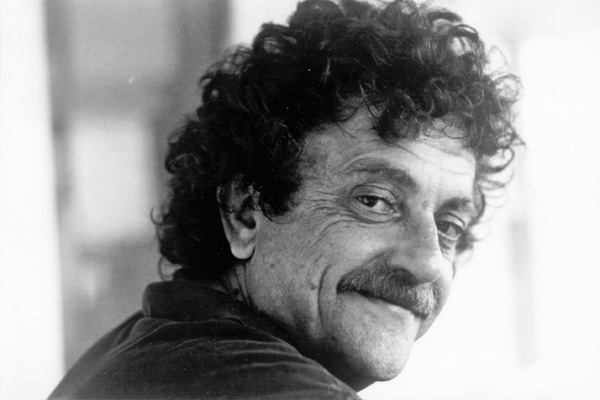
Vonnegut says
“Tiger got to hunt, bird got to fly;
Man got to sit and wonder 'why, why, why?'
Tiger got to sleep, bird got to land;
Man got to tell himself he understand.”

For us, the urge to theorize is very natural, but so is the urge to step back from theory into questioning and wondering. Both are parts of philosophizing. My wife is definitely more active in her approach to life and philosophy, and I am definitely more contemplative. That's OK.  At least that's how things seem to me, if you disagree, tell me about it, maybe we can hash through things together ...


Thursday, February 12, 2015

Skepticism and Hope

When I was a professional philosopher I was quite taken by Skepticism. One of the three main sources of my dissertation was the ancient Greek Skeptic, Sextus Empiricus. Zhuangzi, who I talked about last week, was among other things a skeptic. Sometimes today we use the word skepticism for people who disbelieve in God or ghosts or conspiracy theories or global warming or whatever. But the older use of the term is for people who don't have a belief yet one way or the the other, who are open, literally in Greek it means something like still-investigating. I thought, (and still think) of skepticism as an epistemic virtue, it's part of being a good knower, knowing what we can know, and knowing that there are limits to what we can know, to how certain we can be. It's related to honesty, it's about being honest about the limits of our evidence, about admitting when we are partly guessing, when we are proceeding “as if” something were true, but we know we aren't sure and we might be wrong. It's being humble about our powers to know.

But in my own life as someone struggling with suicide for years, and someone coming out to themselves and then others as trans, and as someone who talks to suicidal trans people regularly now, I'm more and more thinking of Skepticism as a moral virtue too, as something related to hope as well as related to honesty, or humility or being a good knower.

When I was suicidal, I “knew” that I was worthless, that my life did more harm than good to the world at large, that the world would be better off without me, that I would never again be of value, that my potential was all used up, spent on a gamble that didn't pay off. My heart told me those things over and over, and my brain believed them. But in my better moments, another part of my heart and brain fought against those certainties, balancing that argument out with arguments on the opposite side, and resting at some uncertainty, some suspension of beliefs, some irresolution. I couldn't see how I could ever be valuable, or happy again, but I had to admit that I didn't know the future, that my predictions had been wrong before, that I couldn't really be as certain as I was pretending to be. Maybe my future would suck, probably, but I couldn't really be certain. Maybe something will happen that you can't imagine now. Maybe, your situation will change only a little, but your mentality towards your situation will transform. Maybe you're wrong about some assumption somewhere in your train of reasoning, in your train of feeling. It wasn't hope exactly. Or at least it wasn't the sort of thing I've often seen portrayed as hope. It wasn't blowing sunshine up my ass, and it wasn't about positivity. It was a different kind of negativity. I'm limited and weak enough, that I cannot be sure of the dark certainties that I feel so sure of. It wasn't about having a positive attitude, it was about openness to possibilities I couldn't really imagine.

And, of course, for me, this worked. Your mileage may vary. I argued myself out of suicide time and time again, and I got slowly better. Eventually I discovered (literally dis-covering) that I had been repressing my gender issues, and that being more open about them to myself and eventually others was vastly more comfortable. I became happy, and in ways, that I literally failed to imagine when I was at my worst. And again, giving up an assumption that I thought I knew (that I was male), was a key part of the psychological process for me.

One of the trans people I talked to today was very near the end of her rope. Obviously, I don't want to disrespect her privacy by saying much about her, but it's fair to say she'd had a surprisingly rough couple of years. She'd heard most of the lines of thought on suicide before, from friends, family, or therapists. I certainly wasn't trying to argue with her in anything like the philosophical sense, and I certainly didn't want to present false hope. But one of the things I said to her has stuck with me today. I said “Two years ago, could you have imagined that you would be where you are now?” And she was very much, no way, not at all, the things that have happened to me I couldn't have believed or imagined until they happened. “Ok, then realize that two years from now, you could be happy again, somehow. I don't know how, and I'm not saying it's certain, or easy. Just that it's possible. It feels like there are no possibilities anymore, for you, I know. But we just don't know the future.” Sometimes life surprises us. It can be terrible, horrible surprises. But it can be slow, wonderful, healing surprises too.  People that become disabled through injury or disease, sometimes find that after a hard period where everything is very difficult, they actually get to a point where they are happier than they were before the injury, whereas people who win the lottery often find that after an initial period of increased happiness, they wind up less happy than before the event.  Happiness as it plays out in actual human lives is complex and often mysterious or paradoxical.  You just don't know how you will be two years from now, or five or whatever, if you can survive that long.  If you have faith, well, that's one way to spin it. And the theological virtue of faith is the traditional precursor to hope, and then, love in the Christian tradition. But doubt, skepticism, those are ways to spin it too. We just can't really know that things are as hopeless as we can think we know they are. Skepticism, as a purely epistemic virtue, preaches non-hopelessness as a moral virtue. It isn't quite the same thing as actual hope, I'll admit. But it is a kind of substitute for hope when hope is hard to find.

"Come, dream a dream with me; come dream a dream with me; come dream a dream with me; that I might know your mind;
And I'll give you hope, when hope is hard to find; and I'll bring a song of love, and a rose in the winter time."
From the UU hymn "Come Sing a Song" that I used to sing all the time.

If it all seems meaningless or pointless, well, OK, it seems that way to you, fair enough. But you can't really KNOW that it is meaningless or pointless. Maybe the meaning will emerge later. Or maybe it is meaningless after all. But proper skepticism can pry open the space for the possibility of meaning, the possibility of hope, in a heart or mind that is all but closed off to these possibilities.


That is it, that is my philosophical plea, leave a little space in your heart and mind for possibilities that you can't really comprehend, even hopeful happy ones.

Friday, February 6, 2015

Zhuangzi and my Gender Identity

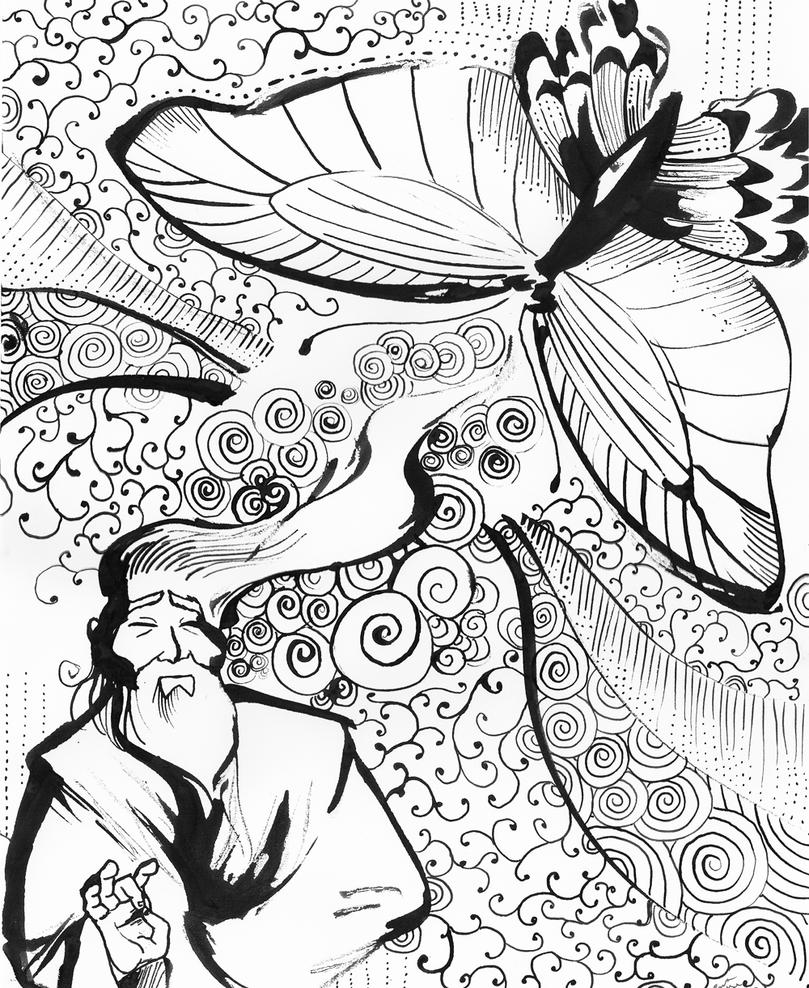
I often turn to ancient Chinese philosophy to try to make sense of things. It's odd for a white, Midwesterner who doesn't speak Chinese, I know, but it is true. (In fairness, I use Greeks, and Frenchmen, and old professors too).  Here's a classic example of me turning to the Ancient Chinese thinkers. So yesterday, I was thinking about Zhuangzi's most famous parable (he's an ancient Daoist I like, whose writing style involved lots of bizarre parables). In his “butterfly dream,” Zhuangzi dreams he is a butterfly, and on waking is uncertain whether he “really is” Zhuangzi who dreamed he was a butterfly, or “really is” a butterfly, who is currently dreaming that he is Zhuangzi. So let's switch things up a bit, but still basically plagiarize Zhuangzi ...
“On many occasions, I, Dr. Morton, dreamt I was a woman, living my life as a woman. I was conscious only of my happiness as a woman, unaware that I was male. And soon I awaked, and there I was, male. Then later, I realized that I did not know whether I was a man dreaming I was a woman, or a woman dreaming I was a man. Between male self and female self there was such a distinction. This is called the transformation of things.”


Now first note, at the level of ontology, this is not all all how we usually use the notion of transformation. No physical thing has changed here, rather we have an uncertainty of perspectives. We are shifting between two different interpretations of self, and in a sense between two whole worlds, rather than watching a change within one perspective or interpretation or world. It is that one's assumptions have come unmoored, and things that previously seemed impossible, or not even thinkable enough to bother rejecting as impossible, suddenly seem possible. I have an old argument about free will somewhere that works just like this. But my early bits gender transition fit this picture well too. I “knew” that I was male (albeit barely so), but there were all these opposing bits of data that I just wouldn't or couldn't take seriously, or frame into an opposing account. And then, I framed the account, and the “knowing” dropped away, and suddenly things had been transformed, because I stood between two accounts, that seemed so distinct, and yet could not both be so. Maybe I was a man who routinely dreamed of being a woman, or maybe I was not a man, but routinely worked to convince myself that I was. How would one go about deciding an issue like that, once it has become plausible enough to be entertained? How do you know you aren't a butterfly dreaming that you are a human? Well, obviously, most people prevent this worry by never really allowing it as a possibility worth serious consideration in the first place. But once you do allow it, what then? Similarly, for me, for so long, I just refused to entertain the possibility, but once I had, I had no further defenses … And once the two possibilities, I'm a man who dreams regularly of being a woman vs I'm a non-man regularly working to pretend to myself that I'm a man – stood together epistemically roughly equal, I quickly knew which I wanted to be true ...

But that is not really the main thrust of Zhaungzi's thought on the matter, even in that chapter, book 2 of Zhuangzi, entitled “The Evening Out Of All Things.” He makes a lot of points about epistemology, and logic, and mysticism there. But one reflects where I wound up on the gender stuff with a couple more years of work and reflection. This is a passage I've come back to, many times over the years. I've recently re-read at least 10 different translations of it, here is my own translation (heavily dependent on Sarah Snyder's translation, and careful word by word 'trot' and analysis, in "Science of Myself", but also many other translations and my own opinions and understandings.)

“There is no being that is not 'that.' There is no being that is not 'this.' From 'that' standpoint we cannot see, but from the standpoint of knowing oneself, one can know. Therefore it is said 'that' comes from 'this,' and 'this' comes from 'that' – which means 'that' and 'this' gives birth to one another. And so with life then death, and death then life. And so with possible then impossible, and impossible then possible. 'This' causes what is uncaused, and what is uncaused causes 'this.' Thus, by means of the sage shedding the light of heaven, 'this' is not the cause, and also is the cause. 'This' is also 'that,' and 'that' is also 'this.' 'That' is also one that 'this' is not, 'this' is also one that 'that' is not. Is the result that 'that' and 'this' are in the same place? Really? Is the result that 'that' and 'this” are not in the same place? Really? When 'this' and 'that' are not incautiously taken as opposites, this is called the pivot of the Dao. At the pivot of the Dao, only then do we attain the center of the ring, where one is not impoverished by what must be so. 'This' also does not exhaust the whole, 'not' also does not exhaust the whole. Consequently, we do not use a limited perspective when we seek to shed light on a topic."

There is an epistemic/mystical place, where traditional opposites no longer stand in opposition. And this is different from the moment of transformation in opposition (as in the first passage), or from an opposition where the tension is being held and used for some useful purpose (as in Heraclitus' notion of opposing coherence). Rather yes and no, no longer “stand against each other,” they seem complementary, or aspects of a whole. It's also not that 'this' and 'that' merge, or lose all distinction, or disappear into a mystical Monism. Rather the distinction between 'this' and 'that' ceases to be a source of “exhaustion” or “impoverishment,”- the situation is “rich” enough to allow different and distinct accounts to have space to be. In gender, my male-self and female-self do not merge fully, or stand in some transcendent unity - but rather both stand together as different and distinct as they are united or blurred - but as elements of a vaster richness, elements in a coincidentia oppositorum. Nor am I holding the two under tension to use the power of the frission, the two stand distinct/non-distinct as they are testifying to the case, rather than working as an engine of becoming.

So I say genderqueer and androgyne and non-binary, rather than male or female. And I don't mean epicene as in unisex, and I don't mean not-any-of-either-male-or-female, and I don't mean actively alternating, or paradoxically-fused, or a simple unity of the two, or transcending the categories of male and female entirely. I mean sitting in a wide lavish ring of wealthy selfness, where Brian and Patricia are present, and no one account is vast enough to account for both together, but I say “BP” as a symbol of this being-together-within-myself.  I mean Anekantavada in Daoist drag, dancing to some crazy Heideggerian euro-pop or something.


And so I remain, as I long have been, a connoisseur of many extremely fine grades of beyond-binaryness.

Wednesday, January 28, 2015

Transitioning, Fitness and My Motivation Problems

My wife talks a lot about fitness. She has a whole awesome blog on it here
I don't talk about it much, because …
I'm embarrassed.
I listen to trans-people every day with far bigger problems than the ones I'm having.
I don't want to be a whiner, or to feel like I'm complaining about the wrong things.
But after I broke down crying in the gym last week, one of the things that really helped was reading a trans-lady marathoner's blog post of how transition impacted her fitness regime, so I guess I feel I ought to add my voice, if I can.

I'm looking at the race results of a little local 5K I ran in April. The top 10 runners are all male. The fastest man, beat the fastest woman by over 4 minutes (an both beat me by over 14m). And in general, the males ran a lot faster than the females. I haven't been to a local weightlifting competition yet, and I can't find a posting of results. But suffice it to say, again, the males lifted a lot more than the females. This is not an anomaly.
Why?
Testosterone.
Testosterone gives people with male-style hormone profiles a HUGE advantage over folks with more female-style hormone profiles in the muscle building (and maintaining) category. And consequently in cardio-vascular endurance. And in running speed. And in lifting. And in lots of physical athletics issues. Don't get me wrong, there are plenty of women who are strong, fast, fit, skilled etc. Far fitter than me. I have run zero marathons in my life. Like most things on gender there are two largely overlapping bell curves, and hard work, or smart work, can definitely effect where you are on them. But we very rarely have females directly compete with males, because that turns out not to go well for the women and girls. Unfortunately, when the “male” you are competing against is your own self a few months ago … well that can get tricky, psychologically...

A woman can lift weights and not need to worry about getting “bulky” because at female levels of testosterone it is very hard to get bulky. You'll build muscle, get fitter, get many health benefits, but you won't get “bulky” (unless you are very specifically trying to get bulky and work your ass off). But the down side is that if you are on a feminizing hormone regime, you are going to slowly, steadily lose muscle for a while, while your body is adjusting and that is going to have a lot of effects.

I knew all this, intellectually, before I started hormones. Frankly, several of the problems I'd worried about with transition, when I started, haven't really materialized. People have remained remarkably polite to me even while I've been visibly in transition, for instance, which is not the experience many trans people have. But I have been surprised how much the slow steady declines in my speed, strength, and endurance have ground me down. I think the issue is not the declines themselves, there is a sense in which I don't really care how fast or strong I am. I'm not really competitive, even at the local level. Rather, my slow steady declines have messed with my motivations for working out, and with the psychology segment of my fitness regime.

Ok background ...
I was a runner back in the day, sorta, barely eeking out my High School letter in cross-country. Running was a nice chance to think and be outdoors and push myself. I was always running against myself. I knew I had no hope of really competing against the other runners, but hey self-improvement was the whole point any way, right? Mens sana in corpore sano, and all that, right? When I was a professor, I walked several miles to and from work each day. I'd organize my thoughts, have some alone time, but I still got got a decent bit of exercise. But as a housewife, for the last several years, I rarely exercised much at all. In 2013 I tried to get back into running, and managed to jog occasionally, but irregularly and without any plan, and it got pre-empted more and more as my schedule got crunched.

I decided 2014 was going to be different. I asked for and got a new jogging jacket for my birthday in Feb 2014, so I could start jogging early in the season and get into good habits. I was actually kinda excited to get back into a real regime. I had joined Fitocracy and interacted with people far more serious than I, but also with regular Joes and Janes trying to get back into fitness like myself. I saw a lot of motivational memes. I exercised 3 hours a week mid Feb-May, and in June my wife convinced me to start in the gym too. From June until now I ran/walked 4 times a week for 45-60min in the park, and did 2 hour-longish sessions with weights at the YMCA. (OK the outdoor stuff got cut for cold weather a lot in the winter). It was by far the most exercise I'd had since high school. In several ways my diet improved too, and it was already not too shabby. Like my wife, I slowly steadily lost weight from Feb to August. I seem to have lost fat. My times and lifts were slowly improving. I was enjoying it, and optimistic. Things were looking up. I looked forward to working out, and was pretty well motivated in my average non-athlete sorta way.

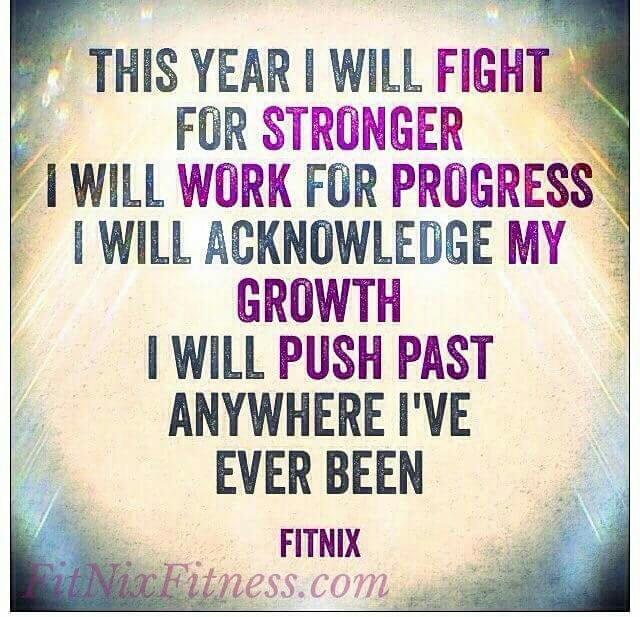
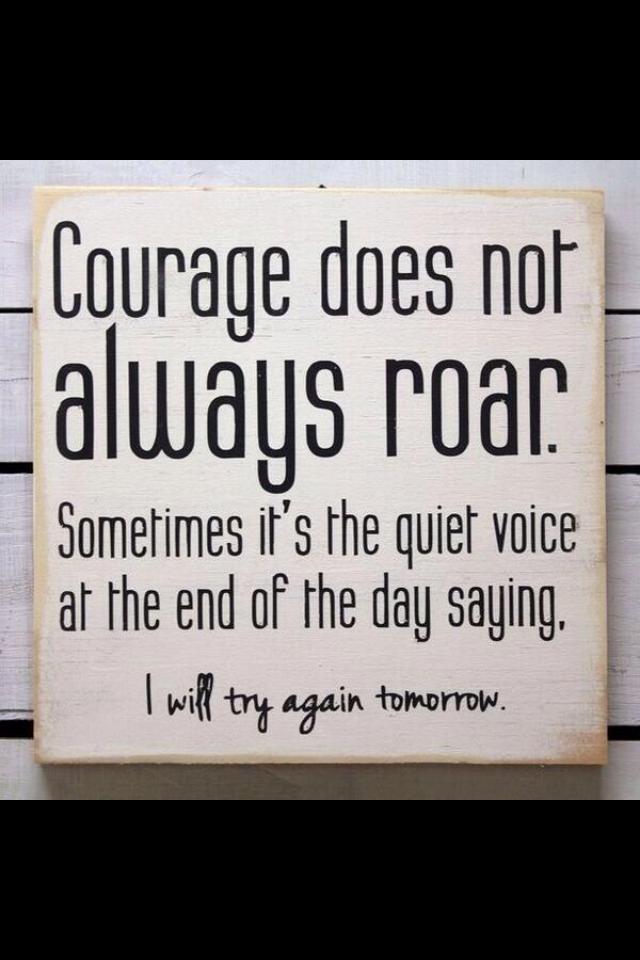
Fairly typical Fitocracy motivational meme ...


Then from late August until early Jan 2014 it all reversed. I slowly began to put back all my weight. I put back on fat. My speeds slowed. My endurance declined. My strength deteriorated. I got slowly steadily weaker and slower and more ragged. Running and weightlifting became discouraging rather than uplifting. The fight to get dinner made after I was done my workouts became more and more awful. Pleasant exhaustion had been replaced by simple dog-tiredness. It seemed like I was eating more too. I was demoralized in the gym or park, and especially when I faced the scale. I'd gotten two new high-end workout outfits as gifts for Christmas from people who wanted to encourage me. I like wearing those and they certainly gave me something to look forward to in early Jan, but by mid Jan I was pretty down. Twice I gave up in the middle of routines I'd been OK with a few months earlier. And when a well-meaning gym patron tried to correct my form on a lift I'd only done a couple times, and I couldn't understand what I was doing wrong, I stiff upper-lipped it until she was gone, then went to a corner and lost it crying.
What the fuck happened?
I was doing so well …
My wife is chugging along, diligently making slow steady progress and I was too, until I wasn't and my continuing diligence in the gym and park wasn't making any difference.
Why was I bothering?
Why was I wasting my time with this crap?
I'll never have a body like these other folks in the gym … I can't even maintain the little progress I made in 2014 … this is already the longest I've maintained a real regime since high school ... give up … give up ...

* * *
So what happened? - Lots of spironolactone (a testosterone-blocker), that's what happened.
I started HRT in April, and loved it right from the first. My doc started me on low doses which helped my dysphoria, but body changes were slower. He slowly upped the doses, and my spiro dose went way up in late August. And that means my testosterone went way down. My tests this month show I have on the low side of female normal levels of testosterone now, although my body is still adjusting. I like my breast growth. I like being on HRT pretty much all the time, except that a little part of me is beginning to resent it when running or lifting. Like many people, my appetite went up a bit, as my estrogen levels went up. Not hugely but noticeably. (I've also totally craved and eaten a LOT more pickles than ever before in my life, too, I don't know if that's hormonal or not, not that pickles are high calorie). So I have to fight against my appetite often now, to stay within my macros, whereas before, my appetite rarely bade me to eat more than I should. Similarly the estrogen/testosterone balance shifting probably means my BMI is going up (I have a the calipers, but they're actually pretty hard to get accurate readings with, at least for us, similarly the online body fat estimator calculation results seem to vary erratically from month to month for me). As I lose muscle and gain fat my body spends fewer calories on daily activity apart from workouts.

Continuing to work out regularly probably IS good for me on many fronts, even during transition. Its probably helping delay my pre-diabetes from converting to full blown diabetes. Working out is probably slowing my muscle loss. I'd probably gain even more weight, and lose even more endurance, if I wasn't keeping up with my workouts. I know that intellectually.

But at the level of daily motivation …

I'm sure that part of what helps Robyn keep being so awesome in the gym and at the table, is the regular feedback of progress. We were taught, and agree, that you should measure in lots of different ways, so we weigh ourselves a fair bit (here's R's discussion of that), and measure our bodies with tape measures once a month. And track our lifts and run times. That way if you plateau for a while in one dimension, maybe you'll see progress in a different dimension. If you don't make much progress on weight this month, well, maybe you PRed on deadlifts, or your waist improved a little, or … And as she agrees, one of the psychologically transformative things about weightlifting for her, has been that for the first time her mind is focused on being “more”(stronger), rather than being “less” (in weight) while working out. And for her, like many women, that makes all the difference.

But notice the refrain, “progress” “personal record” “competing against yourself” “being more” …
For the last 6 months I've seen slow steady regress, personal decline on almost all the metrics I'm tracking, despite lots of diligent work. I just can't compete with myself from a few months ago. When my wife has to try to decide whether or not to add 5lb to this lift, or 10lb to that lift, I have to decide whether or not to go down. And I resist going down, which means I get more and more exhausted even with routines that I could do a month ago, and my form gets more and more ragged …

Eventually, I will “bottom out,” my body will be adjusted to having a female hormone profile and I'll probably start making gains again. There are plenty of women with comparable hormone profiles in far better shape than me.  Then I can compete only against my own female-hormoned self, and try to ignore my PRs from the days of testosterone.  If I can stick with it that long. The trick is just finding ways to motivate myself until then. It may well be another full year of no progress.  As Dick Talens argues, even 2 months without perceived progress often causes someone to quit, if they don't already have a lot of faith in the process they are using.

The hard truth is that psychology is one of the most important part of your fitness regime. Your diet and exercise are not going to be good consistently or long-term without a lot of psychological back up. And many, many things in our culture undermine good psychology of fitness. I've seen many people undermined on the diet and exercise front by stupid theories about how willpower works that our culture keeps trying to promote for example. And like diet and exercise, your fitness psychology strategies need to be tailored to you, there is no one-size-fits-all psychology of fitness that is going to work well for everyone.

I don't really know how I am going to craft a good psychological regime for fitness for myself yet. A lot of the standard advice just doesn't seem to work for me, or to be actively counter-productive. There are definitely things I like. My body IS looking better. My fat is shifting in ways I like. It is hard to know how much is the hormones and how much is the gym work. And there aren't good metrics here. Similarly, maybe my gym work means I'm losing less muscle than I otherwise would, but we don't have good estimates for “normal” muscle loss during feminizing transition, except that it definitely seems to happen, and theoretically ought to happen. Again I don't know how to craft a metric there. I don't know good ways to give myself little psychological bennies for when I do well in the gym. It's hard even to know what counts as doing well for me. Everyone ages, and learning not to compete against your younger self is a lesson many folks have to learn in their 40s. It's just usually not learning not compete against yourself from a few months ago. I'm sure people on chemo, or other extreme health interventions often face similar declines, but I haven't talked with any to see how they coped with staying motivated in the gym through those sorts of issues.


So I don't really have answers, and I don't really want to whinge. But I want other folks going through feminizing hormone transition to know that they aren't alone, if this kind of thing is frustrating or demoralizing them too. It is difficult to keep working hard long term with consistent negative feedback. It just is.
Also, a fairly typical Fitocracy meme ...

Saturday, January 17, 2015

"It's Just A Phase"

One of the things that contributes to the erasing and writing-off of bisexual folks is the idea that bisexuality is “just a phase.” The hard truth is that often it is. Personally, I fully believe that bisexuality is often NOT just a phase, and I know a number on long-term bisexuals that I fully expect to still think of themselves as bisexual in ten years. But I've also known people who thought of themselves as bisexual, and called themselves bisexual, for a period of time, before finally admitting to themselves and others that they were really gay or lesbian. Especially for gay or lesbian folk who went through that process themselves and remember the torn feelings, the self-repression, the internal compromises that you try your best to ignore, it can be hard not to project your own experience onto others.

A similar thing happens with trans folk, and in particular happened to me, maybe it still is. I don't think so. But maybe. I currently think of my self as non-binary – I'm a trans person but not exactly a man or a woman. But I've gone through a lot of phases of self-understanding in my own life, and I know several trans-women who went through a phase of thinking of themselves as genderqueer, before finally admitting to themselves that they were trans-women. I'd bet that's pretty common for trans-men too, although none of my close trans-male friends have told me personal stories to that effect.

So I want to be kind towards “phases.” We're stumbling through our lives trying to make sense of a very complex world, and often very complex selves too. It's one thing to knowingly mislead the people around you about who you are, it's another thing to make your best guess and be wrong, or not have the right words or concepts to explain, or to be afraid of the truth, or to be honest but not as fully disclosive about details of history as someone might like. I can be pretty narcissistically introspective on my own blog if I want, but I don't want every casual social interaction to start with an essay from me about myself.

But in this introspective essay, I want to explore my history, and shed light on some ways of framing identity, but showing some of the many ways I've tried to frame my own. Some trans-folk know who and what they are from the get-go and their struggle is about getting other people to believe them and accept them. Not me. I was full of doubts and confusions, with long periods of denial and self-repression thrown in. My story is about coming out to myself in fits and starts. Trying to find the concepts and possibilities I need to make sense of my self and become comfortable with myself. There are lots of narratives out there for the sure-of-yourself struggles of trans-folk, but I've read precious few from the doubters, wafflers, navel-gazers, and phase-trippers like myself. So I want to talk about some identities that I've claimed for a time but ultimately abandoned: I've considered myself “some other kind of male,” a “crossdreamer,” a "crossdresser,” “bigender,” and “genderfluid.”

“Some other kind of male” - That was my first way of making sense of myself to myself. I knew from very early on that I was not like other boys – somehow - and that male and not-male were at war within me – somehow. This was especially obvious to me when I had to engage in all-male activities like Little League or Boy Scouts. Seeing how my brother interacted with other boys made it pretty clear too. I'm pretty sure I understood this about myself in elementary, junior high, and high school, but I'm not sure I could articulate it much. I wasn't particularly feminine either. And it wasn't clear to me then how different this was from run-of-the-mill alienation which I certainly also had, especially by the time I was a mopey, poetry-writing, black-wearing teen. I don't think it ever occurred to me to try to hide it, any more than I tried to explain it though. Whatever it was, was often confused with me being gay, and I was pretty keen to insist I wasn't gay not-that-there's-anything-wrong-with-that-other-than-girls-I'm-interested-in-giving-up-on-me. I'm not sure it ever occurred to me to try to figure out why so many other people thought I was gay, even when they didn't mean that as an insult.

By college and later grad school, though, I could get pretty articulate about my sense that I was some other kind of male than the regular kind of male. I talked about “counter-masculinity” and “Masculinism” as a counter-part to Feminism, aimed at reforming and improving the male gender role in many of the ways that 2nd wave Feminism had worked to improve the female gender role from within, as a lived experience. I theorized that Nerddom was a kind of nascent attempt to create an alternate model of masculinity that could compete with the more standard sports-business-war picture of masculinity. I talked about beta-masculinity as a alternate strategy to everyone trying to be an “alpha male” whether they were or not. I tried talking about this with others a couple of times, but it never went well, so I settled into a neither-hide-nor-disclose habit about how I thought about myself.

I now think that the whole project of trying to be “some other kind of male” was pretty much doomed for multiple reasons. Masculinity, even its cultural expressions in our culture, were never really as monolithic as it felt to me. There were always many ways to be male. The nerd and the jock, did it differently, as did the blue collar construction worker and the millionaire, or the soldier and the activist. But these were all masculinity. Counter-masculinity just wasn't going to work, it would always be sucked back in as one more way to be male. Sure, the masculine gender role in our culture certainly has a bunch of fucked up aspects that need to be reformed, and introspective discussions about this by men and to men (in some updated and masculine version of the Feminist encounter groups of the 50s and 60s, the Good Men Project springs to mind), are probably even the way to do it, but it wouldn't amount to a counter-masculinity. Similarly, the project of trying to be a dandy or a bear, for instance, make sense, but they aren't going to accomplish what I'd hoped. For nerddom, in particular, it is entirely possible, even common to be a nerd girl. There are a variety of forms of gender bias, and frankly misogyny within nerd culture, but nerdery itself isn't really male or female – masculine or feminine. Similarly, “some other kind of male” just wasn't going to cut it for me personally as a way to do justice to how I felt and what I wanted to be. It was a public story that wasn't a lie, but it also wasn't emotionally workable for me. And there is probably a reason I never met anyone else who thought about themselves in these terms. I think I even dimly understood this by my 30s even if I didn't have a new narrative to replace it until 2012. Still at over 20 years, that's quite a phase ...

“Crossdreamer” - I never actually self-identified as a crossdreamer, by the time I'd heard the word, I'd already moved on. But instantly upon first hearing the term I knew it was the perfect way to express what I was for most of my life, even if I hadn't realized it. I eventually met a bunch of other people in this boat too, and they tend not to get talked about in discussions of trans, and gender and identity and such. By the time I was in junior high, and for the rest of my life I regularly and seriously fantasized about being female. It wasn't even usually sexual (although that happened too, especially later on). I'd just lead these imaginary lives where I was a woman or girl. I'd role play women. I'd play female characters in video games. I'd daydream about being transformed into a woman by a genie, or maybe aliens, or … Always the fantasies had a major fantastic or science-fictiony component. A curse, a wish, time-travelers, witches, mysterious portals, brain-body swaps, and so on. I remember a movie I saw as a kid, about a girl, who at puberty developed some kind of medical condition that turned her into a boy, and her parents moved her to another school and encouraged her to adopt a male name and persona and try again (probably 5-alpha-reductase deficiency although I didn't know that then). But it was portrayed in the film as a real thing that rarely really does happen rather than a fantasy. I used to wish there was a male to female version and I'd get it. I usually wished to be female when I blew out my birthday candles, and definitely tried to kiss my elbow a couple times.

But, importantly, it didn't really spillover into anything realistic. I never thought it could really happen. It never seemed like a plan or a goal. I tried crossdressing as a kid once or twice (and didn't get caught, as an adult, my mother admitted that she never suspected me). But my youthful crossdressing was extremely disheartening. The clothes didn't fit. I had no skill. I couldn't make myself look female even to myself. It just emphasized how male I was, like it or not, how impossible of a dream it was to ever be female.

I don't even think I knew that transsexuality was a thing that happens, until college, and then I was fascinated by it, and intersex, and cultures with 3rd genders. But I had no concept of a broader notion of “transgender” and the stuff I could find on transsexuals was all very gatekeepery and academic. I came to believe that MtF transsexuals believed they already WERE females, and simply wanted to bring their bodies into line, whereas I knew I was somehow male (and not-male too somehow), but WANTED to be female. And that seemed like the critical difference, so that path was closed off to me too. In my fantasies I could be what I wanted, but I couldn't imagine I could ever pull it off in real life. It felt childish and stupid to want what I could never have, but that didn't make me stop wanting it. I didn't talk about it to others much, beyond “I just like playing female characters” or maybe a little more detail to my wife, and didn't meet anyone who seemed like me in this respect until my late 30s.

Also, I frequently just WAS female in my dreams. Not all the time, but often. In my fantasies or daydreams I needed a transformation sequence, an explanation for how this came about. But in my actual dream-dreams it was usually just fait accompli, the dream just began with me already female in the same way that I was already obligated to explore this haunted house, or give this presentation without any preparation, or whatever. And if I managed to lucid dream (and wasn't already female) the first thing I always did was find a mirror and turn myself female. Heck, I practiced and got pretty good at lucid dreaming so that I could do this.

In the month or so before I came out to myself as trans, I discovered an on-line community full of MtF crossdreamers (with a few crossdressers and trans-folk thrown into the mix). For the most part, they didn't think of themselves as trans, and didn't engage in crossdressing. Maybe at Halloween if they got up the courage, or something. Like me they didn't really think they could pull it off, or that it would be emotionally satisfying if they tried. For some people it was purely about masturbatory fantasies, but not for most. I know we were unintentionally transphobic sometimes, but I think the prevailing attitude was one of admiration for folks that were actually trying to transform in real life, not that we'd ever try that. For some, it was definitely a half-way house on the road to realizing that WE might be transgender, or gay, or crossdressers. I was not the first member of this community I saw finally breakdown their resistance and change their tune on this front. But I think some of these guys will probably remain crossdreamers without ever thinking of themselves as transgender, or gay, or really crossdressing for the rest of their lives. Heck I was a crossdreamer for over two decades, so phase almost isn't even the right word. Similarly, some crossdreamers had entirely unrealistic understandings of what it was like to be a woman, and no interest in correcting them, but by and large the crossdreamers respected and admired women, and were trying to get a more complete understanding of them. For some, the imaginary transformation into a woman was largely a mechanism to be able to fantasize about doing sexual things with men without having to think of oneself as gay, but usually there was far more attention on the newly feminized self and life than there was on any partners one might have. Maybe there are FtM crossdreamers like this, I don't know, no one has ever described that to me. There were occasional bits of pop culture that appealed to the crossdreamers, moments of transformation, or explorations of it. Stardust has a scene where a regular Joe gets turned into an innkeeper's daughter by an evil witch, for example. Or the infamous girdle of sex change in D&D. There were a bunch of webcomics that explored this kinds of crossing dream too. One, El Goonish Shive, has a character that at one point gets magically split into male and female versions of himself, who both continue to have lives. Once I saw that, many of my fantasies involved being split into a male and female rather than mere being transformed into a female, so that I could continue with my male duties (as husband, father, and breadwinner), while also being able to lead a female life as well. I knew it was impossible, but that's what fantasies are for, right?

Was it all about repressed internalized homophobia or transphobia? Er … there was sometimes an element of that, but I don't think that was usually the main note. Similarly there are some unkind theories out there about autogynephilia, and there was certainly a grain of truth to that approach, but again it doesn't seem like the main note. In my mind, I just wanted to be female, and didn't think it could ever happen in real life, but I couldn't stop thinking about it either. So “dreaming” was what I could accomplish ...

Julie Serrano, a trans-woman who wrote an interesting gender theory book called “Whipping Girl” theorizes that we have a subconscious gender as well as a conscious one, and that our gender identity is best understood as the result of these two factors combining. For most people the subconscious gender is going to match the conscious, the body, and social role and such well, and you are barely going to notice the many layers of your gender identity. But for transsexuals, the subconscious gender is so strong that it convinces the conscious gender to be strongly at odds with the body and social role, until one can transform the body and social role to better fit with the gender identity. For me, it sorta seems as if, my subconscious femininity, and my conscious masculinity fought and fought, with my conscious (and it's allies, everybody else) getting the upper hand but not definitively winning, and they couldn't figure anyway to compromise or work together, so I lived a fairly male life consciously, and lived a variety of fragments of female lives in places where my subconscious was most powerful, my dreams and daydreams.

At Least a Crossdresser” - There came a point where I realized that all my fantasies were about living a female life, and maybe I'd better face that and think about why … And my fantasies started having realistic components. I'd go through a portal to another world and have adventures in a female body, but at last make it back home only to be trapped back in my male body again, and then decide to initial real-world transition. Or my tangles with horrors from another dimension would break my mind, leaving me with multiple personality disorder, and I'd re-integrate, but with my Trisha personality in charge instead of my Brian personality and begin realistic transition. Or I'd witness a mob hit, go into witness protection, and be forced by the FBI to crossdress, you know, for my own safety … or … And there came a moment when I realized I was going to give crossdressing in the real world another try …

In my second year of college, the Fantasy Club (the role-players) convinced me to be their entry for the “CinderFella – Crossdress Beauty Pagent” part of the homecoming activities that year. Unlike my own early attempts, this time I had two actual women helping me with clothes and make-up and such, and that made all the difference. I played it for camp, and won. Second place was the only other person I knew, and he played it “straight” and was the only contestant that would have passed. I enjoyed the experience immensely even though I envied 2nd place. Disturbingly so, on both fronts. After a little soul searching, I decide to lock all thoughts of crossdressing or wanting to be female into a box in the back of my head labelled “never open this or look in here, or it will destroy any career you might have.” My subconscious femininity leaked out in a variety of ways anyway over the years, and it didn't really stop or slow down my crossdreaming, but the idea of doing anything about it in real life was terrifying for a long time. By the spring of 2012 my career had ended anyway, and so I looked in the box, and recovered a bunch of my memories, and started to process what I found.
From August 2012 to Oct 2012 I thought of myself as a crossdresser, or rather as “at least a crossdresser,” I already suspected that I was ultimately going to think of myself as something “farther down the path.” But I started dressing in female clothes in private, and this satisfied something in myself that hadn't been satisfied before.  In late July I'd had this “trans-epiphany” moment, where I realize that I didn't really think of myself as fully male anymore, and probably never would again. But what kind of trans? How was that going to work? I had no clue. But I was pretty sure that occasional crossdressing was a minimum requirement for me. I could imagine a life where I acted male in public without really feeling it, and every now and then got a chance to dress and act femininely in private and let my Trisha side out. Maybe that would be enough. I wasn't sure how to make being trans actually work in my life. I was afraid to give up my masculine side completely.
Dressing in women's clothes wasn't really about the clothes, or the frission, or the rebellion to me, it was about “being” feminine, about letting my “Trisha side” out. I also never thought of myself in terms of drag. I wasn't performing, and didn't want to exaggerate. I wanted to be feminine while also being myself. I suppose that, that time back in college, I was technically doing “drag” - it was a performance, and I was exaggerating and parodying. But that was very much NOT what I got out of it. It was something else that sung to me and terrified me. Similarly, when I started thinking of myself as at least a crossdresser it fed something in me. Technically I had crossed over into mental illness at that point, the APA considered this “Transvestic Fetish Disorder” until 2013 (when they cleaned up this and several other diagnoses to be a little less transmisogynistic), the International Classification of Diseases put it better though, F64.1 – Dual Role-Transvestism “The individual wears clothes of the opposite sex in order to experience temporary membership in the opposite sex.” Turns out an “experience of temporary membership” was more satisfying than just a daydream, and contrary to what I'd believed for decades, it was achievable for me. (BTW, that's why crossdresser is a more polite term than transvestite, which in the US implies that you believe it is a mental health disorder rather than a healthy identity).

Bigender - In Oct 2012, I heard the term bigender for the first time, I met people who self-identified as bigender, who explained their experience to me, I found the web forum Bigender.net, and by the end of the month I was self-identifying as bigender myself. The idea is that you have two gender “modes” usually a boy-mode and a girl-mode, in my case I called them “Brian” and “Trisha.” If I wore feminine clothes but was stuck in boy-mode, I just felt like a guy in a dress, a bit awkward and embarrassed. But if I was in girl-mode it felt right and I experienced partial “temporary membership” in womanhood. Like many bigender people, I had some control of my modes, but not total control. Indeed the clothes were often powerful cues for shifting modes. Even if I “wasn't feeling it” maybe if I put on feminine clothes I would start feeling it. It wasn't just that I dressed as a female, when I was Trisha, I felt quite female. That “female trapped in a male body” cliché I'd read about often and never really felt before, I felt it when I was in girl-mode. And Trisha wasn't just more feminine than Brian, she was younger, less certain of herself, happier, freer, more tentative. As Trisha, I was at least as much girl as woman, and the contrast of feeling both 39 and 15 at the same time often struck me. I make it sound kinda like multiple personalities, and I wondered about that, but it really wasn't like that. I just don't have better ways to talk about it. Brian and Trisha were both me, I had the same memories, the same plans. They were like sides, or aspects, or filters. Various cues could make me “flip.” The smell of pipe tobacco always dragged me fully and quickly to Brian-mode, Trisha-mode always took a little longer to fully inhabit and came on a little more gradually. Often I'd hear a flip in the inflections of my voice, and know I'd changed modes that way, before the rest of my brain noticed the shift. If I was in Brian-mode, I wanted to be in male clothes and act in male ways. If I was in Trisha-mode I wanted to be in female clothes and act and interact in female ways. I COULD fake masculinity even in Trisha-mode, but it was unpleasant and I always wondered how much femininity seeped through despite my attempted fakery. I could interact with my spouse in either mode, but was quite shy around anyone else as Trisha. Brian and Trisha had separate emails for a while, and other kinds of web presence. For instance, Trisha had a Pinterest account, but as Brian I had zero interest in or patience for Pinterest.

When I began crossdressing I was trying something new after many years of denying myself that experience, and it led to a real shift in my self-identity. But I think bigender was probably a better term than crossdresser for me from as soon as I started, even though I didn't think about it that way for a few months. It wasn't how I dressed that was the critical bit, it was how I felt, what parts of me I was “letting out” and which parts were “locked up.” And the clothes were both a tool for manipulating that, and a reflection of the results of that.

Genderfluid - I know people that have lived as bigender for years, as a stable identity and way to live. But for me it was a phase. In the beginning Brian was very well defined, even set in his ways and stuck, wanting to get past himself, and Trisha was very tentative and fuzzy and coming-into-being, but the distinction between them was very clear. It was like my conscious gender-habits would occasionally step aside and allow my subconscious gender free rein to experiment. Over time, Trisha became stronger and surer of herself, but the boundaries between Brian and Trisha also got softer. In October 2012, I had two very clear modes, and very little in-between, maybe a few minutes while Trisha was coming to the surface. But by Jan 2013, being in an in-between state where Brian-mode and Trisha-mode were both partially activated was becoming common. My conscious gender and subconscious gender were reaching new and synthetic compromises how how gender identity was going to work. I had agreed to participate in a scientific study of bigenderism involving measuring hormone levels in saliva and performing psychological tasks on a computer, but I was finding it hard to get into a clear male or female mode, because the in-between state was becoming so common. I began discretely wearing female clothing under my male clothing. My signature changed to BP, which I knew stood for Brian Patricia rather than Brian Patrick, regardless of my birth certificate. I switched my gender on one of my discreet social media sites that had a lot of gender options to “Genderfluid.”

I understood “genderfluid” to mean almost the same thing as “bigender,” but to be slightly broader. It wasn't clear anymore that I had only two modes, male and female, a third mode in-between or mixed had gone from a trivial transition state, to being important in its own right. But I still had days when I felt very male, or days when I felt very female, and I still felt lots of periodic shifting in my identity.

Androgyne/Genderqueer/Non-Binary - Over 2013, I slowly began being in clear male and female states less often, and the mixed, in-between state became more common. I came to almost always wear a mix of male and female clothing. I begin introducing myself as BP in public. It became harder and harder to shut little feminine mannerisms out of my public interactions. I often wondered how much of my feminine side came through in day-to-day interactions even though I was trying hard to hide it (being not-out to the vast majority of people). I wound up coming out to more and more people, because it became more and more exhausting to suppress part of me for interactions. I thought of myself as BP, a fusion of Brian and Trisha, a fusion of male and female, thoroughly intermixed. At Thanksgiving I finally came out to my parents. I did it in person with a long private talk, but I'd written a detailed letter too, so that they could look over it later to process over time, or to include any little details I happened not to mention during the talk. In it I identify as “androgyne” and “genderqueer” but admit I am also “a little bit genderfluid.” The in-between, mixed gender state had come to feel like my home base, like who I am, and male and female had come to feel like occasional side trips. It feels like my conscious and subconscious have settled on an identity, and are now cooperating robustly on trying to get it to work in practice. I think of androgyne as an old-fashioned word, and genderqueer as a slightly politicized word, for basically the same thing, being in-between genders, or a mix of the genders, or both or neither, or a third gender that is somehow in-between or mixed or both or neither. I think of non-binary as a slightly broader term that include fluid and bigender folk too, but still means something other than a male or female and something other than a trans-male or trans-female.

Since coming out publicly, and starting feminizing hormones, both in early 2014 – I haven't really used much fluid or bigender talk, nor had many of those experiences. I don't “slosh around” significantly anymore. Paradoxically, being on feminizing hormones is making my whole “center of balance” shift slowly femme-ward (and is very psychologically satisfying in it's own right, I feel soooo much more comfortable in myself and my body on the feminizing hormones), but I don't feel nearly as “female” as I occasionally did in strong female-mode when I was bigender. I don't let my feminine side out anymore – rather, it is always out, but always not the full story at any given moment.


Trans-Woman?? - So in some sense I feel stable, I feel at rest. I'm OK with being genderqueer. My best guess is that being genderqueer is not going to be a phase for me, but a permanent state. But I'm also still in transition, and still on feminizing hormones. My body is continuing to shift. I fully believed that I would never “pass,” but I have once or twice now. Probably with another year or two of hormones I'll pass more often. I don't think of myself as a woman, even a trans-woman. I don't feel right claiming that term for myself (although I often defend it for others). But I'm getting ever closer. How do I know that genderqueer isn't one more phase for me, and in a few years I'll think of myself as a trans-woman and see my identity as a genderqueer as just one more phase on the path? I can't know for certain. But I honestly don't think that's what will happen. Maybe I'll even get past the “mid-line” to “almost-female.” Maybe one day it'll be easier to use she and her, than ze and hir. Already I use women's restrooms almost as often as I hold out for a gender-neutral restroom. Maybe I'll be more conventionally female in my social behaviors. But I think if I was going to think of myself as genuinely female it would already have happened. It still doesn't feel possible for me to be genuinely female – but feeling between-male-and-female seems vastly more possible, satisfying, and livable than I ever imagined it would, and that's where I am now.    

Tuesday, January 13, 2015

Who is BP?

I'm a non-binary transgender person in transition.  I'm a housewife and ex-philosophy professor.  I'm now volunteering at a national transgender focused charity.  I live in Terre Haute, IN, a medium Midwestern town that despite having several colleges isn't really a college town.  I'm 41, with a wonderful wife and 2 kids.  I'm a fan of webcomics, geekery, RPGs, LARPS, computer games, reading and poetry.  I cook a fair bit, and have been pretty active about running and weightlifting over the last year.  I'm religiously eclectic, politically cynical, and in classic GenX style have a taste for obscure 80s bands.  I'm a survivor of suicidal depression.  

I kinda hope all of that will come out in various ways over the course of this blog.

But let's unpack it a bit

Non-binary? -  I don't self-identify as a man or a woman.  I also like the old-fashioned word "androgyne."  The common current term "genderqueer" also works pretty well, although I'm a little less politically radical than many people who use that term, and I certainly only mean queer in the reclaiming sense rather than the using-an-offensive-term-like-an-asshole sense.  Current estimates are that about 1 person in 1000 is non-binary in gender, self-identifying as something other than male or female (more in cultures where it is very accepted like Hawai'i or India.)  The two main ways to wind-up non-binary are to be intersex or transgender, although most intersex and transgender people think of them selves as one of the binary genders, male or female.  But a sizable minority of us think of ourselves as something else.  In my case, I'm transgender and think of myself as somewhere in-between male and female, although third gender talk is fine for me too.  My preferred pronouns are ze and hir, although I know those are odd and rare, and in practice I take he, him, she, and her just fine.  Please don't call me Mr. or sir though.  I've suspected I wasn't exactly male for most of my life, but I didn't think I was exactly female either, and I didn't really think I had any options.  So I did my best to be sorta-male or almost-male or barely-male or whatever. I questioned whether I was a transsexual in college, but had a very narrow view of what that was like (based largely on gatekeepery books I found in the college library), and concluded I wasn't. I tried to keep my gender issues locked up tight in the back of my head for many years, although they leaked out in weird ways anyway. A few years ago I finally faced them, let them out of the locked box, and came out to myself as transgender. I tried to figure out exactly what that meant, and what it meant for me, and discovered that contrary to what I read in college there are many different ways to be transgender.  I experimented with several of them to see if they felt like the "fit" me.  In the Spring of 2014, I came out publicly as trans and non-binary, and began feminizing HRT, which has helped me immensely. I doubt I'll ever really think of myself as a woman, but I'm hopeful I'll get pretty close and live as a near-female, much as I lived as a near-male for decades. Since that's all a pretty rare and frankly interesting situation, I imagine I'll wind up talking about various aspects of it a lot on this blog.

Housewife? - I'm an unemployed at-home person. I use gender-neutral language for almost everything about myself, but the two big exceptions are that I describe my job as “housewife” and my kids can call me “Dad” as long as they want to (I hope the day will come when they don't want to anymore, but that day is not today). My wonderful, smart, fascinating wife, Robyn, works full time at the White VioletCenter for Eco-Justice, a crazy organic farm/alpaca farm/fiber art collective/environmentalism education center/etc. ministry owned by a wonderful sisterhood of Catholic religious women (roughly nuns). She appeared on TV this morning to speak about her upcoming class on the spirituality of bread baking, and she's guest lecturing on the role of religion in the environmentalist movement for a friend's class at the local college in a few weeks. She was probably juggling budget spreadsheets and working on refining her internship program today. That's the kind of life she leads. I take lead in taking care of our kids (two boys age 12 and 10), cook, clean, run errands, and all the standard housewifey things. I was pretty lousy at it when I started being full-time "at home" 5 years ago, but I'm getting better at it every year.

Ex-Philosophy Professor? - Yup, I have a Ph. D. in Philosophy and I've taught at a number of colleges across the US. Never got tenure though. My major interests revolved around religion and logic. I was especially interested in mystical traditions and non-standard logical systems, but I certainly dabbled in many different issues in philosophy. It has been suggested to me that my long interest in logics with contradictory values, or non-bivalent values, or other weird features may have been a reflection of my subconscious knowledge that I didn't fit into the categories of male or female in the usual ways, but was somehow neither, or both, or a contradictory combination of the two. Yeah, I suppose that's possible.  Odd to think of something as abstract as logic, and as personal as gender interacting in such an intimate way, but that's my life, I guess.

Volunteer? - I spend 10-15 hours a week volunteering for an organization called the TransLifeline – a crisis hotline for trans people by trans people. If you're trans and thinking about suicide give us a call. You'll get to talk to another trans person who can probably relate to some extent. Or if you're just freaking out and have questions. Or you've just been kicked out of your house. Sometimes we can help you find resources, or come up with ideas, but we call always at least listen and help you think and talk about your situation.

Geekery? - I play RPGs with some of my friends every week and have for decades. I read a LOT of webcomics. I read a fair bit of other fantasy and science-fiction and these days even some graphic novels. I play video games. Our house collects bottle caps for our Zombie Apocalypse fund. I've LARPed on and off for years. If it's geeky I've probably at least tried it, and maybe spent years obsessing on it … obscure math? Yup. Old anime? Yup. The SCA? Yup. Euro-style boardgames? Uh-huh. I could go on, but you probably sense the pattern … - For that matter, I suppose many of my interests look more hipsterish than classically geeky, but if you really understand it's just a slightly different flavor of geekery. Local food systems? Yup. Urban Chickens? Uh-uh. Pretentious old bands like They Might Be Giants or the Pogues or the Primitives? Want that on vinyl, tape, CD, or MP3 Local poetry readings? Every month babe! Do I sound like the kind of white person that would have been middle class 20-30 years ago when there still was such a thing? Yeah, I suppose so. But hey, I am what I am, and geekery is about unapologetically enthusing about the things that genuinely interest you so if you're gonna read my eclectic blog, that's what you're gonna get.

I suppose that's enough introduction for now … hope you enjoy ...