Showing posts with label Trans. Show all posts

Monday, May 4, 2015

Is Bruce Jenner a Lesbian, and Am I?

So I haven't seen the Bruce Jenner interview yet, but trans folks are certainly talking plenty about it. Some opinionated overview, in case you haven't been following the case. Yes Jenner is trans and has been transitioning for about the last year and a half, (and thus is a little “ahead” of me). Bruce has not provided the world with a female name yet, and said to use male pronouns for the interview. Whether we are intended to use them after the interview is less clear, but I will try to continue using male pronouns until I'm convinced that that's not the most respectful way to talk about Jenner (and I sympathize a lot with the tensions here personally). Despite this Jenner says "for all intents and purposes I am a woman."  The media as a whole has handled the whole damn thing pretty shamefully, and quite unlike the cases of Lana Wachowski, Laura Jane Grace, or Chaz Bono. In particular fuck TMZ, but ABC and Diane Sawyer handled things well if not quite pitch perfectly. Also, of course, it bares repeating that the experiences of white multi-millionaire transwomen have important dis-similarities from the experiences of the rest of us and can serve as a distraction if we aren't careful.

This morning's discussion (well last weeks, I'm behind on my posting) is that Jenner claims to be attracted to women and to be a woman, but not to be gay. I have trans friends who want to stake out this position as well, and defend Jenner for claiming it, but I also have trans friends who want to insist that if you are a woman who is attracted to other women, then you are a gay woman whether you admit it or not. And I definitely feel pulled both ways myself here, so I want to explore the question a little.

Most immediately there is a tension between gayness as a pattern of attraction and gayness as a matter of identity, culture and/or community. The American Psychological Association recently defined sexual orientation as “an enduring pattern of emotional, romantic, and/or sexual attractions to men, women, or both sexes. Sexual orientation also refers to a person’s sense of identity based on those attractions, related behaviors, and membership in a community of others who share those attractions.” Each side of this definition can be problematized (When do isolated incidents become a “pattern?” What if romantic and sexual attractions conflict? What if someone identifies one way but has community membership in another way? Etc.) But more saliently, the two halves of this definition can easily be in conflict, and in several ways. Consider the classic “closet case,” a man who has an enduring pattern of attraction to other men, but nonetheless self-identifies as straight and tries to have minimal or adversarial interactions with the broader community of gay males. Are we to say they are gay despite their opposition to gayness, because of the first part of the definition, or that they aren't gay because of the second part? Usually I think we lean to saying they are gay despite themselves in this case. But shift it just a little, imagine a black guy, who occasionally has sex with other men, but wants to keep it on the “down low” and doesn't feel comfortable using the terms and markers of white gay male culture, and uses terms like MSM instead of gay or bi. Do we still want to say that they are gay despite their own self-understanding? What if the person we are thinking about has a pattern of attraction to males, but only actually has sex with other men for money, or only while in prison, or other border cases?

Or to switch over to Jenner, and I and many other transwomen. I have an enduring pattern of attraction to mostly women, no doubt. But am I women enough myself to count as a lesbian or a gay woman? I'm women enough already to call myself trans, and to correct people when they use male pronouns for me, but I still accept neutral pronouns more often than I ask for female ones. And I certainly don't feel I can demand female pronouns yet. Maybe someday.  There isn't really a good word for a gender-neutral person attracted primarily to women.*  Gynophile is an old word, but has been used in a bunch of different ways by Freud, Chodorow, Money, and especially Blanchard, who I dislike intensely.  Yuck, I'll pass.  Jenner doesn't even ask for neutral pronouns yet. And lesbians are not just any old set of women, they are a community that has become tight-knit over the years, often in response to rejection from biological families and repression from the culture at large. Lesbian culture definitely has gateways for women who have recently come out to themselves to enter and learn the culture. Ciswomen undergo a process of shifting from a mere pattern of lesbian attractions, to identity and community membership as lesbians too.  But these entryways function so-so or worse for transwomen in transition. Often we are simply not welcome in lesbian spaces and at lesbian events. And even when we are, the processes of learning the culture and coming to feel like a member of the community don't work the same for transwomen as they do for ciswomen.  My case is even trickier, because the dating scene is one of the main gateways into community, and as a married person I've never been part of the lesbian dating scene.

This exchange was clearly intended as sarcasm, but this IS how it works in the case of trans folk. I have an actual letter from my therapist, and I celebrated when I got it.  I haven't done the paperwork with the state yet, and it's expensive and I may not get around to it for a while (especially since all 50 states still only allow M or F as genders, rather than the broader palates allowed by Facebook, or countries like New Zealand, Australia and India.) Some transfolk never get the gender marker on their driver's licence changed, some never get a letter from their therapists (either because they find an informed consent clinic, or don't wind up getting HRT). But, yeah, I did some of the paperwork, and not other bits. Have I done enough paperwork to count as gay?  I feel ambivalent about it myself, and whether I am accepted as a lesbian by other LGBT folks varies greatly.  It is entirely possible to interpret the LGBT acronym as implying that I am not an L, because I am a T instead... sigh ... that's one of the many problems of mixing categories of different types in parallel.

My current running joke is that I am Chian.   When I get the blank look, I explain that Chios is the island right next to Lesbos in the Aegean Sea.  So I'm not exactly a lesbian yet, but I'm definitely in the vicinity.  Even the term "lesbian" is an odd one.  Its an old Victorian understanding of same sex attraction, parallel to terms like Sapphist, Uranian, or invert.  It's a metaphorical reference to Sappho of Lesbos one of the great poets of antiquity, who wrote about attraction to women.  Thus it was an oblique code phrase for the learned to pass information to each other without necessarily scandalizing others.  My older very Christian friend Jim Stilwell read an anonymous Hoosier poem from the turn of the last century, about a guy getting up the courage to kiss a lady, at our open mike poetry in April.  And he totally missed the ending where writer promises never to bother the lady again now that she has revealed to him that she is a follower of Sappho.  That was how the term worked a century ago.  (BTW, there is plenty of reason to suspect that the historical Sappho was what we would now call bisexual, despite how the Victorians and Edwardians used her partial memory.)  So it always seems odd to me to claim that some is a lesbian without admitting it to themselves.  The term has roots in metaphor, being metaphorically like Sappho of Lesbos, so taking it really literally seems counter-intuitive to me.  Am I metaphorically like Sappho of Lesbos who lived over 2,500 years ago?  Er ... kinda?  Is Bruce Jenner?  Sorta, I guess.

But is there space for a trans woman to be primarily attracted to other women without being a gay woman?  It's surely normal for cis and trans folks to go through a questioning phase where they aren't certain yet.  And it can take a while to get comfortable using terms and self-describing in ways that are unfamiliar, even if you agree they "technically" fit you.  But those aren't the real problem.  The real problem is that attraction, identity and community are all separate things, and we all sorta know it, but we lack good terms for distinguishing them.  You can have the attractions, but not the identity or community membership.  Jenner has sought out other high profile transwomen to ask advice and is trying to find ways to be a genuine part of the trans community and culture.  Has Jenner worked to become part of the lesbian community yet? I have no idea.  There is a person I talk to sometimes, who once identified as trans, but got sorta exiled from her local trans community, and is now leery about calling herself "trans."  She experiences the same tension, admitting that she "technically" counts as trans, but feeling uncomfortable calling herself trans any more.  The terms, taken as labels or definitions, seem broadly inclusive, the actual experience of using the terms rarely lives up to the inclusiveness of the definitions.  Prescriptively we intend the labels to include folk who "count" whether they self-identify or not, descriptively we are often leery of applying the terms to border cases (except when we are accusing people of being in denial).  Indeed, for gender terms, there is a pretty clear ethos in the trans community of take people's self-descriptions and designations seriously. But when it comes to orientation, we seem far more cavalier about applying our understanding of someone's patterns of behavior to them, regardless of their opinion in the matter.  And this can lead to bi-erasure, false outing, and all kinds of other problems.  Indeed, even if we are thinking of patterns of attraction, how we categorize the possible answers can be as tricky as which question we are trying to ask, when we ask about sexual orientation.  Asexuals seem like a legitimate sexual orientation to me, but they tended to get erased in a lot of understandings of sexual orientation, probably because they are only beginning to organize as a community or culture.  Or consider terms like "sapiosexual" or "submissive"  those sure seem like they are describing enduring patterns of emotional, romantic, and sexual attraction, even if they aren't using gender as their main way of categorizing, (and both do have identities and communities that sometimes go with the terms).  Is "submissive" a sexual orientation? Suppose we call someone a bisexual because they seem to date both men and women, and they reply no, I'm a submissive, I'm attracted to people who will dominate me, and whether they are male or female is less important to me.  Do we claim that we were still technically correct, or admit that their self-understanding is probably more salient than our external view?  If Jenner wants to insist that he is a woman, and attracted to other women, but is not a gay woman, well I might be curious as to why he thinks that, but I think it's possible for those three claims to be all true together, and I don't think it's my job to second guess other people's claims about their orientation. 

On the flip side, I had a cis friend who identified as a lesbian for decades and was clearly in the community and fit the attraction pattern.  Then she started dating a trans guy.  And she had to admit that she no longer fit the strict definition, and started using words like bi and queer instead.  But she still had deep roots in the lesbian community, and still had the identity in her own head and heart.  It was HARD for her to accept that she no longer got to self-describe as lesbian.  She did it out of respect for her boyfriend, and I'm proud she did, but no one should pretend it wasn't hard for her.  My wife likes the term heteroflexible now that my transness calls her own heterosexuality into question, but the parallel homoflexible doesn't seem to get nearly as much use (and sounds clunky and often gets interpreted as betrayal ... sigh) ...  An Indianapolis group I know uses the phrase "past, present, and future women" and unpack that by saying "In other words, if you were assigned female at birth, or currently identify as a woman, or are actively working toward that, you are welcome at xxxxx." Bruce and I can fit there.  But we can't assume that everyone who uses the terms lesbian or gay women intend to include us in their communities, or identities, regardless of what formal definitions they would give if asked.

I think it's very disingenuous to imagine that sexual orientation is matter purely of attraction pattern, without any reference to self-identity, culture or community.  Of course, one of the reasons we continue to talk this way is because of ongoing fights on politics and religion, especially on the topic of choice.  You don't choose your pattern of attraction, you do choose some elements of your self-identity, behavior and community membership.  The truth that sexual orientation is both not a choice, and also partially a choice, can look like it is unnecessarily giving ground to anti-LGBT ideologies that want to portray LGBT identities as pure choices (and morally wrong ones at that). But my gender is a complex mix of things I didn't get to choose (including my body, and my brain, and the dysphoria I experience, what it says on some documents about me), and things I DO get to choose (including how I present myself publicly and interact with others, and what it says on other documents about me.)  I fear that sexual orientation is like that too, a complex mix of chosen and unchosen elements interlaced tightly together

I am slowly learning lesbian culture, and I do feel genuinely closer to being a lesbian than I was a year ago.  I also pass as female better, and get more acceptance from other lesbians.  But it's all a work in progress ...

P.S.  Everyday Feminism just ran a little article about this comic by from the strip Robot Hugs. Notice that even though the artist K, is non-binary, genderqueer, and careful to only talk about their sexuality with the term "queer" the editors of Everyday Feminism describe it and title their version of it in terms of "lesbian" sexuality.  I have many things I want to say about this comic, including how it is bittersweet for me, and I recognize myself in all 3 of the main characters, but they keep coming out wrong, so for today let me simply note that I guess the term for a non-binary person who is attracted to mostly women IS lesbian, according to the editors of Everyday Feminism.  At least for some non-binary genderqueers. ... sigh

Wednesday, March 4, 2015

Meditations on the Life of Gayle Starr

Towards a new Obituary for Gayle Starr


Gayle Starr died sometime around 1969 in rural Montana. She had been working as a waitress. My old colleague, Heather Branstetter, found the initial report of her death, as a dateless and contextless newspaper clipping in a file, while doing historical research on rural Idaho, and commented that today “we would probably write a different narrative for Gayle Starr’s obituary.” I did a little more digging and found a few more articles and details of Gayle's life, but still not enough to give her a proper obituary. Still I keep thinking about her, guessing about her life, wondering about it, sorta amazed by it.

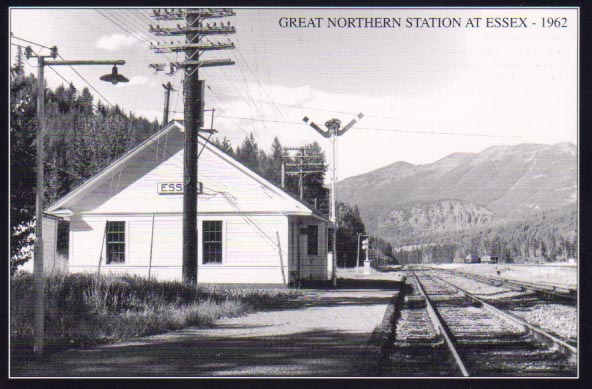
Gayle was around 50 when she died, and was born in 1919, although I can find no clue as to where, or who her family were. However, we do know that Gayle was assigned as male at birth and given the name Herbert C. Upton. Gayle's upbringing and youth are unclear too. But by the age of 42, in 1961, Gayle was an ex-convict who had done time in both the New Mexico and the Michigan State Prisons on convictions of larceny, forgery, and fraudulent checks. In 1961, Gayle lived in Flathead County, MT and worked as a barmaid, in Essex, MT.  Essex is a tiny train stop on the edge of Glacier National Park, with few amenities mostly for tourists passing through.  Even the county seat of Kalispell isn't exactly big.  She was living successfully as a woman for at least 9 months. In one version of the story, she was arrested by the county Sheriff “after a tip by an area resident that things were not what they seemed where 'Gayle Starr' was concerned.” This arrest made it into the local paper, the Kalispell Daily Inner Lake, and she was held pending a psychiatric hearing. Another version of the story, has her being arrested after “area residents filed complaints of disturbances and threats with the sheriff's office” but the real problem emerges when Gayle “was growing a beard today in the county jail while awaiting arraignment for vagrancy and possibly other charges as yet unspecified.”


She was sent to the State Hospital for “psychiatric examination.” But the State Hospital “failed to find” "insanity to warrant commitment,” and further “previous charges were dropped on the basis of the psychiatrist's report.” Gayle was released back to Kalispell, a month after arrest, a free person, albeit one whose conviction record and birth name had been revealed in the local paper of the county of 30,000ish.
Downtown Kalispell 1974

By 1969, Gayle was living in Mineral County, MT, at the Guy Ghilheri Ranch in Haugan, MT. That county had only 3000ish people. Gayle had worked at the West End cafe as a waitress for over a year, at the time of her death. According to reports Gayle wore women's clothing, used heavy make up, and none of the locals had a clue that Gayle was given a male name at birth. The title of Gayle's obituary is “Death Reveals a Masquerade” and it assumes that Herbert C. Upton was the real person who died, and was male, and that Gayle Starr was merely the “feminine name” that “he” used. The file my old friend found the 1969 clipping in was historical notes marked “Residents of Shoshone Co” (a county in rural ID, that borders Mineral county, MT and had about 20,000 people in 1969), so odds are that Gayle lived there too at some point.
The Silver Bar, Haugan, MT in the 1960s
Yet Gayle certainly lived publicly as a woman, for months or years at a time, over the course of at least 8 years. Despite the name Gayle Starr getting negative publicity in nearby Kalispell, that was the name that she choose to use for herself over the following years. That sure sounds like it was a genuine identity for her, rather than merely an alias of convenience. The only Herbert C. Upton in the 1950 or 1940 census (near as I can tell, this could be my limits as a researcher) is a significantly older fellow living in Mass. So the person named Herbert C. Upton at birth, probably wasn't going publicly by that name already by the age of 21. It would have been easy for the psychiatrist at Montana's state hospital to have Gayle committed, that he didn't probably means he thought Gayle was a threat to no one, and also wasn't delusional. Similarly, the Sheriff could probably have sent Gayle to prison again for forgery. Given that Gayle's previous convictions included forgery and fraudulent check writing, it's tempting to guess that Gayle had previously attempted to live a publicly female life, and got caught and had the book thrown at her.

The picture that emerges from these few scattered reports, at least in my imagination, is a person who struggled their entire adult life to live in an identity and gender other than the one given them at birth. Someone who paid dearly for this, doing multiple stints in prison, and then living as an ex-con. Yet someone who kept being Gayle Starr, whenever she could, in a culture that definitely did not understand or approve of this. Living humbly as a barmaid and waitress, in the fading mountain west. Moving from small town to small town occasionally, probably looking for work, but also trying to start over again and again when their secret was revealed. Humble, brave, and relentlessly true to themselves despite real dangers, that's a mix I can respect.

Musing and Questions on Gayle Starr


1969 was the year that the Stonewall Riots happened in New York City. The contrast between the queens and transvestites of the big city, and the wandering rural trans folk is poignant to me, as a trans person that has never lived in a real city, or felt a part of trans community.

Evidence suggests that the vast majority of trans folk choose to move to large cities, and large cities have been centers of trans culture throughout the 20th century and still today. Yet, I'm stayin' here in Terre Haute, which is a bit bigger that Kalispell, MT, but has far more in common with Kalispell or Wallace ID, than it does with New York, San Francisco, or Quebec. I often wonder how life is different for rural or small town trans folk, than it is for big city trans folk. I think there may be advantages to being small town trans as well as disadvantages.  It's hard to find kindred spirits.  But people are polite to me here, even when their eyes suggest they disapprove. I suspect the anonymity of the big city takes that away ...

Did Gayle know anyone else in a similar situation to her? Was Gayle a natural drifter, or did she feel forced to move? Was there really no one in Mineral Co, who heard about Gayle's publicity in Flathead Co. a few years earlier? Or did some folks know and simply not mind, and not want to make trouble for her?

Why did the state psychiatrist choose not to have Gayle committed for Transvestism, which was certainly in the DSM at the time? Why did the Sheriff decide not to press any charges, including transvestism, or forgery? Were there authority figures who were covertly trying to create space for trans people to be themselves in the 60s despite the laws of the time?

Gayle's forgery and fraudulent checking charges, were those just punishments for trying to live as a woman, or had she done more than just provide cover for herself? Were charges like that regularly used to punish trans people? If we looked back through the fraudulent checking and forgery convictions would we find lots of cases where the only fraud someone was guilty of, was trying to be themselves? Were there other techniques that were used to backdoor punish trans folk, while trying to obscure what was really going on? Or maybe everyone back then knew that fraudulent checking sometimes meant kiting checks, and sometimes just meant trying to open a checking account under a non-birth gender and getting caught. The mafia famously owned lots of gay bars, including the Stonewall Inn, was organized crime helping trans folk create fake IDs, perhaps?

How did Gayle think of herself? Did she understand herself as a “female impersonator,” as a “queen,” as a “transvestite?” Several of the newspaper blurbs use the term “masquerader,” was that a technical term of the time? Would Gayle have thought of herself in those terms? Christine Jorgensen was a sensation in 1952, when Gayle was 33. Did Gayle think of herself as transsexual? Did she dream of surgery? Hormone therapy became available in the US during the 50s and 60s, but was pretty tightly controlled. Did Gayle know about that? Did she apply for it? Was she rejected? There is no mention of hormone pills in any of the news stories about her.

Who outted Gayle to the Sheriff and why? What all am I missing from Gayle's story? What would it be like to be gender non-conforming in your heart in the 20s, the 30s, the 40s, the 50s, the 60s? I've meet folks from the 70s and 80s and on. But in the 50s, even open minded experts like Kinsey or Benjamin were barely wrapping their head around transgenderism. Did the queer folk in the streets, or drifting from town to town, have a better understanding of their own situation from up close? Or were they lost, trying to make sense of themselves with old categories that barely fit? Did Gayle have experiences that haven't even been hinted at in the few articles I've found? What did she do during WWII, for example? She'd have been 22 or 23 in 1942 when the US entered the war, but perhaps she was already living as a female by then. Did she have long term relationships during her life? Kids? How did she relate with her family?


There are so many things I don't know about Gayle Starr and her life, and she's probably not my kin or anything, but I keep coming back and musing about her life, and how people adapt to their times ... The Chevalier D'Eon is just a storybook character to me, but Gayle Starr seems like a person I can almost but not quite relate to, like a great-aunt.  Someone from before Stonewall, but after Jorgensen. Everyone else has been thinking about Ferguson and Selma recently, and I certainly see why, but I keep drifting back to thinking about this waitress from Montana I never met ...

Thursday, February 12, 2015

Skepticism and Hope

When I was a professional philosopher I was quite taken by Skepticism. One of the three main sources of my dissertation was the ancient Greek Skeptic, Sextus Empiricus. Zhuangzi, who I talked about last week, was among other things a skeptic. Sometimes today we use the word skepticism for people who disbelieve in God or ghosts or conspiracy theories or global warming or whatever. But the older use of the term is for people who don't have a belief yet one way or the the other, who are open, literally in Greek it means something like still-investigating. I thought, (and still think) of skepticism as an epistemic virtue, it's part of being a good knower, knowing what we can know, and knowing that there are limits to what we can know, to how certain we can be. It's related to honesty, it's about being honest about the limits of our evidence, about admitting when we are partly guessing, when we are proceeding “as if” something were true, but we know we aren't sure and we might be wrong. It's being humble about our powers to know.

But in my own life as someone struggling with suicide for years, and someone coming out to themselves and then others as trans, and as someone who talks to suicidal trans people regularly now, I'm more and more thinking of Skepticism as a moral virtue too, as something related to hope as well as related to honesty, or humility or being a good knower.

When I was suicidal, I “knew” that I was worthless, that my life did more harm than good to the world at large, that the world would be better off without me, that I would never again be of value, that my potential was all used up, spent on a gamble that didn't pay off. My heart told me those things over and over, and my brain believed them. But in my better moments, another part of my heart and brain fought against those certainties, balancing that argument out with arguments on the opposite side, and resting at some uncertainty, some suspension of beliefs, some irresolution. I couldn't see how I could ever be valuable, or happy again, but I had to admit that I didn't know the future, that my predictions had been wrong before, that I couldn't really be as certain as I was pretending to be. Maybe my future would suck, probably, but I couldn't really be certain. Maybe something will happen that you can't imagine now. Maybe, your situation will change only a little, but your mentality towards your situation will transform. Maybe you're wrong about some assumption somewhere in your train of reasoning, in your train of feeling. It wasn't hope exactly. Or at least it wasn't the sort of thing I've often seen portrayed as hope. It wasn't blowing sunshine up my ass, and it wasn't about positivity. It was a different kind of negativity. I'm limited and weak enough, that I cannot be sure of the dark certainties that I feel so sure of. It wasn't about having a positive attitude, it was about openness to possibilities I couldn't really imagine.

And, of course, for me, this worked. Your mileage may vary. I argued myself out of suicide time and time again, and I got slowly better. Eventually I discovered (literally dis-covering) that I had been repressing my gender issues, and that being more open about them to myself and eventually others was vastly more comfortable. I became happy, and in ways, that I literally failed to imagine when I was at my worst. And again, giving up an assumption that I thought I knew (that I was male), was a key part of the psychological process for me.

One of the trans people I talked to today was very near the end of her rope. Obviously, I don't want to disrespect her privacy by saying much about her, but it's fair to say she'd had a surprisingly rough couple of years. She'd heard most of the lines of thought on suicide before, from friends, family, or therapists. I certainly wasn't trying to argue with her in anything like the philosophical sense, and I certainly didn't want to present false hope. But one of the things I said to her has stuck with me today. I said “Two years ago, could you have imagined that you would be where you are now?” And she was very much, no way, not at all, the things that have happened to me I couldn't have believed or imagined until they happened. “Ok, then realize that two years from now, you could be happy again, somehow. I don't know how, and I'm not saying it's certain, or easy. Just that it's possible. It feels like there are no possibilities anymore, for you, I know. But we just don't know the future.” Sometimes life surprises us. It can be terrible, horrible surprises. But it can be slow, wonderful, healing surprises too.  People that become disabled through injury or disease, sometimes find that after a hard period where everything is very difficult, they actually get to a point where they are happier than they were before the injury, whereas people who win the lottery often find that after an initial period of increased happiness, they wind up less happy than before the event.  Happiness as it plays out in actual human lives is complex and often mysterious or paradoxical.  You just don't know how you will be two years from now, or five or whatever, if you can survive that long.  If you have faith, well, that's one way to spin it. And the theological virtue of faith is the traditional precursor to hope, and then, love in the Christian tradition. But doubt, skepticism, those are ways to spin it too. We just can't really know that things are as hopeless as we can think we know they are. Skepticism, as a purely epistemic virtue, preaches non-hopelessness as a moral virtue. It isn't quite the same thing as actual hope, I'll admit. But it is a kind of substitute for hope when hope is hard to find.

"Come, dream a dream with me; come dream a dream with me; come dream a dream with me; that I might know your mind;
And I'll give you hope, when hope is hard to find; and I'll bring a song of love, and a rose in the winter time."
From the UU hymn "Come Sing a Song" that I used to sing all the time.

If it all seems meaningless or pointless, well, OK, it seems that way to you, fair enough. But you can't really KNOW that it is meaningless or pointless. Maybe the meaning will emerge later. Or maybe it is meaningless after all. But proper skepticism can pry open the space for the possibility of meaning, the possibility of hope, in a heart or mind that is all but closed off to these possibilities.


That is it, that is my philosophical plea, leave a little space in your heart and mind for possibilities that you can't really comprehend, even hopeful happy ones.

Wednesday, January 28, 2015

Transitioning, Fitness and My Motivation Problems

My wife talks a lot about fitness. She has a whole awesome blog on it here
I don't talk about it much, because …
I'm embarrassed.
I listen to trans-people every day with far bigger problems than the ones I'm having.
I don't want to be a whiner, or to feel like I'm complaining about the wrong things.
But after I broke down crying in the gym last week, one of the things that really helped was reading a trans-lady marathoner's blog post of how transition impacted her fitness regime, so I guess I feel I ought to add my voice, if I can.

I'm looking at the race results of a little local 5K I ran in April. The top 10 runners are all male. The fastest man, beat the fastest woman by over 4 minutes (an both beat me by over 14m). And in general, the males ran a lot faster than the females. I haven't been to a local weightlifting competition yet, and I can't find a posting of results. But suffice it to say, again, the males lifted a lot more than the females. This is not an anomaly.
Why?
Testosterone.
Testosterone gives people with male-style hormone profiles a HUGE advantage over folks with more female-style hormone profiles in the muscle building (and maintaining) category. And consequently in cardio-vascular endurance. And in running speed. And in lifting. And in lots of physical athletics issues. Don't get me wrong, there are plenty of women who are strong, fast, fit, skilled etc. Far fitter than me. I have run zero marathons in my life. Like most things on gender there are two largely overlapping bell curves, and hard work, or smart work, can definitely effect where you are on them. But we very rarely have females directly compete with males, because that turns out not to go well for the women and girls. Unfortunately, when the “male” you are competing against is your own self a few months ago … well that can get tricky, psychologically...

A woman can lift weights and not need to worry about getting “bulky” because at female levels of testosterone it is very hard to get bulky. You'll build muscle, get fitter, get many health benefits, but you won't get “bulky” (unless you are very specifically trying to get bulky and work your ass off). But the down side is that if you are on a feminizing hormone regime, you are going to slowly, steadily lose muscle for a while, while your body is adjusting and that is going to have a lot of effects.

I knew all this, intellectually, before I started hormones. Frankly, several of the problems I'd worried about with transition, when I started, haven't really materialized. People have remained remarkably polite to me even while I've been visibly in transition, for instance, which is not the experience many trans people have. But I have been surprised how much the slow steady declines in my speed, strength, and endurance have ground me down. I think the issue is not the declines themselves, there is a sense in which I don't really care how fast or strong I am. I'm not really competitive, even at the local level. Rather, my slow steady declines have messed with my motivations for working out, and with the psychology segment of my fitness regime.

Ok background ...
I was a runner back in the day, sorta, barely eeking out my High School letter in cross-country. Running was a nice chance to think and be outdoors and push myself. I was always running against myself. I knew I had no hope of really competing against the other runners, but hey self-improvement was the whole point any way, right? Mens sana in corpore sano, and all that, right? When I was a professor, I walked several miles to and from work each day. I'd organize my thoughts, have some alone time, but I still got got a decent bit of exercise. But as a housewife, for the last several years, I rarely exercised much at all. In 2013 I tried to get back into running, and managed to jog occasionally, but irregularly and without any plan, and it got pre-empted more and more as my schedule got crunched.

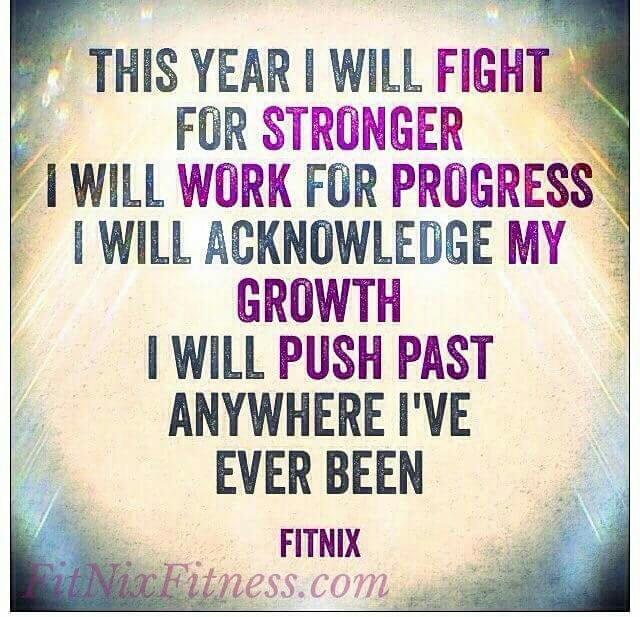
I decided 2014 was going to be different. I asked for and got a new jogging jacket for my birthday in Feb 2014, so I could start jogging early in the season and get into good habits. I was actually kinda excited to get back into a real regime. I had joined Fitocracy and interacted with people far more serious than I, but also with regular Joes and Janes trying to get back into fitness like myself. I saw a lot of motivational memes. I exercised 3 hours a week mid Feb-May, and in June my wife convinced me to start in the gym too. From June until now I ran/walked 4 times a week for 45-60min in the park, and did 2 hour-longish sessions with weights at the YMCA. (OK the outdoor stuff got cut for cold weather a lot in the winter). It was by far the most exercise I'd had since high school. In several ways my diet improved too, and it was already not too shabby. Like my wife, I slowly steadily lost weight from Feb to August. I seem to have lost fat. My times and lifts were slowly improving. I was enjoying it, and optimistic. Things were looking up. I looked forward to working out, and was pretty well motivated in my average non-athlete sorta way.

Fairly typical Fitocracy motivational meme ...


Then from late August until early Jan 2014 it all reversed. I slowly began to put back all my weight. I put back on fat. My speeds slowed. My endurance declined. My strength deteriorated. I got slowly steadily weaker and slower and more ragged. Running and weightlifting became discouraging rather than uplifting. The fight to get dinner made after I was done my workouts became more and more awful. Pleasant exhaustion had been replaced by simple dog-tiredness. It seemed like I was eating more too. I was demoralized in the gym or park, and especially when I faced the scale. I'd gotten two new high-end workout outfits as gifts for Christmas from people who wanted to encourage me. I like wearing those and they certainly gave me something to look forward to in early Jan, but by mid Jan I was pretty down. Twice I gave up in the middle of routines I'd been OK with a few months earlier. And when a well-meaning gym patron tried to correct my form on a lift I'd only done a couple times, and I couldn't understand what I was doing wrong, I stiff upper-lipped it until she was gone, then went to a corner and lost it crying.
What the fuck happened?
I was doing so well …
My wife is chugging along, diligently making slow steady progress and I was too, until I wasn't and my continuing diligence in the gym and park wasn't making any difference.
Why was I bothering?
Why was I wasting my time with this crap?
I'll never have a body like these other folks in the gym … I can't even maintain the little progress I made in 2014 … this is already the longest I've maintained a real regime since high school ... give up … give up ...

* * *
So what happened? - Lots of spironolactone (a testosterone-blocker), that's what happened.
I started HRT in April, and loved it right from the first. My doc started me on low doses which helped my dysphoria, but body changes were slower. He slowly upped the doses, and my spiro dose went way up in late August. And that means my testosterone went way down. My tests this month show I have on the low side of female normal levels of testosterone now, although my body is still adjusting. I like my breast growth. I like being on HRT pretty much all the time, except that a little part of me is beginning to resent it when running or lifting. Like many people, my appetite went up a bit, as my estrogen levels went up. Not hugely but noticeably. (I've also totally craved and eaten a LOT more pickles than ever before in my life, too, I don't know if that's hormonal or not, not that pickles are high calorie). So I have to fight against my appetite often now, to stay within my macros, whereas before, my appetite rarely bade me to eat more than I should. Similarly the estrogen/testosterone balance shifting probably means my BMI is going up (I have a the calipers, but they're actually pretty hard to get accurate readings with, at least for us, similarly the online body fat estimator calculation results seem to vary erratically from month to month for me). As I lose muscle and gain fat my body spends fewer calories on daily activity apart from workouts.

Continuing to work out regularly probably IS good for me on many fronts, even during transition. Its probably helping delay my pre-diabetes from converting to full blown diabetes. Working out is probably slowing my muscle loss. I'd probably gain even more weight, and lose even more endurance, if I wasn't keeping up with my workouts. I know that intellectually.

But at the level of daily motivation …

I'm sure that part of what helps Robyn keep being so awesome in the gym and at the table, is the regular feedback of progress. We were taught, and agree, that you should measure in lots of different ways, so we weigh ourselves a fair bit (here's R's discussion of that), and measure our bodies with tape measures once a month. And track our lifts and run times. That way if you plateau for a while in one dimension, maybe you'll see progress in a different dimension. If you don't make much progress on weight this month, well, maybe you PRed on deadlifts, or your waist improved a little, or … And as she agrees, one of the psychologically transformative things about weightlifting for her, has been that for the first time her mind is focused on being “more”(stronger), rather than being “less” (in weight) while working out. And for her, like many women, that makes all the difference.

But notice the refrain, “progress” “personal record” “competing against yourself” “being more” …
For the last 6 months I've seen slow steady regress, personal decline on almost all the metrics I'm tracking, despite lots of diligent work. I just can't compete with myself from a few months ago. When my wife has to try to decide whether or not to add 5lb to this lift, or 10lb to that lift, I have to decide whether or not to go down. And I resist going down, which means I get more and more exhausted even with routines that I could do a month ago, and my form gets more and more ragged …

Eventually, I will “bottom out,” my body will be adjusted to having a female hormone profile and I'll probably start making gains again. There are plenty of women with comparable hormone profiles in far better shape than me.  Then I can compete only against my own female-hormoned self, and try to ignore my PRs from the days of testosterone.  If I can stick with it that long. The trick is just finding ways to motivate myself until then. It may well be another full year of no progress.  As Dick Talens argues, even 2 months without perceived progress often causes someone to quit, if they don't already have a lot of faith in the process they are using.

The hard truth is that psychology is one of the most important part of your fitness regime. Your diet and exercise are not going to be good consistently or long-term without a lot of psychological back up. And many, many things in our culture undermine good psychology of fitness. I've seen many people undermined on the diet and exercise front by stupid theories about how willpower works that our culture keeps trying to promote for example. And like diet and exercise, your fitness psychology strategies need to be tailored to you, there is no one-size-fits-all psychology of fitness that is going to work well for everyone.

I don't really know how I am going to craft a good psychological regime for fitness for myself yet. A lot of the standard advice just doesn't seem to work for me, or to be actively counter-productive. There are definitely things I like. My body IS looking better. My fat is shifting in ways I like. It is hard to know how much is the hormones and how much is the gym work. And there aren't good metrics here. Similarly, maybe my gym work means I'm losing less muscle than I otherwise would, but we don't have good estimates for “normal” muscle loss during feminizing transition, except that it definitely seems to happen, and theoretically ought to happen. Again I don't know how to craft a metric there. I don't know good ways to give myself little psychological bennies for when I do well in the gym. It's hard even to know what counts as doing well for me. Everyone ages, and learning not to compete against your younger self is a lesson many folks have to learn in their 40s. It's just usually not learning not compete against yourself from a few months ago. I'm sure people on chemo, or other extreme health interventions often face similar declines, but I haven't talked with any to see how they coped with staying motivated in the gym through those sorts of issues.


So I don't really have answers, and I don't really want to whinge. But I want other folks going through feminizing hormone transition to know that they aren't alone, if this kind of thing is frustrating or demoralizing them too. It is difficult to keep working hard long term with consistent negative feedback. It just is.
Also, a fairly typical Fitocracy meme ...

Saturday, January 24, 2015

Clavicula Mortonis – Being an Alphabetickal Compendium of Arcane Gender Lore

Agender – a person who feels neither male nor female, because neither masculinity nor femininity seem to apply to them. Especially if “none” seems closer than “a mix of both” or “in-between.” Seems fairly synonymous with nongendered, genderless, and null-gendered. Close to neutrois, but see it for more.  check here for more

Androgyne – an old Greek term for someone who combines male and female within themselves, that has been used for centuries. Sounds old fashioned these days, but still in use. It's my preferred label, although I like lots of others too. Androgynos was also one of the six gender categories in Jewish law.

Arenotelicon - A creature that alternates between male and female. This word is so obscure it is not even in the O.E.D.; as far as I know it occurs only in the Physiologus, an anonymous book of the early Renaissance. The Physiologus uses it to describe hyenas, which were commonly believed to change their sex every year. These days we'd probably say bigender or genderfluid.

'Aylonit – one of the six gender categories in Jewish law, for people who seem female at birth, but later seem pretty non-female. Literally means barren, but often used as a far more specific and extreme case of non-femaleness than what we would call barrenness in English.  For a modern trans rabbi's perspective check here, for more detail check here, or if you can access academic papers here

Baeddel – see scrat, also some folks on tumblr seem to be reviving this very old term, and I can't follow the 21st century issues well enough to comment.

Bigender – a gender identity where one has both a “male-mode” and a “female-mode” and shifts between them, and typically self-identifies as male in male-mode and female in female-mode. A crossdresser might behave similarly, but think of themselves as the same gender whether presenting male or female, a bigender person typically feels their identity switching as well. I was one for a while, but I'm pretty androgyne-all-the-time these days. Bigender is pretty close to genderfluid, but you tend to have two fairly discrete states, like a switch, rather than a whole flowing spectrum. Brin Convenient is a good example. I've seen the term trigender, but never met someone who described themselves to me that way.  For more info or community check bigender.net

Bisexual - when Charles Gilbert Chaddock translated Kraft-Ebbing's German book Psychopathia Sexualis into English in 1892 he picked the word "bisexual" to mean something like "sexually attracted to both genders."  The term has evolved since then, and you can find plenty of other discussions of it.  But BEFORE 1892ish it was a common English term meaning something like androgyne or hermaphrodite or having characteristics of each sex.  So you'll find it applied to people that don't fit nicely into the gender binary regardless of their attractions in lots of pre-20th century contexts.

Chaser, Admirer, or Transfan – slang terms for someone who is particularly attracted to trans people. Sometimes they are ppejorative terms, sometimes they aren't. It can be hard to tell if they're being used affectionately or insultingly.

Chian - Chios is the island in the Aegean right next to the island of Lesbos, which lesbians are named after (by analogy to the famous Greek Poet Sappho of Lesbos, who was probably bi, but oh well).  So a chian would be someone who isn't exactly a lesbian, but definitely in the vicinity ...

Cisgender, often shortened Cis – someone who thinks the gender assigned to them at birth fits them relatively well. It is never a slur or insult when I or most trans people say it. My lovely wife is cis, and I won't hear cisfolk badmouthed, OK?

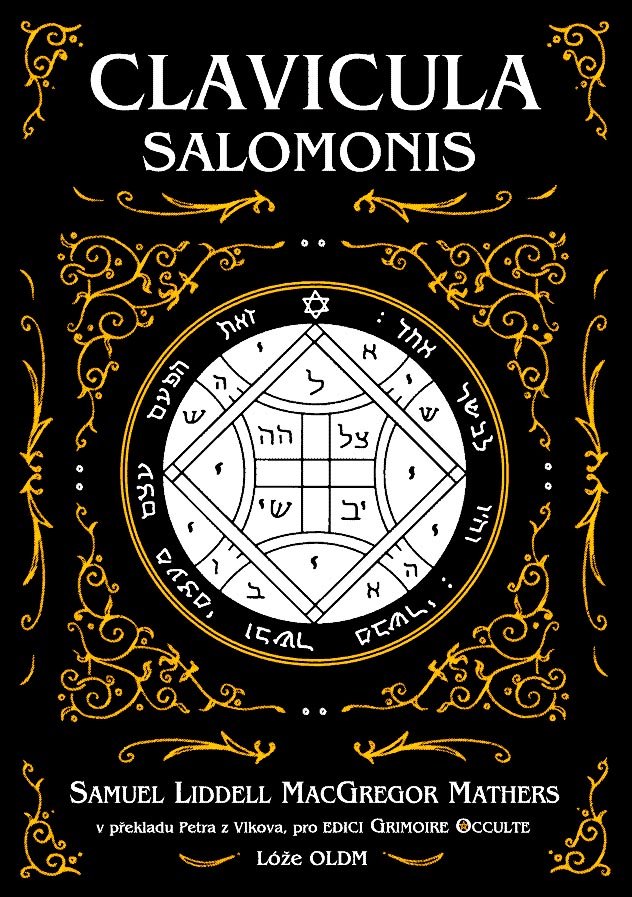
Clavis – a fancy old word for a “glossary,” literally a “key.” I think it gives an elegant occultist feel to the standard old run down of terms that every discussion of non-standard gender or sexuality issues seems to be required to have, kinda like the Clavicula Salomonis. See also Gender Occultist.


The Clue Fairy – a well meaning spirit that repeatedly attempts to hit trans people living in denial over the head with a giant hammer, representing the repressed truth about themselves, until they finally start getting some of the clues through their thick skulls and coming out to themselves. Why do you take the extra time to peeing sitting down? Wham! Why do you insist on calling yourself a housewife? Wham! Is that gender dysphoria you feel when you look in a mirror? Wham! Why do you always pick female characters when playing video games? Wham! Your examples may vary.


Crossdreamer – Someone who regularly dreams or fantasizes about being another gender, or dressing, presenting or living as someone of another gender, but doesn't actually do much of any of that in real life. Yet.

Crossdressing – dressing in the clothes associated with the opposite gender regardless of motives. Very old practice, done in many cultures for many reasons.

Crossdresser / Transvestite – May mean someone who crossdresses even briefly for whatever reason, but may also mean someone who has regularly crossdressing as a part of their self-identity. In some cases we call someone a “crossdresser” because we don't know much about how they thought about themselves, we only know about their behaviour. Consider Marina the Monk (d. 508) or Ulrika Eleanore Stalhammar (1688-1733) who lived successful male lives for many years. In other cases, people self-identify as crossdressers or transvestites because it seems to fit their gender identity better than other terms, such as Eddie Izzard, who self-describes as a transvestite. The word transvestite is no longer polite in the US, where it was used for psychiatric conditions for so long that it now implies that you think someone's crossdressing is a psychological disorder, rather than a healthy lifestyle, but the word transvestite doesn't usually have these implications in British or Australian English. Someone who regularly crossdresses as part of a public performance will often identify and be called a Drag King/Queen instead, especially if they take an exaggerated gender role while performing. There are a lot of cultural differences between Drag folk and other crossdressers. The term “drag” dates to the 1870s, “transvestite” was coined in 1910, and the word crossdresser seems to appear in English first as a translation of the German transvestit in 1911.

Drag – see crossdresser

Epicene - partaking of the characteristics of both sexes; or common to both sexes; worn or inhabited by both sexes. Unisex. It's an old word that has been used for gender-non-conforming folks for centuries. Ben Jonson used it to mean something like 'effeminate'. Its Greek root means 'common,' and it shows up in descriptions of garments that either sex can wear, or places both sexes dwell ('Epicene...Convents, wherein Monks and Nuns lived together.' -- Fuller, c.1661). It's a good term for folks that think of themselves less as a combination of male and female, than as the greatest common denominator of male and female. I'll take this although I'm more mixed than common denominators only.

Eunuch – a term that either means a castrated servant in a royal household; or any servant, castrated or not, that you can trust your women with; or any castrated person; or any infertile male; or any impotent male; or any male who is impotent with women; or any male who has chosen to live celibately; or anyone of regardless of gender who has chosen to live celibately; or anyone born with ambiguous genitalia; or anyone assigned male at birth who then feminizes to the point of no longer being entirely male; or some combination of these categories depending on the century and culture it's being used in, and often the background of the speaker. The term has been in use for thousands of years, and I may or may not be one.  see my blog post, or wikipedia, or if you have access, dozens of scholarly articles ...

Furries - I'm not really qualified to speak here, but the furries I've known have been decent folk, and furries get made fun of, shit on, or have their conventions bombed a lot more than they should, so I feel obligated to say something.  My understanding is that there is a spectrum of identification from just being a fan of anthropomorphic animal art of various kinds (furry fandom), all the way up to feeling that one's "fursona" is a more authentic expression of themselves than their (what's the opposite furlessona?).  My understanding is that as with gender issues, there are analogs of crossdreamer, crossdresser, and transgender here (furdreamer, furdresser, and otherkin), with someone who regularly dresses in a fursuit often being called a furry lifestyler.  Sometimes there is a sexual component to furry fandom, often called yiff, (and things like pony play and puppy play are both historically older than furry fandom within alt-sex communities), but often there is only a minor sexual component, or none at all.  So it isn't necessarily about sex, or gender, but the analogs to the not-feeling-right-in-your-apparent-gender experience are strong enough that I've always felt furries were siblings to transfolk in an odd way.  

Galli – a priest/ess of the religion of the Cybele and Attis in the ancient world. They originated in Phyrigia, but were common throughout the Roman world for centuries. They castrated themselves and adopted many feminine mannerisms and dress habits publicly, and were commonly take to be a middle gender or third gender by their contemporaries, (medium genum, tertium sexus, etc.) although we don't have any self-descriptions of being a gallus/galla that I know of.

Gender Dysphoria – Dysphoria is an unpleasant feeling sorta between pain and sadness, kinda like discomfort but more or less intense. It can be as mild as a barely detectable niggling, or so intense you lay in a fetal position in your bed all day. If it's gender dysphoria, it will be tied to gender experience, presentation, and treatment in various ways. You might find that wearing a particular kind of clothing makes it worse, or alleviates it, or being called ma'am, or using particular mannerisms, or changing your appearance. Not all trans folks have it, and it isn't part of the definition or anything, but it is extremely common, and often a major clue that you are trans, and noticing carefully what seems to make it worse and better can be a big clue as to what kind of trans person you are.  It is also the APA's term for a new mental health diagnostic category, (here's the APA's official blurb on it). Here's a blog post about indirect ways it may manifest, 


Gender Identity Disorder – a US mental health diagnosis discontinued in 2013 on the grounds that having a gender identity other than what your birth certificate says you should have isn't a fucking disorder. Compare with homosexuality, which the US mental health system decided wasn't really a disorder in 1973, or habitual crossdressing AKA -Transvestic Fetish Disorder which was also discontinued in 2013.

Gender Occultist – One who is knowledgeable about the occult, hidden, secret, clandestine world of gender identities beyond the binary model of standard male and standard female, that we keep trying to tell anyone who will listen about so it won't seem so damn arcane and daunting to folks.

Gender Oracle - a person whom others approach to ask about another person's sex. It is well if the oracle can be persuaded to relish their role as an ongoing joke; more often, they dread it as a sticky social situation, and may transfer this discomfort to their client of not-entirely-obvious sex. In such cases the client is well advised to commiserate, pointing out that it is poor manners are on the part of the querant, to ask an oracle instead of the person themselves.  Coined by Raphael Carter, 1996

Gender Refusenik - a term for people denied SRS, whether due to lack of funds or psychological paternalism. All gender refuseniks are non-ops, but not all non-ops are refuseniks. Also 'gender otkaznik' for the Slav-savvy. Coined byRaphael Carter 1996, on the model of the Soviets who were “refused” permission of emigrate during the cold war (it didn't originally mean people who refuse to do something, but people who are refused permission to do something critical).

Genderfluid – someone whose feeling of their own gender shifts over time fluidly. They may feel quite male one day, and quite female the next, and may experience plenty of in-between (as opposed to bigender folk who tend to experience fairly discrete states of gender). Its not unusual for their preferred pronouns to shift along with their state. Genderfluid folks are genderqueer and transgender. Ruby Rose is a famous example.

Genderqueer - a catch-all category for gender identities other than man and woman, thus outside of the gender binary and cisnormativity. Non-offensive. A close synonym of non-binary. The word queer was associated with a certain political style in the late 80s and 90s, and aimed at reclaiming what had previously been an insulting term, so sometimes the term genderqueer inherits these political associations or sounds too close to an old insult. I identify as queer and genderqueer, but I'm actually pretty moderate on a lot of gender and sexuality issues, so I like the term non-binary a little better.

Hermaphrodite /Hermaphroditus – an old Greek term for a combination of male and female, that has come to mean many different things over the centuries. Sometime a child of Hermes and Aphrodite. Sometimes linked to statues of Aphrodite with male genitalia in the shape of a herm (pictured to the side). In some centuries it's a common term for what we'd now call non-binary or intersex people. Sometimes a technical medical term for conditions that very few humans fit, involving have both kinds of gonadal tissue. The term is still used in non-human biology a lot, (it's common in plants and snails, for instance), but it's usually avoided when talking about humans these days because it is taken to be loaded with specious or stigmatizing associations from various past uses.

Hijra – a category of third gender persons common in India. Often now called "transgenders" in Indian English (which is non-offensive in Indian English, although "transgender people" is more correct in US or British English).  See wikipedia, or say this article on recent legal victories for hijras


Homovestite - A person who obsessively, compulsively and neurotically wears the clothing of their own sex. Coined by Raphael Carter 1996

Intersex – I have yet to see a definition of this that really works. Roughly though, if your biology has a mix of male and female traits, other than just in your brain/identity, and the doctors notice it, and they don't think you are trans instead, they will label you as intersex. Only now it is often called DSD (Disorders of Sexual Development). Because you know, being a mix of male and female can't possibly be a healthy state, it has to always be medicalized as a disorder, and if it happens in the “body” it is a totally different thing that if it happens in the “brain.” Sigh. Many people with intersex biology are binary and cisgender in their own self-identity. And many people (like me) fit some of the formal definitions of intersex, but are not considered intersex because we are trans instead. Maybe this is it – if YOU decide your sex assigned at birth is wrong or oversimplified then you are trans, regardless of what the doctors think - if A DOCTOR decides that your sex assigned at birth is wrong or oversimplified or is “ambiguous” already at birth, then you are intersex, regardless of what you think about it. There are a lot of different kinds of intersex conditions and some of them really do have serious medical complications, like Congenital Adrenal Hyperplasia, so it's inevitable and even desirable to medicalize gender biology issues in some cases. But 20th century America proved to be very bad at being ethical about when and how to medicalize unusual biologies of gender.  (OK I've got whole books on this, but I'm having trouble finding a good overview, I guess this news report is a start). Intersex people have very much been given a raw deal over the last several decades, so I hope I don't sound dismissive and my venom is not for them. Being trans, intersex, or coming from a culture that assigns people non-binary genders at birth are the three ways to wind up non-binary, although plenty of intersex or trans people are binary too.

M. - the goal of a gender neutral honorific substitute for Mr. /Ms./ Mrs./Miss, is a natural one. Some use Mx. (pronounced mix or mux), but I think M. is an elegant solution too, maybe it will even catch on some day.

Macaroni – an 18th century British identity, where a male wore over-the-top fashions. Often they were ridiculed and accused of androgyny. Indeed, some seemed to aim for as much androgyny as they could get away with. Descendant of 15th-18th century terms like fop, beau, gallant, popinjay, coxcomb, fribble, fashion-monger, and ninny. Precursors of the 18th-20th century Dandies.

Mahu – a native Hawaiian non-binary gender category, a “third gender.” Often associated with hula dancing, or in general keeping old ways alive. Also sometimes other kinds of trans folk are called mahu now in Hawaiian slang by extension.

Molly – an 18th century British identity that doesn't exactly map to modern notions of homosexuality, crossdressing or transgender, but is partly all three. Mollies congregated together in molly houses, which were usually also taverns and/or houses of prostitution. Mollies had a ritual called “lying-in” or “mock birth” in which they ritually imitated giving birth.

Neutrois – a person who identifies as neither male nor female. Especially if metaphors like “neutral” or “null” or “none” are closer than “both” or “mixed” or “none of the above.” It falls under the umbrellas of trans and non-binary and genderqueer. Many neutrois are happy to identify as agender too, others say they have a gender but it is somehow neutral, or neutered. Appears to have been coined in 1995 by H. A. Burnham.  See more here.

Non-Binary – not fitting into a two-fold system. In logics, it usually means you have more that 2 truth values. In gender, it means someone who identifies as something other than male or female. Genderqueers, Genderfluid folk, tumtums, third-gender folk, androgynes, neutrois, many two-spirits, and many more are examples. Transmen and transwomen are NOT non-binary though, and typically resent it if you treat them as not-a-real-man, or not-a-real-woman, or somewhere-in-between. Similarly some intersex people self-identify as non-binary, but many do not.

Otherkin - Folks who believe that they are non-human in identity, even if they are human in body. Sometimes they identify as elves or faeries.  Sometimes as animals, or anthropomorphic animals, in which case they may also be furries.  I've known a person or two who thought of themselves as dragons-in-human-form.  Angels, demons, shapeshifters, werewolves, vampires, aliens, cartoon characters, there are a lot of possibilities.  It may sound like a mental health problem, and it probably is sometimes, but I've known folks that were pretty non-delusional, and far closer to something like a religious or spiritual or self-discovery understanding of the sense in which this is true.  Oh and someone's non-human self-identity is likely to interact with their gender and sexual identities.

Pansexual – Some one who is attracted to people of “all” genders. A bisexual person who wishes to emphasize that gender identities other than male and female are attractive to them too.  Older dictionary definitions of bisexual often assume there are only two genders, but more recent definitions by self-identified bisexuals often allow attraction to many gender-identities and try not to assume there are only “two” genders, so usually if someone says pansexual instead of bisexual they are trying to emphasize non-binary possibilities.

Pronouns – It is polite to ask someone's preferred pronouns, and rude not to try your best to use them once you know them. They used in the singular is correct grammar, and the next most polite option if you don't know someone's preferred pronouns. Many non-binary people prefer he/him/his or she/her/hers or they/them/theirs. Some people prefer it, and if, so it is correct to use it. However, it is always inappropriate to call a person it, unless you are confident that it is its preferred pronoun. Non-binary folk often use ze/hir/hirs, and odder pronouns like zir, co, ey, xe, etc. are sometimes preferred. Do your best. Except zie, that's just wrong, see the entry on zie.

Radar -v. the stuttering of pronouns or honorifics owing to gender confusion. Named for Radar O'Reilly's invariable "sir, ma'am, sir" when addressing Major Hoolihan in the TV show M*A*S*H. Also suggests the scanning motion of the eyes that often accompanies the stutter. Coined by Raphael Carter 1996

Saris – one of the six gender categories in Jewish law, for people who seem male at birth, but later seem seriously non-male. Used largely for eunuchs in the Old Testament, but comes to seem closer to our modern notion of a transwoman later on.

Sib – a informal affectionate term for a non-binary person. Shortened form of sibling. Use it the way you would use bro, sis, dude, lady, mate, buddy, girl (for an adult), honey, sugar, etc. Homie and comrade are also gender neutral if either fit your style.  I wrote more here.

Scrat - Old English term for 'hermaphrodite' - “Hermafroditus, waepenwifestre, uel scratta, uel baeddel.” --AElfric, c.1000 (Waepenwifestre and baeddel have meanings similar to scrat, but seem not to have made it into Modern English in any recognizable form.) “Somtyme one of mankynde is both man & woman & suche..in englyssh is called a scrette.”--Caxton, Trevisa's Higden (1482) - The origins of the word 'scrat' are murky, but they seem to be somehow bound up with the Old Norse skratte, meaning wizard, goblin, monster. 'Old Scratch,' a nickname for the devil, is an alteration of 'scrat.'

Shemale – a terribly impolite term. From the mid 19th to mid 20th century it was used to refer to women who were considered too masculine in a pejorative way. By the 1970s it started shifting to being used to make fun of effeminate males and trans-folk. These days it is usually a rude term or a porn term for pre-operative MtF transsexuals, often fetishizing them for others' gratification. If you are tempted to use this term in psychology or reptile biology (as some people do), then don't.

They – a pronoun that has been used in the singular regularly since frickin' Chaucer. It fell out of favor in the 19th century because prudes and chauvanists argued that using he for everybody regardless of gender was preferrable. They singular is a common pronoun of choice for non-binary folks, and it is not a new or edgy or incorrect use of this very old word, so get over that worry. I like ze though.

Third Gender – a phrase used to describe specific kinds of non-binary people who think of themselves as something other than male or female, like hijras, or fa'afafine, or the sworn virgins of the Balkans. A lot of times it's not necessarily how the people with the supposed third gender identity see themselves (like with the Kathoey), and a lot of times the local gender schema have more than three gender categories available (as in many Native American cases). There is a big danger of projecting our anthropological categories onto other people. Still, often it is an OK way to think about non-binary people. Richard O'Brien describes himself as being in a third gender between male and female. I'm happy to be called third gender, that seems like a decent way to cash out my in-between or mixed gender state.

Tranny – This was actually a polite term once. Long ago.  There are queerfolk who have been around a while that still use it affectionately.  But most transfolk in my experience find it offensive and impolite, here's a careful argument. Unless you are TRYING to degrade someone or sell degrading porn, or provoke a fight within the trans* community, don't use it. Oh and don't try to do any of those things either.

Transgender – 1) someone who thinks the gender assigned to them at birth doesn't fit very well how they think of themselves.
2) a broad term for many many kinds of “transgressive” gender identities.

Trans or Trans* - like transgender, but especially emphasizing inclusiveness and the second definition, and definitely trying to include trans-vestites, and crossdressers, and drag queens/kings, and intersex people, who might not feel they fall under the first definition of transgender above.

Transsexual – every definition I've seen of this is either identical to def#1 of transgender or has medical BS I don't like in it. I think it tends to be used especially for people striving to live and be accepted as the “opposite” sex of their sex-assigned-at-birth, and thus for binary trans-folk - transmen, transboys, transwomen and transgirls. It also tends to be used more for folk that use medical interventions like hormone or surgery. My sense has always been that as a non-binary person I don't count.

Transvestite – see crossdresser

Tumtum or timtum – a Hebrew category of gender from the Mishnas on (first few centuries CE). A person whose gender is not readily apparent, but might wind up being either male or female. Sometimes used as a slur against feminine males, or masculine females, but also used as a neutral category of Jewish legal thought, or even as a self-description. A baby can be tumtum. One who is questioning their own gender identity can be tumtum even to themselves. Someone who is trying to live with a gender presentation that leaves their biological sex in doubt to others might self-identify as tumtum.  Here's the awesome article.

Two-Spirit – a term for grouping a bunch of different Native American identities together (winjke, nadleehe, etc). Often they involve gender variance of some kind, but the lines between bisexuality, homosexuality, transgender, crossdressing, “third gender” and gender-non-conforming can get tricky and vary from tribe to tribe and be not natural concepts in the original languages. Instead of a gender binary for instance it is pretty common for Native American cultures to divide people into 4 types – masculine men, masculine women, feminine men, and feminine women. There is also a lot of evidence that contemporary two-spirit communities and self-understanding differ quite a bit from pre-contact or early-contact two-spirit communities and self-understandings. Its not unusual for a two-spirit person to think of themselves as non-binary in gender even if they seem fairly binary in gender to others.

Waepenwifestre – see scrat

Ze / hir / hirs – Another common pronoun set for genderqueer folk, especially in the Internet age. Hir is pronounced like “hear” or “here” not like “her.” Actually, the vowel in “hir” is just a little different than “here,” but like pin/pen or tin/ten, or bin/Ben, I can't hear the difference with my Midwestern ear and accent. I take this.


Zie / hir / hirs– the WRONG pronoun set, for all right thinking non-binary people. Those who use zie with an i, will be roasted over the flaming remains of their own genitalia of undisclosed shape, for all eternity in the afterlife. Don't let this tragic fate befall you, return to the path of righteousness and use ze without the i.

maybe I should include terms like demisexual, hyposexual, asexual, aromantic, panromantic, MSM, etc. etc. but my inclination is not to include sexuality identities that don't really have a gender component on my list.  Look terms like that up elsewhere.  Also, I've tried and failed to find a decent term for my own sexuality so I don't relish trying to explain the nuances of others.  Currently I joke, say I'm chian, and them give them the definition above when I get the blank look..