Agender – a person who feels
neither male nor female, because neither masculinity nor femininity
seem to apply to them. Especially if “none” seems closer than “a
mix of both” or “in-between.” Seems fairly synonymous with
nongendered, genderless, and null-gendered. Close to neutrois, but
see it for more. check
here for more
Androgyne – an old Greek term
for someone who combines male and female within themselves, that has
been used for centuries. Sounds old fashioned these days, but still
in use. It's my preferred label, although I like lots of others too.
Androgynos was also one of the six gender categories in Jewish law.
Arenotelicon - A creature that
alternates between male and female. This word is so obscure it is not
even in the O.E.D.; as far as I know it occurs only in the
Physiologus, an anonymous book of the early Renaissance. The
Physiologus uses it to describe hyenas, which were commonly believed
to change their sex every year. These days we'd probably say
bigender or genderfluid.
'Aylonit – one of the six
gender categories in Jewish law, for people who seem female at birth,
but later seem pretty non-female. Literally means barren, but often
used as a far more specific and extreme case of non-femaleness than
what we would call barrenness in English. For a modern trans rabbi's perspective check
here, for more detail check
here, or if you can access academic papers
here,
Baeddel – see scrat, also some folks on tumblr seem to be reviving this very old term, and I can't follow the 21st century issues well enough to comment.
Bigender – a gender identity
where one has both a “male-mode” and a “female-mode” and
shifts between them, and typically self-identifies as male in
male-mode and female in female-mode. A crossdresser might behave
similarly, but think of themselves as the same gender whether
presenting male or female, a bigender person typically feels their
identity switching as well. I was one for a while, but I'm pretty
androgyne-all-the-time these days. Bigender is pretty close to
genderfluid, but you tend to have two fairly discrete states, like a
switch, rather than a whole flowing spectrum. Brin Convenient is a
good example. I've seen the term trigender, but never met someone
who described themselves to me that way. For more info or community check
bigender.net
Bisexual - when Charles Gilbert Chaddock translated Kraft-Ebbing's German book Psychopathia Sexualis into English in 1892 he picked the word "bisexual" to mean something like "sexually attracted to both genders." The term has evolved since then, and you can find plenty of other discussions of it. But BEFORE 1892ish it was a common English term meaning something like androgyne or hermaphrodite or having characteristics of each sex. So you'll find it applied to people that don't fit nicely into the gender binary regardless of their attractions in lots of pre-20th century contexts.
Chaser, Admirer, or
Transfan – slang terms for someone who is
particularly attracted to trans people. Sometimes they are
ppejorative terms, sometimes they aren't. It can be hard to tell if
they're being used affectionately or insultingly.
Chian - Chios is the island in the Aegean right next to the island of Lesbos, which lesbians are named after (by analogy to the famous Greek Poet Sappho of Lesbos, who was probably bi, but oh well). So a chian would be someone who isn't exactly a lesbian, but definitely in the vicinity ...
Cisgender, often shortened Cis
– someone who thinks the gender assigned to them at birth fits them
relatively well. It is never a slur or insult when I or most trans
people say it. My lovely wife is cis, and I won't hear cisfolk
badmouthed, OK?
Clavis – a fancy old word for
a “glossary,” literally a “key.” I think it gives an elegant
occultist feel to the standard old run down of terms that every
discussion of non-standard gender or sexuality issues seems to be
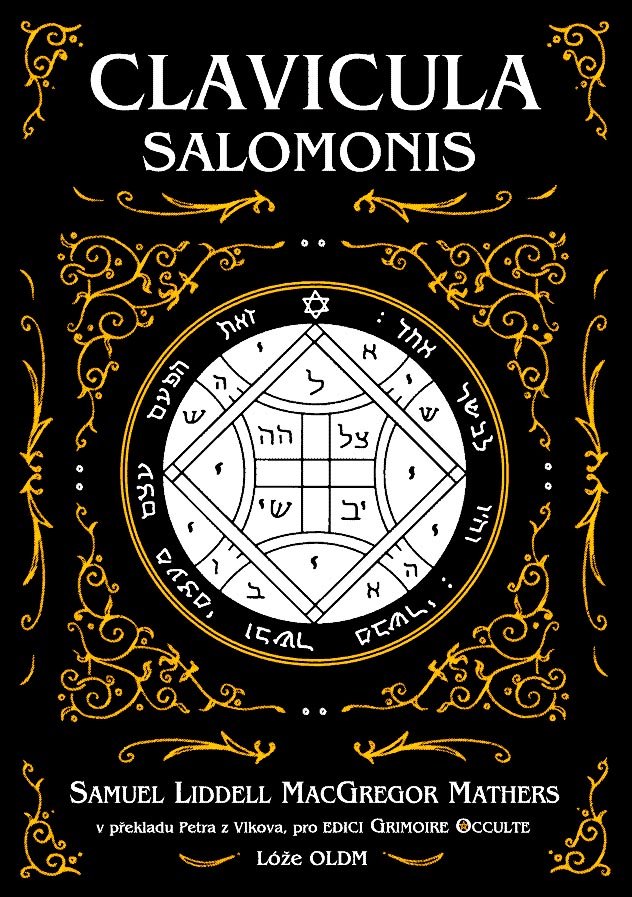
required to have, kinda like the Clavicula Salomonis. See also Gender
Occultist.
The Clue Fairy – a well
meaning spirit that repeatedly attempts to hit trans people living in
denial over the head with a giant hammer, representing the repressed
truth about themselves, until they finally start getting some of the
clues through their thick skulls and coming out to themselves. Why
do you take the extra time to peeing sitting down? Wham! Why do you
insist on calling yourself a housewife? Wham! Is that gender
dysphoria you feel when you look in a mirror? Wham! Why do you
always pick female characters when playing video games? Wham! Your examples may vary.
Crossdreamer – Someone who
regularly dreams or fantasizes about being another gender, or
dressing, presenting or living as someone of another gender, but
doesn't actually do much of any of that in real life. Yet.
Crossdressing – dressing in
the clothes associated with the opposite gender regardless of
motives. Very old practice, done in many cultures for many reasons.
Crossdresser / Transvestite –
May mean someone who crossdresses even briefly for whatever reason,
but may also mean someone who has regularly crossdressing as a part
of their self-identity. In some cases we call someone a
“crossdresser” because we don't know much about how they thought
about themselves, we only know about their behaviour. Consider
Marina the Monk (d. 508) or Ulrika Eleanore Stalhammar (1688-1733)
who lived successful male lives for many years. In other cases,
people self-identify as crossdressers or transvestites because it
seems to fit their gender identity better than other terms, such as
Eddie Izzard, who self-describes as a transvestite. The word transvestite is no
longer polite in the US, where it was used for psychiatric conditions
for so long that it now implies that you think someone's
crossdressing is a psychological disorder, rather than a healthy
lifestyle, but the word transvestite doesn't usually have these
implications in British or Australian English. Someone who regularly
crossdresses as part of a public performance will often identify and
be called a Drag King/Queen instead, especially if they take an
exaggerated gender role while performing. There are a lot of
cultural differences between Drag folk and other crossdressers. The
term “drag” dates to the 1870s, “transvestite” was coined in
1910, and the word crossdresser seems to appear in English first as a
translation of the German transvestit in 1911.
Drag – see crossdresser
Epicene - partaking of the
characteristics of both sexes; or common to both sexes; worn or
inhabited by both sexes. Unisex. It's an old word that has been
used for gender-non-conforming folks for centuries. Ben Jonson used
it to mean something like 'effeminate'. Its Greek root means
'common,' and it shows up in descriptions of garments that either sex
can wear, or places both sexes dwell ('Epicene...Convents, wherein
Monks and Nuns lived together.' -- Fuller, c.1661). It's a good term
for folks that think of themselves less as a combination of male and
female, than as the greatest common denominator of male and female.
I'll take this although I'm more mixed than common denominators only.
Eunuch – a term that either
means a castrated servant in a royal household; or any servant,
castrated or not, that you can trust your women with; or any
castrated person; or any infertile male; or any impotent male; or any
male who is impotent with women; or any male who has chosen to live
celibately; or anyone of regardless of gender who has chosen to live
celibately; or anyone born with ambiguous genitalia; or anyone
assigned male at birth who then feminizes to the point of no longer
being entirely male; or some combination of these categories
depending on the century and culture it's being used in, and often
the background of the speaker. The term has been in use for
thousands of years, and I may or may not be one. see my
blog post, or wikipedia, or if you have access, dozens of scholarly articles ...
Furries - I'm not really qualified to speak here, but the furries I've known have been decent folk, and furries get made fun of, shit on, or have their conventions bombed a lot more than they should, so I feel obligated to say something. My understanding is that there is a spectrum of identification from just being a fan of anthropomorphic animal art of various kinds (furry fandom), all the way up to feeling that one's "fursona" is a more authentic expression of themselves than their (what's the opposite furlessona?). My understanding is that as with gender issues, there are analogs of crossdreamer, crossdresser, and transgender here (furdreamer, furdresser, and otherkin), with someone who regularly dresses in a fursuit often being called a
furry lifestyler. Sometimes there is a sexual component to furry fandom, often called
yiff, (and things like pony play and puppy play are both historically older than furry fandom within alt-sex communities), but often there is only a minor sexual component, or none at all. So it isn't necessarily about sex, or gender, but the analogs to the not-feeling-right-in-your-apparent-gender experience are strong enough that I've always felt furries were siblings to transfolk in an odd way.
Galli – a priest/ess of the
religion of the Cybele and Attis in the ancient world. They
originated in Phyrigia, but were common throughout the Roman world
for centuries. They castrated themselves and adopted many feminine
mannerisms and dress habits publicly, and were commonly take to be a
middle gender or third gender by their contemporaries, (medium genum,
tertium sexus, etc.) although we don't have any self-descriptions of
being a gallus/galla that I know of.
Gender Dysphoria – Dysphoria
is an unpleasant feeling sorta between pain and sadness, kinda like
discomfort but more or less intense. It can be as mild as a barely
detectable niggling, or so intense you lay in a fetal position in
your bed all day. If it's gender dysphoria, it will be tied to
gender experience, presentation, and treatment in various ways. You
might find that wearing a particular kind of clothing makes it worse,
or alleviates it, or being called ma'am, or using particular
mannerisms, or changing your appearance. Not all trans folks have
it, and it isn't part of the definition or anything, but it is
extremely common, and often a major
clue that you are trans,
and noticing carefully what seems to make it worse and better can be
a big
clue as to what kind of trans person you are. It is also the APA's term for a new mental health diagnostic category, (here's the APA's official
blurb on it). Here's a
blog post about indirect ways it may manifest,

Gender Identity Disorder – a
US mental health diagnosis discontinued in 2013 on the grounds that
having a gender identity other than what your birth certificate says
you should have isn't a fucking disorder. Compare with
homosexuality, which the US mental health system decided wasn't
really a disorder in 1973, or habitual crossdressing AKA -Transvestic
Fetish Disorder which was also discontinued in 2013.
Gender Occultist – One who is
knowledgeable about the occult, hidden, secret, clandestine world of
gender identities beyond the binary model of standard male and
standard female, that we keep trying to tell anyone who will listen
about so it won't seem so damn arcane and daunting to folks.
Gender Oracle - a person whom
others approach to ask about another person's sex. It is well if the
oracle can be persuaded to relish their role as an ongoing joke; more
often, they dread it as a sticky social situation, and may transfer
this discomfort to their client of not-entirely-obvious sex. In such
cases the client is well advised to commiserate, pointing out that it
is poor manners are on the part of the querant, to ask an oracle
instead of the person themselves.
Coined by Raphael Carter, 1996
Gender Refusenik - a term for
people denied SRS, whether due to lack of funds or psychological
paternalism. All gender refuseniks are non-ops, but not all non-ops
are refuseniks. Also 'gender otkaznik' for the Slav-savvy.
Coined byRaphael Carter 1996, on the model of the Soviets who were “refused”
permission of emigrate during the cold war (it didn't originally mean
people who refuse to do something, but people who are refused
permission to do something critical).
Genderfluid – someone whose
feeling of their own gender shifts over time fluidly. They may feel
quite male one day, and quite female the next, and may experience
plenty of in-between (as opposed to bigender folk who tend to
experience fairly discrete states of gender). Its not unusual for
their preferred pronouns to shift along with their state.
Genderfluid folks are genderqueer and transgender.
Ruby Rose is a
famous example.
Genderqueer - a catch-all
category for gender identities other than man and woman, thus outside
of the gender binary and cisnormativity. Non-offensive. A close
synonym of non-binary. The word queer was associated with a certain
political style in the late 80s and 90s, and aimed at reclaiming what
had previously been an insulting term, so sometimes the term
genderqueer inherits these political associations or sounds too close
to an old insult. I identify as queer and genderqueer, but I'm
actually pretty moderate on a lot of gender and sexuality issues, so
I like the term non-binary a little better.

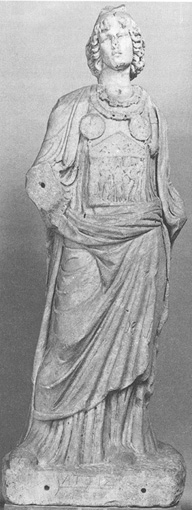
Hermaphrodite /Hermaphroditus –
an old Greek term for a combination of male and female, that has come
to mean many different things over the centuries. Sometime a child
of Hermes and Aphrodite. Sometimes linked to statues of Aphrodite
with male genitalia in the shape of a herm (pictured to the side). In
some centuries it's a common term for what we'd now call non-binary
or intersex people. Sometimes a technical medical term for
conditions that very few humans fit, involving have both kinds of
gonadal tissue. The term is still used in non-human biology a lot,
(it's common in plants and snails, for instance), but it's usually
avoided when talking about humans these days because it is taken to
be loaded with specious or stigmatizing associations from various
past uses.
Hijra – a category of third
gender persons common in India. Often now called "transgenders" in
Indian English (which is non-offensive in Indian English, although "transgender people" is more correct in US or British English). See wikipedia, or say
this article on recent legal victories for hijras

Intersex – I have yet to see a
definition of this that really works. Roughly though, if your
biology has a mix of male and female traits, other than just in your
brain/identity, and the doctors notice it, and they don't think you
are trans instead, they will label you as intersex. Only now it is
often called DSD (Disorders of Sexual Development). Because you
know, being a mix of male and female can't possibly be a healthy
state, it has to always be medicalized as a disorder, and if it
happens in the “body” it is a totally different thing that if it
happens in the “brain.” Sigh. Many people with intersex biology
are binary and cisgender in their own self-identity. And many people
(like me) fit some of the formal definitions of intersex, but are not
considered intersex because we are trans instead. Maybe this is it –
if YOU decide your sex assigned at birth is wrong or oversimplified
then you are trans, regardless of what the doctors think - if A
DOCTOR decides that your sex assigned at birth is wrong or
oversimplified or is “ambiguous” already at birth, then you are
intersex, regardless of what you think about it. There are a lot of
different kinds of intersex conditions and some of them really do
have serious medical complications, like Congenital Adrenal
Hyperplasia, so it's inevitable and even desirable to medicalize
gender biology issues in some cases. But 20th century America proved
to be very bad at being ethical about when and how to medicalize
unusual biologies of gender. (OK I've got whole books on this, but I'm having trouble finding a good overview, I guess
this news report is a start). Intersex people have very much been
given a raw deal over the last several decades, so I hope I don't
sound dismissive and my venom is not for them. Being trans,
intersex, or coming from a culture that assigns people non-binary
genders at birth are the three ways to wind up non-binary, although
plenty of intersex or trans people are binary too.
 M.
M. - the goal of a gender
neutral honorific substitute for Mr. /Ms./ Mrs./Miss, is a natural
one. Some use Mx. (pronounced mix or mux), but I think M. is an
elegant solution too, maybe it will even catch on some day.
Macaroni – an 18th
century British identity, where a male wore over-the-top fashions.
Often they were ridiculed and accused of androgyny. Indeed, some
seemed to aim for as much androgyny as they could get away with.
Descendant of 15th-18th century terms like fop, beau,
gallant, popinjay, coxcomb, fribble, fashion-monger, and ninny.
Precursors of the 18th-20th century Dandies.
Mahu – a native Hawaiian
non-binary gender category, a “third gender.” Often associated
with hula dancing, or in general keeping old ways alive. Also
sometimes other kinds of trans folk are called mahu now in Hawaiian
slang by extension.
Molly – an 18th
century British identity that doesn't exactly map to modern notions
of homosexuality, crossdressing or transgender, but is partly all
three. Mollies congregated together in molly houses, which were
usually also taverns and/or houses of prostitution. Mollies had a
ritual called “lying-in” or “mock birth” in which they
ritually imitated giving birth.
Neutrois – a person who
identifies as neither male nor female. Especially if metaphors like
“neutral” or “null” or “none” are closer than “both”
or “mixed” or “none of the above.” It falls under the
umbrellas of trans and non-binary and genderqueer. Many neutrois are
happy to identify as agender too, others say they have a gender but
it is somehow neutral, or neutered. Appears to have been coined in
1995 by H. A. Burnham. See more
here.
Non-Binary – not fitting into
a two-fold system. In logics, it usually means you have more that 2 truth
values. In gender, it means someone who identifies as something other
than male or female. Genderqueers, Genderfluid folk, tumtums,
third-gender folk, androgynes, neutrois, many two-spirits, and many
more are examples. Transmen and transwomen are NOT non-binary
though, and typically resent it if you treat them as not-a-real-man,
or not-a-real-woman, or somewhere-in-between. Similarly some
intersex people self-identify as non-binary, but many do not.
Otherkin - Folks who believe that they are non-human in identity, even if they are human in body. Sometimes they identify as elves or faeries. Sometimes as animals, or anthropomorphic animals, in which case they may also be furries. I've known a person or two who thought of themselves as dragons-in-human-form. Angels, demons, shapeshifters, werewolves, vampires, aliens, cartoon characters, there are a lot of possibilities. It may sound like a mental health problem, and it probably is sometimes, but I've known folks that were pretty non-delusional, and far closer to something like a religious or spiritual or self-discovery understanding of the sense in which this is true. Oh and someone's non-human self-identity is likely to interact with their gender and sexual identities.
Pansexual – Some one who is
attracted to people of “all” genders. A bisexual person who
wishes to emphasize that gender identities other than male and female
are attractive to them too. Older
dictionary definitions of bisexual often assume there are only two genders, but
more recent definitions by self-identified bisexuals often
allow attraction to many gender-identities and try not to assume there are only “two”
genders, so usually if someone says pansexual instead of bisexual
they are trying to emphasize non-binary possibilities.
Pronouns – It is polite to ask
someone's preferred pronouns, and rude not to try your best to use
them once you know them. They used in the singular is correct
grammar, and the next most polite option if you don't know someone's
preferred pronouns. Many non-binary people prefer he/him/his or
she/her/hers or they/them/theirs. Some people prefer it, and if, so
it is correct to use it. However, it is always inappropriate to call
a person it, unless you are confident that it is its preferred
pronoun. Non-binary folk often use ze/hir/hirs, and odder pronouns
like zir, co, ey, xe, etc. are sometimes preferred. Do your best.
Except zie, that's just wrong, see the entry on zie.
Radar -v. the stuttering of
pronouns or honorifics owing to gender confusion. Named for Radar
O'Reilly's invariable "sir, ma'am, sir" when addressing
Major Hoolihan in the TV show M*A*S*H. Also suggests the scanning
motion of the eyes that often accompanies the stutter.
Coined by Raphael Carter 1996
Saris – one of the six gender
categories in Jewish law, for people who seem male at birth, but
later seem seriously non-male. Used largely for eunuchs in the Old
Testament, but comes to seem closer to our modern notion of a
transwoman later on.
Sib – a
informal affectionate term for a non-binary person. Shortened form
of sibling. Use it the way you would use bro, sis, dude, lady, mate,
buddy, girl (for an adult), honey, sugar, etc. Homie and comrade are
also gender neutral if either fit your style. I wrote more
here.
Scrat - Old English term for
'hermaphrodite' -
“Hermafroditus, waepenwifestre, uel scratta, uel baeddel.”
--AElfric, c.1000 (Waepenwifestre and baeddel have meanings similar
to scrat, but seem not to have made it into Modern English in any
recognizable form.) “Somtyme one of mankynde is both man &
woman & suche..in englyssh is called a
scrette.”--Caxton, Trevisa's Higden (1482) - The origins
of the word 'scrat' are murky, but they seem to be somehow bound up
with the Old Norse skratte, meaning wizard, goblin, monster.
'Old Scratch,' a nickname for the devil, is an alteration of 'scrat.'
Shemale – a terribly impolite
term. From the mid 19th to mid 20th century it
was used to refer to women who were considered too masculine in a
pejorative way. By the 1970s it started shifting to being used to
make fun of effeminate males and trans-folk. These days it is usually
a rude term or a porn term for pre-operative MtF transsexuals, often
fetishizing them for others' gratification. If you are tempted to
use this term in psychology or reptile biology (as some people do),
then don't.
They – a pronoun that has been
used in the singular regularly since frickin' Chaucer. It fell out
of favor in the 19th century because prudes and chauvanists
argued that using he for everybody regardless of gender was
preferrable. They singular is a common pronoun of choice for
non-binary folks, and it is not a new or edgy or incorrect use of
this very old word, so get over that worry. I like ze though.
Third Gender – a phrase used
to describe specific kinds of non-binary people who think of
themselves as something other than male or female, like hijras, or
fa'afafine, or the sworn virgins of the Balkans. A lot of times it's
not necessarily how the people with the supposed third gender identity see
themselves (like with the Kathoey), and a lot of times the local gender
schema have more than three gender categories available (as in many
Native American cases). There is a big danger of projecting our
anthropological categories onto other people. Still, often it is an
OK way to think about non-binary people. Richard O'Brien describes
himself as being in a third gender between male and female. I'm
happy to be called third gender, that seems like a decent way to cash
out my in-between or mixed gender state.
Tranny – This was actually a
polite term once.
Long ago. There are queerfolk who have been around a while
that still use it affectionately. But most transfolk in my experience find it offensive and impolite,
here's a careful argument. Unless you are TRYING to
degrade someone or sell degrading porn, or provoke a fight within the trans* community, don't use it. Oh and don't
try to do any of those things either.
Transgender – 1) someone who
thinks the gender assigned to them at birth doesn't fit very well how
they think of themselves.
2) a broad term for many many kinds of
“transgressive” gender identities.
Trans or Trans* - like
transgender, but especially emphasizing inclusiveness and the second
definition, and definitely trying to include trans-vestites, and
crossdressers, and drag queens/kings, and intersex people, who might
not feel they fall under the first definition of transgender above.
Transsexual – every definition
I've seen of this is either identical to def#1 of transgender or has
medical BS I don't like in it. I think it tends to be used
especially for people striving to live and be accepted as the
“opposite” sex of their sex-assigned-at-birth, and thus for
binary trans-folk - transmen, transboys, transwomen and transgirls.
It also tends to be used more for folk that use medical interventions
like hormone or surgery. My sense has always been that as a
non-binary person I don't count.
Transvestite – see
crossdresser
Tumtum or timtum – a Hebrew
category of gender from the Mishnas on (first few centuries CE). A
person whose gender is not readily apparent, but might wind up being
either male or female. Sometimes used as a slur against feminine
males, or masculine females, but also used as a neutral category of
Jewish legal thought, or even as a self-description. A baby can be
tumtum. One who is questioning their own gender identity can be
tumtum even to themselves. Someone who is trying to live with a
gender presentation that leaves their biological sex in doubt to
others might self-identify as tumtum.
Here's the awesome article.
Two-Spirit – a term for
grouping a bunch of different Native American identities together
(winjke, nadleehe, etc). Often they involve gender variance of some
kind, but the lines between bisexuality, homosexuality, transgender,
crossdressing, “third gender” and gender-non-conforming can get
tricky and vary from tribe to tribe and be not natural concepts in
the original languages. Instead of a gender binary for instance it
is pretty common for Native American cultures to divide people into 4
types – masculine men, masculine women, feminine men, and feminine
women. There is also a lot of evidence that contemporary two-spirit
communities and self-understanding differ quite a bit from
pre-contact or early-contact two-spirit communities and
self-understandings. Its not unusual for a two-spirit person to
think of themselves as non-binary in gender even if they seem fairly
binary in gender to others.
Waepenwifestre – see scrat
Ze / hir / hirs – Another
common pronoun set for genderqueer folk, especially in the Internet
age. Hir is pronounced like “hear” or “here” not like “her.”
Actually, the vowel in “hir” is just a little different than
“here,” but like pin/pen or tin/ten, or bin/Ben, I can't hear the
difference with my Midwestern ear and accent. I take this.
Zie / hir / hirs– the WRONG
pronoun set, for all right thinking non-binary people. Those who use
zie with an i, will be roasted over the flaming remains of their own
genitalia of undisclosed shape, for all eternity in the afterlife.
Don't let this tragic fate befall you, return to the path of
righteousness and use ze without the i.
maybe I should include terms like demisexual, hyposexual, asexual, aromantic, panromantic, MSM, etc. etc. but my inclination is not to include sexuality identities that don't really have a gender component on my list. Look terms like that up elsewhere. Also, I've tried and failed to find a decent term for my own sexuality so I don't relish trying to explain the nuances of others. Currently I joke, say I'm chian, and them give them the definition above when I get the blank look..




.jpg/150px-Hermaphroditus_(herma).jpg)

.jpg)